


The Grocery Cart Trap: How Contamination Starts Before You Even Get Home
Food safety conversations usually start in the kitchen — raw chicken on cutting boards, leftovers cooling too long, poorly rinsed produce. But contamination doesn’t begin at home. For most people, the risk starts long before the fridge door opens, in a place so ordinary it feels harmless: the grocery store.
We walk into a supermarket expecting abundance and convenience — shelves stocked, produce misting, carts lined up, fluorescent lights humming. But behind the routine lies a quiet, overlooked truth: groceries move through dozens of hands, surfaces, temperatures, and environments before they reach your pantry. The last stop in that chain — the store itself — is where cross-contamination can take root if we aren’t paying attention.
Not because grocery stores are careless. They operate under strict rules. But like any high-traffic, constant-motion environment, the system isn’t airtight. And the average shopper has never been taught how quickly bacteria can spread in places that look clean and controlled.
Food safety isn’t only a kitchen responsibility — it starts in the aisle, the cart, and the checkout lane.
From Warehouse to Aisle to Cart
By the time a single apple reaches your hand, it has passed through field workers, transport crews, distribution centers, and store employees. Boxes have been stacked on pallets, moved across loading docks, and rolled into back rooms. None of this automatically means danger — it simply means the apple is not arriving sterile.
Freshness doesn’t equal isolation. Every step introduces touchpoints. And once inside a store, the apple sits beside other produce — some washed, some not, some cut, some in open bins. Water sprays help keep produce crisp, but moisture is also an environment bacteria appreciate.
Many people handle fruit to check firmness or color. Some place items back down. Children touch displays. Shoppers rest reusable bags on carts and shelves. Every motion leaves something behind.
And this isn’t cause for panic — it’s cause for awareness.
The Cart Isn’t Neutral
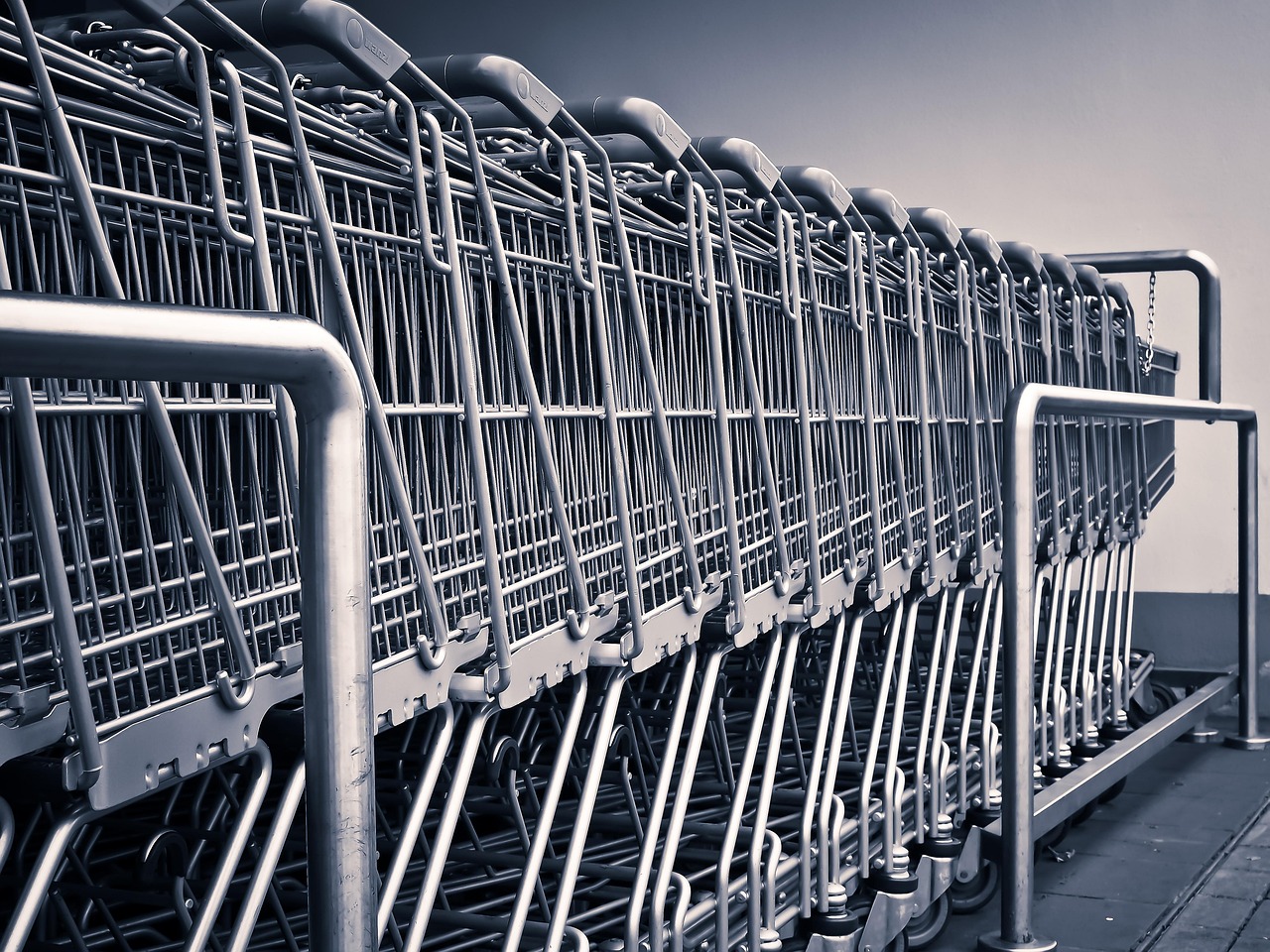
The shopping cart feels like a simple tool — a basket on wheels. But it is one of the most high-contact objects in any public space. Thousands of hands touch the same handles every week. Raw food packaging, leaking meat trays, wet produce, and packaged snacks all share the same metal frame.
Most stores sanitize carts regularly, but frequency is not perfection, and traffic varies. And shoppers themselves bring in outside bacteria — from car seats, public doors, gym bags, backpacks, and pockets.
Then there’s how we load the cart. Without thinking, many people place produce where meat was sitting or stack groceries in a way that encourages cross-contact. A sealed meat package isn’t always truly sealed. Condensation forms. Microscopic leaks happen.
All while the shopper believes contamination begins at home, not here.
The Checkout Conveyor Belt Problem
Checkout lanes move fast, but bacteria aren’t slow. Conveyor belts see raw poultry packaging followed by apples, leafy greens, and bakery items. We rarely stop to consider that the surface beneath our groceries touches everyone else’s groceries too.
And even self-checkout doesn’t eliminate the risk — we place food on counters, scan them with hands that touched carts, and bag items in a hurry. The pressure to move quickly can outweigh caution.
It’s not dramatic contamination — it’s ordinary contamination. And ordinary contamination is the most common kind.
Bags, Cars, and the Space Between Store and Fridge
Once groceries are paid for, the transition continues with little attention: bags into carts, carts to cars, car trunks used for sports gear, pets, shoes, or whatever life throws in. Groceries ride home, sometimes sitting warm in the back seat while errands take priority.
Again, these moments don’t look dangerous. They look normal. And that’s why they’re risky.
Places Contamination Sneaks In
Raw meat packaging touching produce, cart seats, or checkout belts
- Food sitting unrefrigerated too long during errands or travel
- Reusable bags not washed between shops
- Unwashed hands grabbing fruit, handles, freezer doors, phones, and wallets
This is not unusual behavior. It’s everyday behavior — the kind people never think to question.
Awareness Is Stronger Than Fear
This is not an argument for paranoia. Grocery stores are designed to move food safely on a massive scale, and they do far more right than wrong. But the patterns we follow as shoppers — where we place items, how long they sit, what touches what — matter.
Safety isn’t about suspicion. It’s about small habits that protect the investment we make in fresh food. If we’re willing to spend money on berries, greens, chicken, yogurt, and fresh herbs, it makes sense to keep them safe from store to kitchen.
That’s the part social media trends rarely mention. We see “what I eat in a day,” “healthy grocery haul,” “Sunday shopping vlog,” but rarely, “here’s how I keep my food safe from the moment I pick it up.”
Health isn’t only about choosing good food — it’s about handling it wisely.
Simple Shifts That Matter
A few grounded habits go a long way:
Put raw meat in bags before placing it in the cart.
Keep produce away from protein.
Wash reusable bags regularly.
Go home after grocery shopping instead of running three more errands.
Unload perishables first.
Wash hands before putting groceries away, not just after.
These aren’t rigid rules — they’re practical steps that protect the food you just spent real money on.
Because food poisoning isn’t just unpleasant — it interrupts life, work, school, and health goals. Most cases don’t trace back to dramatic incidents. They trace back to everyday routines that didn’t account for invisible risks.
The Point Isn’t Perfection — It’s Perspective
We don’t need to treat supermarkets like hazardous zones. We just need to remember that fresh food is alive, and handling it with intention preserves both health and quality.
The journey from shelf to home is part of food safety — not outside it. The kitchen is only the last chapter, not the first.
Modern grocery shopping gives us choice, variety, and convenience. With a little awareness, it can give us safety too.
Fresh food is powerful.
Fresh food is vulnerable.
And the decisions we make before we ever turn on a stove matter as much as the ones we make after.
