

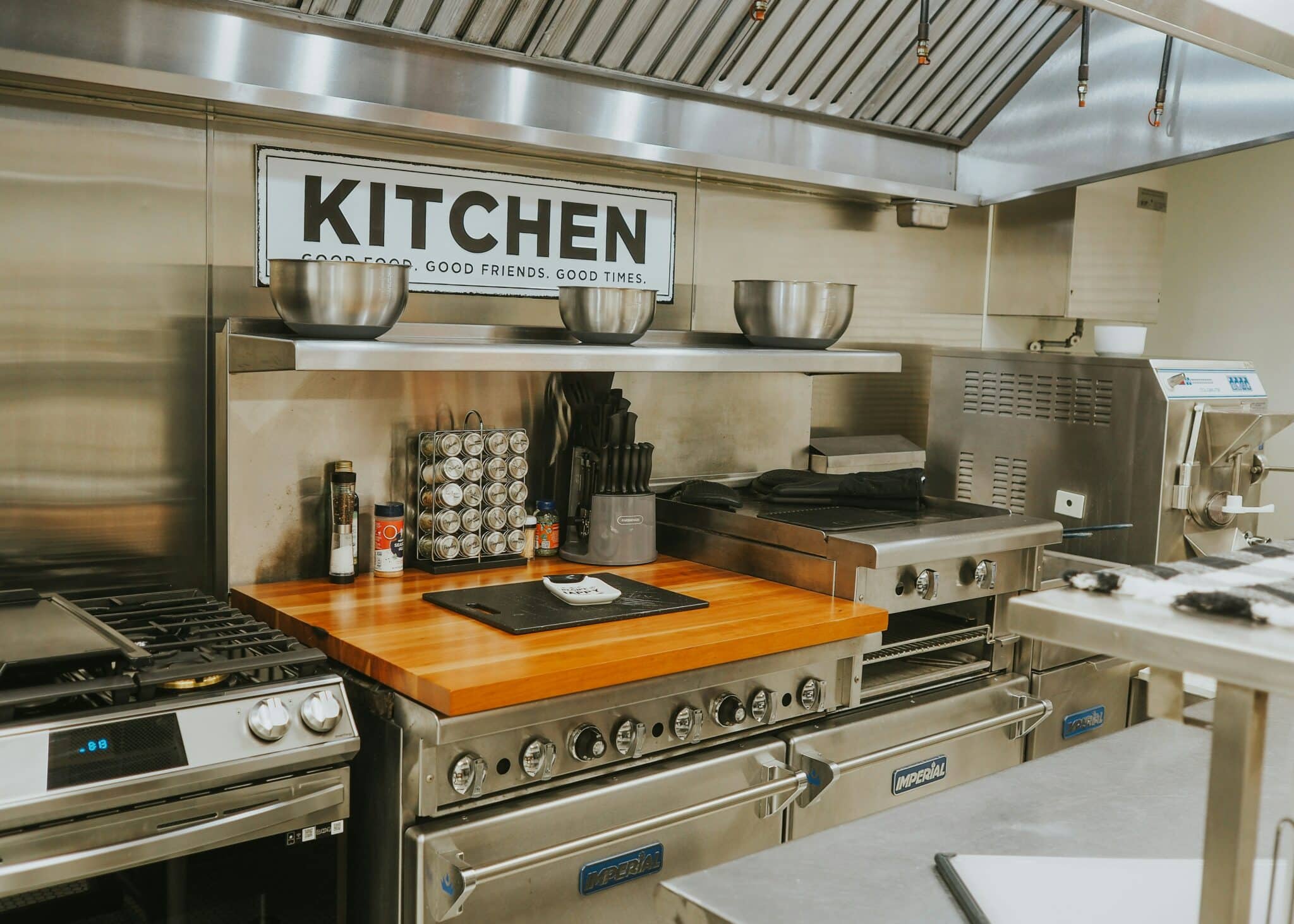

The kitchen is often called the heart of the home, a place of warmth, creativity, and shared meals. Yet, beneath this comforting image lies a startling and often ignored public health reality. A growing body of evidence suggests that for many people around the world, the home kitchen is the most likely place they will encounter a foodborne illness. In Brazil, data spanning a decade shows that 37.2% of foodborne illness cases originated in domestic kitchens, more than double the percentage linked to restaurants. This pattern is not unique to one country; studies in the United States, Canada, and elsewhere consistently identify the home as a high-risk environment for food poisoning.
This widespread risk exists not because home cooks are careless, but because of a perfect storm of psychological biases, deeply ingrained habits, and the absence of the structured safety systems we take for granted in commercial settings. Unlike restaurants, which operate under stringent health codes and Hazard Analysis Critical Control Point (HACCP) plans, home kitchens are largely unregulated territories. The responsibility falls entirely on individuals whose perception of risk is often distorted, leading to common, well-intentioned mistakes with serious consequences. Understanding why our kitchens have become such vulnerable places requires looking beyond simple hygiene reminders and into the complex interplay of human behavior, cognition, and everyday routine.
The Perception Gap: Why We Underestimate the Danger at Home
A primary reason home kitchens are so risky is that people consistently underestimate their personal vulnerability. Food safety experts identify a critical cognitive bias known as the “anchoring effect” that heavily influences this miscalculation. When individuals judge their risk of getting food poisoning, they often anchor their estimation to an initial piece of information, such as a highly publicized restaurant outbreak. Even when presented with contradictory data, their final judgment remains biased toward that initial anchor.
Research has demonstrated this effect clearly. In a study of consumers in China, participants who were first given a low initial estimate for the probability of getting a foodborne disease subsequently provided significantly lower personal risk assessments themselves. This suggests that a general cultural belief that “it probably won’t happen to me” sets a low anchor, making people dismissive of the very real hazards in their own refrigerators and on their cutting boards. Furthermore, familiarity breeds complacency. The same study found that people with less familiarity with foodborne illnesses were more susceptible to this anchoring bias, leading to greater errors in judgment. In other words, because we cook at home every day without incident, we become less likely to perceive the potential for danger.
This cognitive disconnect is reinforced by a phenomenon scientists call “optimistic bias.” People tend to believe they are more skilled or less likely to encounter negative events than the average person. A home cook might faithfully follow a recipe for a complex sauce but neglect to use a food thermometer when cooking chicken, over-relying on color and texture, a practice the Centers for Disease Control and Prevention (CDC) explicitly warns against. They believe their personal culinary judgment overrides basic scientific control. This overconfidence is a documented contributor to cognitive bias in food safety risk perception. The result is that the very place where we feel most in control is where we are, behaviorally, most at risk.
The Five Fault Lines: Common Kitchen Practices That Breed Illness
Public health agencies have distilled the root causes of foodborne illness outbreaks into five major risk factors. While these are used to inspect restaurants, they provide an exact blueprint for what goes wrong in home kitchens.
First is improper cooling or heating of perishable food. The “danger zone,” where bacteria multiply most rapidly, is between 40°F and 140°F. At home, leftovers are often left on the counter to cool for hours before being refrigerated, or large pots of soup are stored in the fridge where they take too long to cool in the center. The CDC notes that perishable food should never be left out for more than two hours (or one hour if the temperature is above 90°F). Yet, the common practice of leaving pizza or a holiday meal out for grazing far exceeds this window, allowing pathogens like Staphylococcus aureus or Bacillus cereus to proliferate.
Second is improper cooking temperatures. Cooking is the only step that kills harmful bacteria, but home cooks rarely verify it with a tool. They judge doneness by color or juice clarity, which is unreliable. Poultry must reach 165°F, ground meats 160°F, and fresh cuts of beef or pork 145°F to be safe. Without a simple food thermometer, it is impossible to know if these temperatures have been achieved in the thickest part of the meat.
Third is dirty or contaminated utensils and equipment, leading to cross-contamination. This is one of the most pervasive home kitchen risks. Using the same cutting board for raw chicken and then for fresh vegetables without proper cleaning transfers bacteria like Salmonella or Campylobacter directly to food that will not be cooked. The U.S. Department of Agriculture (USDA) recommends using separate cutting boards for raw meat and produce and washing all surfaces with hot, soapy water. Similarly, not properly washing hands after handling raw eggs or meat is a major vector for spreading germs.
Fourth is poor personal health and hygiene. The imperative to cook for one’s family can override common sense when a person is ill. An individual with gastrointestinal symptoms who prepares a meal can inadvertently spread viruses like norovirus or bacteria like Shigella to everyone at the table. Professional food facilities have strict “exclusion” policies for sick workers, but no such rule exists at home.
Fifth is food from unsafe sources, which can include using expired ingredients, consuming raw dough made with uncooked flour or eggs, or drinking unpasteurized milk. At home, the checks and balances of a commercial supply chain are absent. A 2002 study on salmonella risk factors in domestic kitchens found that handling and consuming raw or free-range eggs were significant independent risk factors. This highlights how even high-quality ingredients from trusted sources can carry risk if not handled with appropriate caution.
Beyond Knowledge: The Psychology of Changing Behavior
Awareness of these risk factors is necessary, but it is not sufficient to change behavior. Research has repeatedly shown that knowledge alone has a weak direct effect on a person’s intention to practice safe food handling. Knowing that chicken should be cooked to 165°F does not automatically mean someone will buy and use a thermometer. Effective behavior change must address the deeper psychological drivers outlined in models like the Theory of Planned Behavior.
This theory posits that three main factors influence whether someone will perform a specific behavior: their attitude toward it, the perceived social pressure (subjective norms), and their perceived behavioral control. During the COVID-19 pandemic, a unique natural experiment occurred. A 2021 study of Brazilian consumers found that the dramatic increase in home cooking, coupled with heightened general anxiety about health, positively shifted these factors. People’s attitude toward food safety became more serious, subjective norms shifted as hygiene became a dominant public topic, and many felt greater perceived control over their home environment compared to the perceived risk of eating out.
The pandemic experience offers a blueprint for effective public health campaigns. It demonstrated that a sustained, society-wide focus on microbial risk can reshape domestic habits. The challenge is to translate that heightened awareness into lasting practice without a global crisis as a catalyst. Successful campaigns are those that make safe practices feel normal, easy, and socially expected. For instance, promoting the food thermometer not as a specialized tool for experts, but as an essential kitchen gadget as basic as a chef’s knife, can alter its perceived norm. Framing rapid refrigeration of leftovers as a simple act of care for one’s family, rather than a tedious chore, can improve attitudes toward it.
Globally, some of the most promising interventions are culturally sensitive and leverage social networks. Community-based training that uses trusted local figures, not just external experts, has shown success. Programs that model behaviors in relatable home-kitchen settings, rather than in abstract classrooms, help overcome the “it won’t happen to me” bias. Furthermore, leveraging digital tools and social media to provide timely reminders and tips, similar to how weather apps send alerts, can keep food safety front-of-mind in a world of competing priorities.
Analysis & Next Steps
The emerging understanding of home kitchen risk represents a significant shift in food safety philosophy. For decades, public health efforts and consumer anxieties were disproportionately focused on the industrial food system: factory farms, processing plants, and restaurants. While oversight in these areas remains crucial, the new frontier is clearly the private, unregulated space of the home. What is new is the rigorous application of behavioral science and epidemiological tracing to this environment, revealing that our cognitive biases and everyday habits are as important as any pathogen.
This matters because the scale of the problem is vast. With an estimated 600 million cases of foodborne illness globally each year, even a fractional reduction in domestic transmission would prevent immense suffering. The burden of illness disproportionately affects the most vulnerable: young children, the elderly, pregnant women, and those with compromised immune systems, for whom a case of food poisoning can lead to severe dehydration, long-term complications like kidney failure, or even death. Beyond the human cost, these illnesses place a heavy, preventable burden on healthcare systems.
The population affected is, in essence, everyone who eats food prepared at home. However, the responsibility for change cannot rest on individuals alone. A multi-layered approach is necessary. For consumers, the immediate task is to move from passive knowledge to active practice. This starts with investing in a few key tools: a refrigerator thermometer to ensure it stays at or below 40°F, a food thermometer to verify cooking temperatures, and a clear system for labeling leftovers. It means adopting the simple, life-saving mantra of public health agencies: Clean, Separate, Cook, and Chill. Crucially, it involves recognizing and overriding our own cognitive biases about risk.
For educators and public health officials, the path forward is to design interventions that work with human psychology, not against it. Messaging should be clear, consistent, and focused on building positive habits rather than instilling fear. Campaigns must make safe practices seem easy, normative, and rewarding. Finally, for policymakers, there is an opportunity to promote food safety literacy with the same vigor as other essential life skills. Integrating practical, science-based food handling education into school curricula, community programs, and even appliance purchasing guides can help build a culture of safety from the ground up. The goal is not to turn every home into a sterile laboratory, but to equip every cook with the understanding and habits to ensure that the heart of the home is also a place of health and security.
