


Few foodborne and waterborne pathogens illustrate the public-health consequences of climate change as clearly as Vibrio. These bacteria are naturally associated with marine and brackish environments, and for decades they were treated largely as a warm-water hazard concentrated in predictable coastal regions and in the hotter months of the year. That assumption is becoming harder to maintain. As coastal waters warm, heat waves become more intense, sea-surface temperatures remain elevated for longer periods, and storm-driven flooding pushes warm brackish water into populated areas, Vibrio infections are becoming more geographically widespread, more seasonally extended, and more difficult to dismiss as isolated coastal curiosities. The CDC explains that Vibrio bacteria naturally live in certain coastal waters and are found in higher numbers from May through October, when water temperatures are warmer. The same federal guidance is important because it captures the central biological reality behind the problem: warmer water generally means more favorable conditions for Vibrio.
That relationship between temperature and risk is why global warming has become such a central issue in Vibrio epidemiology. Unlike pathogens whose transmission depends mainly on person-to-person spread or indoor sanitation, Vibrio responds directly to environmental conditions. Warmer seas, estuaries, and shellfish-growing areas can increase the abundance of pathogenic Vibrio species, prolong the season in which they remain active, and expand the regions where they can flourish. A widely cited Nature Climate Change study on emerging Vibrio risk at high latitudes concluded that environmental changes in the Baltic region were associated with the emergence of Vibrio infections and projected future risk in connection with warming trends. More recently, a 2023 Scientific Reports study on climate warming and increasing Vibrio vulnificus infections in the United States noted that climate change is expected to increase the suitability and distribution of pathogenic Vibrio species, particularly at higher latitudes.
That shift is not merely theoretical. Public-health agencies are already documenting it. In 2023, the CDC Health Alert Network warned that Vibrio vulnificus infections in the eastern United States had increased eightfold from 1988 to 2018 and that the northern geographic range of infections had expanded by about 48 kilometers per year. That same CDC alert explained that Vibrio vulnificus thrives in warmer waters, especially during summer months and in lower-salinity marine environments such as estuaries. In plain terms, the pathogen is moving into places where clinicians, public-health officials, and the public have historically been less accustomed to seeing it. The hazard is no longer confined to the traditional Gulf Coast mental map.
The most dramatic species in the public imagination is Vibrio vulnificus, often described as the “flesh-eating” Vibrio because it can cause severe wound infections, necrotizing fasciitis, septicemia, and death. The CDC states that about 150 to 200 V. vulnificus infections are reported to CDC each year and that about one in five people with this infection die, sometimes within a day or two of becoming ill. But focusing only on V. vulnificus can obscure the bigger picture. Vibrio parahaemolyticus causes many seafood-associated gastrointestinal illnesses, especially linked to raw or undercooked shellfish such as oysters, and other Vibrio species can also cause serious disease. The CDC’s oyster-specific guidance warns that harmful germs in oysters do not change the way the shellfish looks, smells, or tastes, and that although most Vibrio infections occur during warmer months, infections are reported year-round.
That year-round warning is important because climate change is not simply making summers hotter. It is altering baseline conditions and stretching the windows of environmental suitability. The NOAA-backed research on future scenarios of Vibrio risk in a warming climate identified coastal regions with temperatures above 18°C and lower salinity as suitable for Vibrio, and projected increased risk under future warming scenarios. NOAA’s own forecasting and background materials emphasize that sea-surface temperature is a major driver of Vibrio growth and that predictive products can provide early warning of coastal hazards associated with these bacteria. When ocean temperatures stay elevated longer, the practical result is more days and more places in which Vibrio can persist.
The connection between warming waters and increased illness has also become more visible after extreme weather events. Heat waves can sharply elevate coastal water temperatures, and hurricanes or storm surge can expose more people to contaminated seawater and floodwater. In a 2024 CDC MMWR report on severe Vibrio vulnificus infections, investigators described 11 severe cases in residents of Connecticut, New York, and North Carolina during July and August 2023 after a period of heat waves and elevated sea-surface temperatures. Four of those patients experienced septic shock and five died. That report is striking not only because of the severity of the illnesses, but because it ties them directly to a period of abnormal heat and warming coastal conditions in states not traditionally seen as the classic center of Vibrio vulnificus risk.
The northern expansion of Vibrio risk has been especially apparent in Europe as well. The European Centre for Disease Prevention and Control’s Vibrio map viewer is designed specifically to show environmental suitability for Vibrio growth, particularly in the Baltic Sea, where warming has created more favorable conditions for these bacteria. In 2025, the ECDC warned of increased risk of Vibrio infections during the summer season, noting that Vibrio is often detected in the Baltic Sea because its lower salt concentration and warming temperatures favor bacterial growth, and that rising sea-surface temperatures are expected to expand the bacteria into additional coastal areas. Earlier epidemiologic work in Emerging Infectious Diseases similarly linked warming low-salinity coastal waters in the Baltic region to increased risk of disease from Vibrio and related organisms.
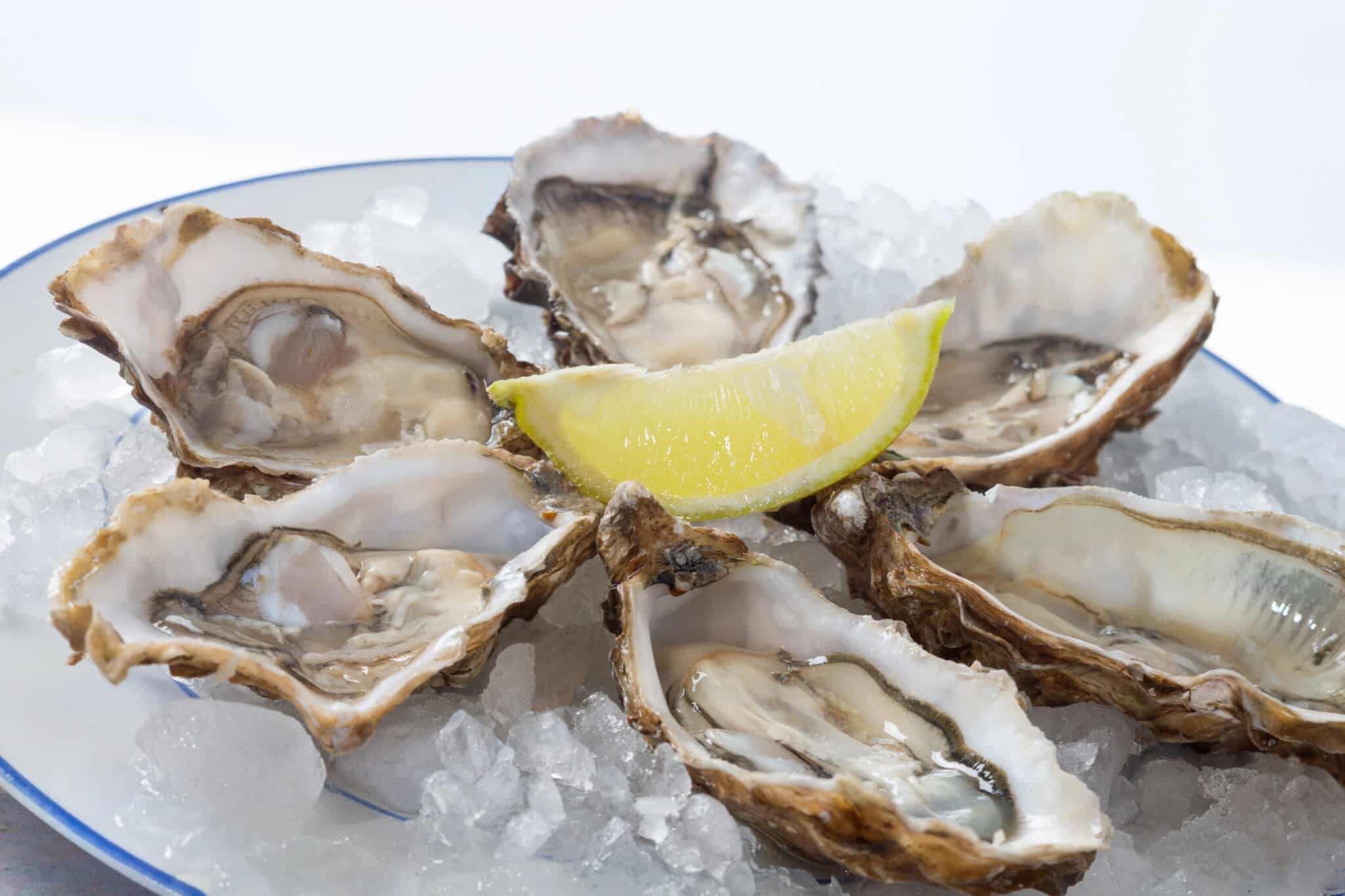
In the United States, the shellfish connection remains central. Oysters are filter feeders. They can concentrate naturally occurring Vibrio from surrounding waters, which means consumers may be exposed even when the shellfish appears fresh and wholesome. The CDC’s page on Vibrio and oysters makes clear that you cannot tell whether an oyster contains harmful germs by looking at it, and that raw oysters remain a major exposure route. As warmer waters increase bacterial abundance, the shellfish problem becomes more difficult. One recent Food Poisoning News article on why Vibrio cases are rising in oysters and shellfish directly links the rising profile of Vibrio to warmer marine conditions and explains why oysters on ice can still harbor dangerous bacteria. That framing is useful because it connects the science to the everyday consumer reality: climate-driven change in coastal waters can translate directly into greater foodborne risk at the dinner table.
The projected long-term burden is sobering. The U.S. Department of Agriculture’s Economic Research Service reported that non-cholera Vibrio infections in the United States may increase by 50 percent by 2090 relative to 1995 under a moderate warming scenario, and by more than 100 percent if global warming is not sufficiently mitigated. USDA also noted that the economic costs associated with these infections are expected to rise sharply. A related USDA chart summary explains that climate change is expected to expand both the geographic range and the season of Vibrio infections as sea-surface temperatures warm. Those projections matter because they move the issue from anecdotal concern to a measurable public-health and economic burden.
Scientific reviews have reached similar conclusions. A 2022 review examining the relationship between climate change and Vibrio incidence found that the life cycles, range, and geographic prevalence of Vibrio species are tied closely to climate conditions, including sea-surface temperature, and that infections from V. parahaemolyticus and V. vulnificus have increased over time. A 2020 review in Environmental Microbiology similarly concluded that warming coastal waters have increased both the temporal range of Vibrio species and the potential for Vibrio-human interactions. That second point is important. Climate change affects not only the bacteria, but also human behavior. Warmer conditions mean more swimming, more shellfish consumption, more coastal recreation, and more human contact with waters that may now be hospitable to pathogens for longer parts of the year.
Storms and flooding may amplify that effect. While oysters and seafood remain classic foodborne routes, wound exposure is a major route for severe Vibrio vulnificus illness. Floodwater and storm surge can carry warm brackish or marine water into streets, homes, and communities, exposing people with cuts or abrasions to dangerous bacteria. This is one reason climate change can drive Vibrio disease even outside the restaurant or shellfish context. The CDC’s 2023 health alert urged clinicians to consider Vibrio vulnificus in patients with infected wounds exposed to coastal waters, particularly during periods of warmer sea temperatures. The risk is ecological, recreational, and foodborne all at once.
Public-facing reporting has increasingly drawn these connections together. A Food Poisoning News article on potentially deadly Vibrio infections rising as Gulf waters warm frames warming Gulf waters as a factor that may increase severe Vibrio illnesses and fatalities. Another Food Poisoning News article on climate change worsening foodborne illnesses points to Vibrio as one of the clearest examples of a pathogen whose risk profile is intensifying as temperatures rise. These articles are useful not because they replace primary sources, but because they translate the science into a broader consumer and public-health warning: climate change is not only about storms, heat, and sea-level rise. It is also about microbial risk.
What makes Vibrio especially important in the climate conversation is that it functions almost like a sentinel organism. It is highly responsive to temperature, salinity, and environmental change. When Vibrio expands northward, persists longer into the year, or appears after exceptional marine heat, it offers a visible microbial sign of ecological change already underway. The NOAA repository review on climate change and Vibrio vulnificus abundance warns that increased water temperatures associated with atmospheric warming raise concern about geographic range expansion and increased exposure risk. That concern is no longer speculative; both surveillance data and outbreak investigations now show that it is happening.
This does not mean every increase in Vibrio illness can be attributed to global warming alone. Improved surveillance, greater awareness, more testing, coastal population growth, changing seafood consumption patterns, and better recognition by clinicians all play roles. But the environmental signal is too consistent to ignore. Warmer waters support more Vibrio. More favorable marine conditions create more opportunities for shellfish contamination and wound exposure. Higher-latitude coasts that once lay outside the routine range of concern are becoming newly suitable. And long-term projections suggest that, absent meaningful mitigation, the burden will continue to rise. The convergence of CDC surveillance and alerts, NOAA and USDA modeling, and peer-reviewed climate-health research makes that conclusion difficult to avoid.
In the end, increased Vibrio outbreaks due to global warming are not a distant or abstract possibility. They are a present and expanding public-health reality. Warmer oceans, hotter estuaries, prolonged summer conditions, marine heat waves, and climate-fueled coastal disruption are making Vibrio more common, more mobile, and more dangerous. That means more risk from raw oysters, more risk from warm coastal water entering an open wound, more risk in regions once considered comparatively safe, and more pressure on public-health systems to adapt. Vibrio has become one of the clearest microbial indicators of climate change’s effects on human disease. As the waters warm, the outbreaks are following.
