

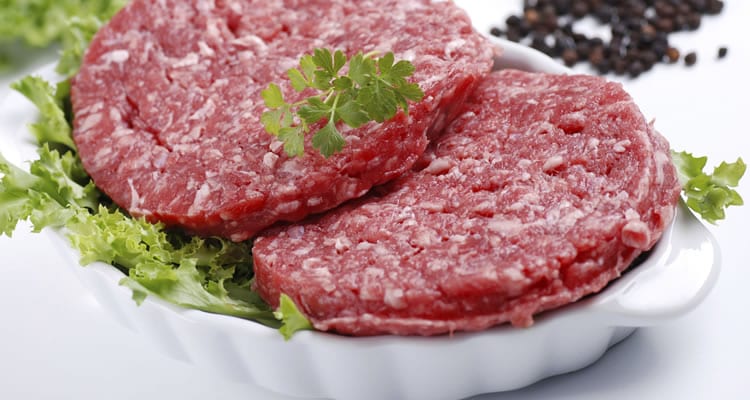

The U.S. Department of Agriculture’s Food Safety and Inspection Service (FSIS) has announced an ongoing investigation of E. coli O157:H7 illnesses, the latest of which was reported on June 25, 2014. Whole Foods Market, in cooperation with the Massachusetts Department of Public Health (MDPH), the FSIS, and the Centers for Disease Control and Prevention (CDC), is conducting the recall of hundreds of pounds of ground beef due to the discovery of a link between consumption of Whole Foods Market ground beef and at least three E. coli illnesses, all of who presented with E. coli O157:H7 between June 13th and 25th. Interviews determined that the victims had consumed ground beef purchased from one of two locations of Whole Foods Market, including locations in South Weymouth and Newton, both in Massachusetts.
According to the FSIS announcement, the investigation into the outbreak was finally able to link the three cases after additional testing determined, on August 13, that the three cases were linked-the bacteria were a PFGE match providing a 99.9% probability that the illnesses are linked to a single source. The trace-back investigation is ongoing, attempting to trace the product beyond the two Whole Foods Market locations to a common supplier, and to find the source of the infection. According to E. coli lawyer Ron Simon, “the fact that individuals who bought the same product from two different locations of Whole Foods Market became ill confirms that the source of the E. coli infection was not localized to one Whole Foods Market, which is concerning. This bacteria is obviously being spread through a supply chain, which means many more individuals may have been exposed to E. coli. Investigators need to find the source to prevent this outbreak from spreading to other locations.”
The ongoing concern, even two months after the latest victims presented with the symptoms of E. coli O157:H7, is due to the fact that much of the recalled product may yet be in consumers’ freezers. Freezing is not sufficient to kill E. coli O157:H7, which is a potentially deadly bacteria that is noted for its bloody diarrhea in addition to the severe abdominal cramps it causes. E. coli O157:H7 is also linked to kidney failure, or hemolytic uremic syndrome (HUS), which can be life-threatening and lead to life-long dependence on kidney transplants and often leads to extended use of dialysis.
