

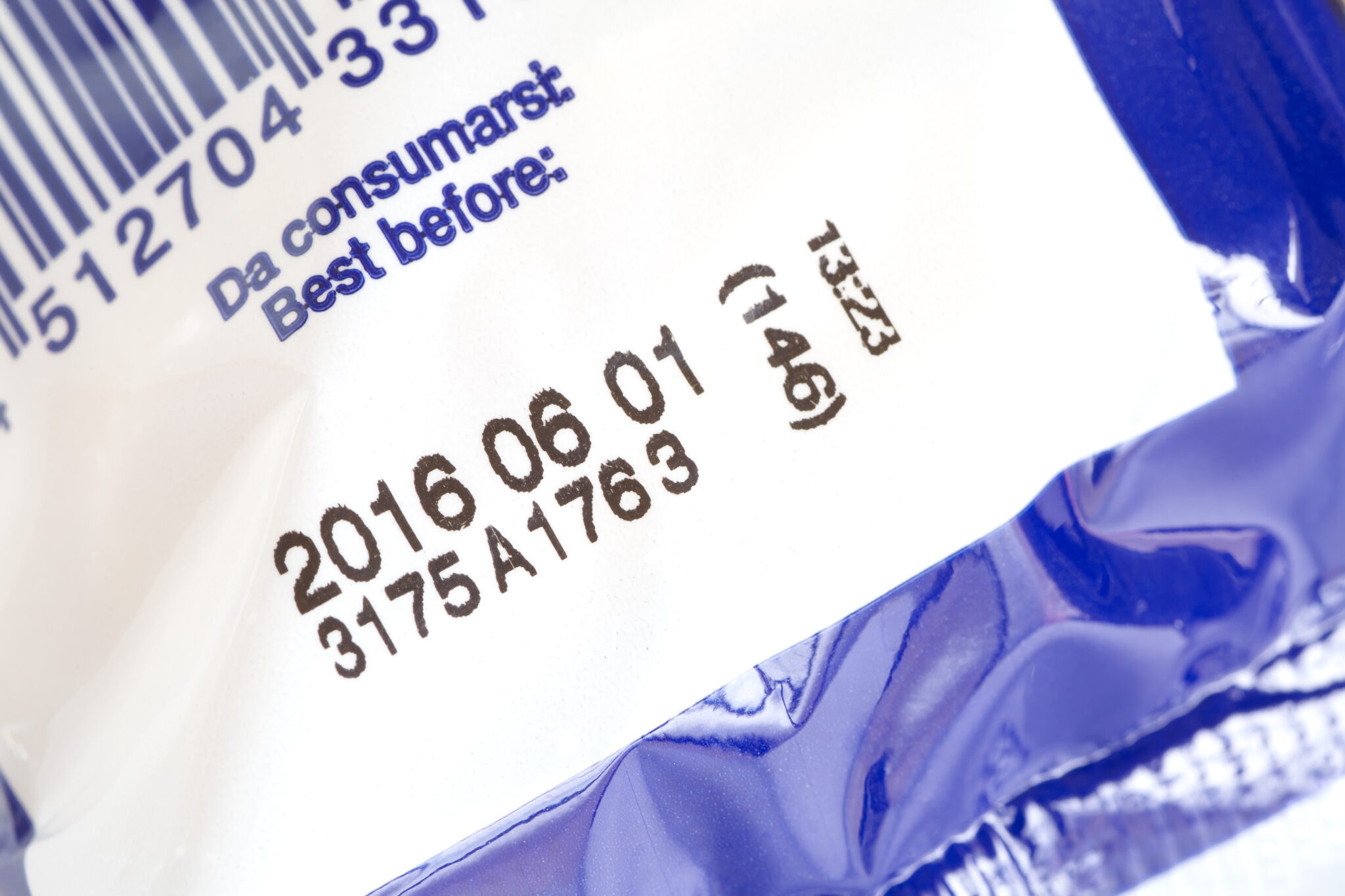

The big question for consumers browsing their refrigerator or cupboard is what to make of sell-by dates and use-by dates. Together, these are often referred to as expiration dates. The FDA has some suggestions, such as the fact that meat “begins” to deteriorate after the expiration date, but nothing is as clear-cut as, say, internal cooking temperatures. When the FDA says cook to an internal temperature of 165, that is pretty much the end of the story. The FDA does not help much, however, on sell-by dates – and in fact, only requires them on baby food.
So how should consumers weigh a sell-by date? Keep in mind the sell-by date is created by the manufacturer, and is intended to have the item consumed at peak quality – not as long as it is safe. And again, the FDA is not very helpful here, stating: “The quality of perishable products may deteriorate after the date passes; however, such products should still be safe if handled properly. Consumers must evaluate the quality of the product prior to its consumption to determine if the product shows signs of spoilage.”
Here are some safe tips. First, treat any food as if it did not have a sell-by date if it is “perishable.” Items such as meat, poultry, egg and dairy products are inherently dangerous berceuse they are mediums in which food borne pathogens are likely to take root and grow rapidly at the proper temperature. Keeping such foods (often with high moisture contents) at cold temperatures during storage will preserve their shelf-lives. Looking at color and firmness, wile considering smell and coloration, are important. Milk products, for example, will usually last at least as long as their sell-by date, but not if the refrigerator is failing to keep a below-40 temperature. Sometimes yogurt and cream can go bad in short-order, so a sell-by date is more a guide. In very cold conditions, the sell-by date may be extended for the same reasons. For meat, smell and color can often tell a consumer if the meat has “turned a corner.”
The FDA primer on use-by dates has the following information:
- A “Best if Used By/Before” date indicates when a product will be of best flavor or quality. It is not a purchase or safety date.
- A “Sell-By” date tells the store how long to display the product for sale for inventory management. It is not a safety date.
- A “Use-By” date is the last date recommended for the use of the product while at peak quality. It is not a safety date except for when used on infant formula as described below.
- A “Freeze-By” date indicates when a product should be frozen to maintain peak quality. It is not a purchase or safety date.
According to the University of Connecticut, only an Expiration Date signals food is no longer fit for consumption. UC says: “Expiration Date: If you have a product with an expired expiration date, throw it out. While other dating terms are used as a basic guideline, this one is absolute.
Most of the time, except for baby formula, terms that indicate a product should be sold, frozen, or eaten by a certain date, are suggestions, and eating those foods after such a date (within reason) is usually though of as safe. In fact, that is why foods past said date are often still sold in clearance bins (although some stores have a policy of never doing so). It is also why many “expired” foods are still used by food banks and in homeless kitchens. Just like other food, it is rarely a health risk because how a product is handled is often more important than how long it is handled, again, within reason.
Using foods approaching or after their “sell-by” dates is up to consumer choice, but employing the same criteria for purchasing any food, regardless of expiration date, is always recommended – looking carefully at the color, firmness, odors, and if the packaging is intact. And remember, most dangerous pathogens are introduced into food through improper handling, and these cannot be seen, smelt, or tasted!
