


How Long Do Foodborne Bacteria Survive on Kitchen Surfaces—and Why Cleaning Isn’t Always Enough
Food poisoning is often imagined as a problem that begins and ends with food itself. Undercooked meat, unwashed produce, or improper storage tend to receive most of the attention. Yet one of the most persistent and underestimated sources of foodborne illness exists outside the food entirely. Kitchen surfaces, utensils, and everyday tools quietly harbor bacteria long after food preparation ends, allowing contamination to spread without being noticed.
Foodborne bacteria are remarkably resilient. Once transferred from food to a surface, they can survive for hours, days, or even longer depending on conditions. Cutting boards, countertops, sinks, sponges, dishcloths, refrigerator handles, and faucets all provide opportunities for bacteria to persist. These surfaces may look clean, but appearance alone offers no indication of microbial safety.
Moisture plays a significant role in bacterial survival. Damp environments allow bacteria to remain active longer, making items like sponges and dishcloths particularly risky. These tools are frequently used to wipe multiple surfaces, spreading bacteria rather than removing it. Because they are rarely dried completely between uses, they can become reservoirs of contamination.
Different materials also affect how long bacteria survive. Porous surfaces such as wood, plastic, and fabric can trap moisture and organic matter, creating ideal conditions for bacterial persistence. Even smooth surfaces like stainless steel or glass can harbor bacteria when microscopic scratches or residues are present. Once bacteria adhere to a surface, routine wiping may not be enough to remove them.
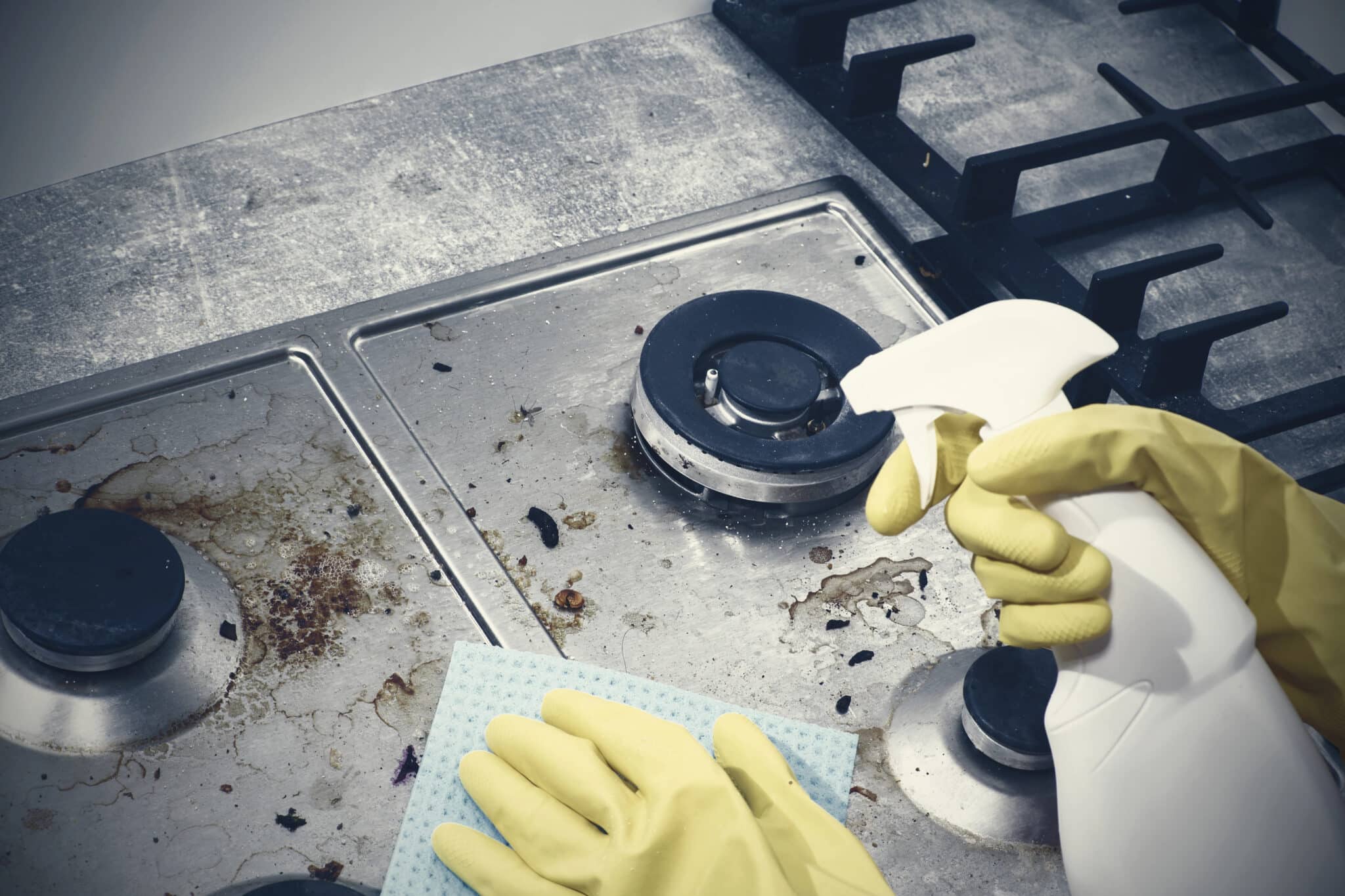
Cleaning methods are often insufficient because they focus on visible dirt rather than microbial removal. Wiping a surface with a damp cloth may spread bacteria across a larger area. Using the same sponge or towel repeatedly compounds the problem, redistributing contamination rather than eliminating it. Without proper sanitation, bacteria remain available to transfer onto hands, utensils, and food.
Cross-contamination frequently occurs during routine tasks. A cutting board used for raw meat may be rinsed quickly and reused for vegetables. A countertop wiped after food preparation may later be used to assemble ready-to-eat foods. In these moments, bacteria move silently from surface to food, bypassing cooking steps that would otherwise kill them.
Temperature influences bacterial survival but does not eliminate risk. Refrigerated environments slow bacterial growth, but many foodborne bacteria can survive cold conditions. Refrigerator shelves, drawers, and handles can become contaminated through contact with packaging or spills. Because these areas are rarely cleaned frequently, bacteria can persist and spread to other foods.
Hands act as a critical link between surfaces and food. Touching contaminated surfaces transfers bacteria to the skin, where they can then be passed to food during preparation or eating. Handwashing is often inconsistent, especially when tasks are interrupted or performed quickly. Even brief contact is enough to facilitate transfer.
One of the most challenging aspects of surface contamination is that bacteria do not need favorable conditions to survive for short periods. Even dry surfaces can harbor bacteria long enough to cause illness. Once food comes into contact with these surfaces, bacteria are reintroduced into an environment where they can grow.
Another overlooked factor is cleaning frequency. Many kitchens are cleaned at the end of cooking rather than during preparation. This allows bacteria to spread throughout the cooking process. Items like spice containers, appliance handles, and phones are touched repeatedly with contaminated hands, turning them into secondary sources of exposure.
Dishwashing practices also influence bacterial survival. Washing utensils or cutting boards in lukewarm water or without sufficient detergent may remove food residue but leave bacteria behind. Air-drying on contaminated racks or towels can reintroduce bacteria after washing. Without proper drying and sanitation, cleaned items may still pose a risk.
Bacteria are particularly adept at surviving in microscopic niches. Small cracks, seams, and crevices in kitchen tools protect bacteria from cleaning agents. Over time, repeated contamination builds up, allowing bacteria to persist even in kitchens that appear well-maintained. This persistence explains why food poisoning can occur even when basic cleanliness seems adequate.
Many people associate food poisoning with major mistakes rather than cumulative exposure. In reality, repeated low-level contamination increases the likelihood of illness. Each transfer may involve only a small number of bacteria, but over time, exposure adds up. Because symptoms may not appear immediately, the role of surface contamination is often overlooked.
The survival of foodborne bacteria on kitchen surfaces challenges the assumption that cleanliness equals safety. True food safety requires not just cleaning, but effective sanitation practices that reduce bacterial presence. Without attention to how bacteria survive and spread beyond food itself, even careful cooks remain vulnerable.
Understanding how long bacteria can persist on kitchen surfaces highlights the importance of consistent hygiene throughout food preparation. Food poisoning is rarely caused by a single mistake. More often, it results from everyday interactions between hands, surfaces, and food. Recognizing these invisible pathways is essential to reducing risk in environments where meals are prepared daily.
