

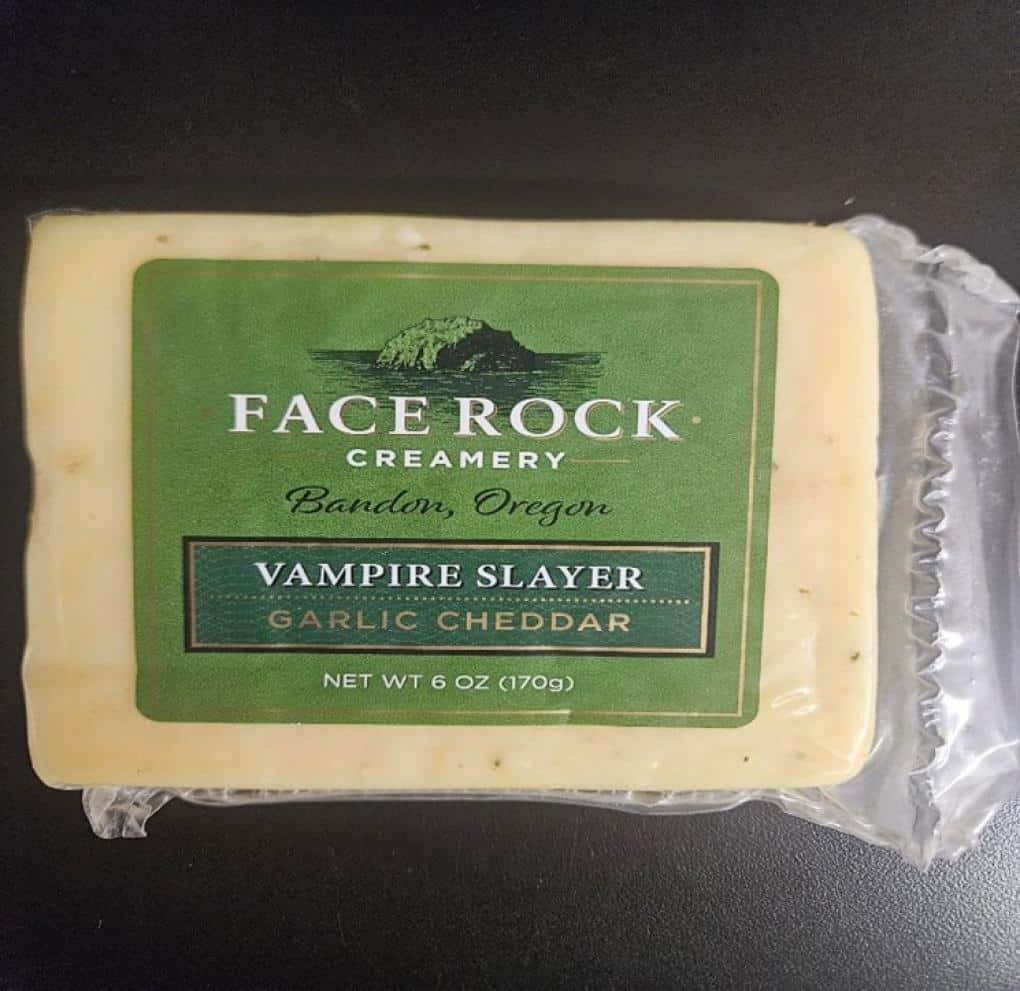

Face Rock Creamery Recalls Vampire Slayer Garlic Cheddar Over Possible Listeria Contamination
Face Rock Creamery LLC of Bandon, Oregon announced a voluntary recall on November 14, 2025 of 16 units of its 6-ounce Vampire Slayer Garlic Cheddar blocks after environmental testing by the U.S. Food and Drug Administration detected Listeria monocytogenes in the processing area where the cheese was packaged. The recall is precautionary: finished product samples have not tested positive, but the presence of Listeria in the packaging environment prompted the company and regulators to remove the small number of sold units from circulation and alert consumers. The FDA has posted the company’s announcement and product photos so shoppers can identify affected packages.
Which Product Was Recalled
Face Rock Creamery’s announcement makes the scope of the recall simple and narrow. The affected item is Vampire Slayer Garlic Cheddar cheese, sold in 6-ounce units bearing UPC 8 512222 00547 8 with a use-by date of 11/04/26. Approximately 16 units of this product were sold exclusively at the Face Rock Flagship retail store at 680 2nd St. SE, Bandon, Oregon between November 10 at 3:30 p.m. PT and November 13 at 3:30 p.m. PT. If you purchased the product in that window and the UPC and use-by date match, the company asks that you either destroy the product or return it to the store for a full refund.
Because distribution was limited to the company’s retail outlet and the number of units is small, the exposure footprint is narrow. That important fact helps public-health teams prioritize follow-up and makes consumer action much easier: check your refrigerator for the UPC and date and return or discard any matches.
How the Issue Was Discovered
The recall began after an FDA environmental sample taken in Face Rock Creamery’s packaging area tested positive for Listeria monocytogenes. Environmental sampling is a routine part of regulatory inspections and modern quality programs; it looks for pathogens on floors, drains, equipment, and other non-food contact zones that can act as reservoirs and eventually contaminate finished product. In this case Face Rock notified the FDA that the environmental positive had been found and cooperated with immediate actions. The company’s public statement stated “We initiate this recall due to the FDA environmental sample identified the presence of Listeria monocytogenes in the processing area where this cheese was packaged.”
Face Rock Creamery also noted that finished product had not tested positive. That distinction is meaningful: an environmental finding signals potential risk, and prudent manufacturers and regulators commonly use it as a trigger for recall when even a small number of finished units have reached consumers and cross-contamination cannot be fully excluded.
Why Listeria Is a Special Public Health Concern
Listeria monocytogenes differs from many other foodborne bacteria in ways that increase its public-health threat. It can survive and even multiply at refrigeration temperatures, making chilled ready-to-eat foods such as soft cheeses, deli meats, smoked fish, and packaged salads especially vulnerable. Listeria can persist in food-processing environments by forming biofilms on equipment, in drains, and in cracks where cleaning is difficult. When an environmental niche goes unnoticed, it can intermittently contaminate finished foods over long periods.
Public-health agencies consistently warn that Listeria infections can be severe for particular groups. The FDA’s recall announcement restates that risk in clear terms, “Listeria monocytogenes can cause serious and sometimes fatal infections in young children, frail or elderly people, and others with weakened immune systems. Although healthy individuals may suffer only short-term symptoms such as high fever, severe headache, stiffness, nausea, abdominal pain and diarrhea, listeria infection can cause miscarriages and stillbirths among pregnant women.” That language is the reason recalls for even small exposures are taken seriously.
The Centers for Disease Control and Prevention provides similar guidance on symptoms and timing; listeriosis can present days to many weeks after exposure and requires clinical vigilance in at-risk patients.
Who Is At Greatest Risk and Why Rapid Action Matters
While many healthy people exposed to small amounts of Listeria may experience a short febrile gastroenteritis, invasive listeriosis occurs when the bacteria spread beyond the gut to the bloodstream or the central nervous system. Pregnant women, people aged 65 and older, and those with weakened immune systems are disproportionately likely to develop invasive disease. In pregnancy, maternal illness may be mild but can cause miscarriage, stillbirth, premature labor, or life-threatening infection in the newborn.
Because of that elevated risk, even a small potential exposure in a dairy product, especially one designed to be eaten without further cooking, triggers prompt recall actions and strong consumer advisories. The company and FDA are working to ensure the limited number of distributed units are returned or destroyed and that any surfaces or utensils that contacted the cheese are cleaned and sanitized.
What Consumers Should Do Now
If you think you may have purchased or received the recalled Vampire Slayer Garlic Cheddar:
- Check the UPC and use-by date. Confirm the product UPC is 8 512222 00547 8 and the use-by date is 11/04/26. If both match, the product is included in the recall.
- Do not consume the product. Destroy it or return it to Face Rock Flagship store for a full refund. The company provided contact information and urged customers to bring the product back or call with questions.
- Sanitize surfaces and utensils. If the cheese contacted cutting boards, knives, countertops or containers, wash them with hot, soapy water and sanitize the area. For porous cutting boards or worn utensils, consider replacing them.
- Watch for symptoms and seek care. If you or someone in your household develops fever, muscle aches, headache, stiff neck, confusion, loss of balance, diarrhea, severe nausea, or signs of invasive infection, particularly pregnant people, older adults, or immunocompromised persons, contact a healthcare provider and mention possible Listeria exposure from the recalled cheese. Symptoms can appear within a few days or as long as several weeks after exposure.
Reporting suspected illnesses to your local health department helps public-health investigators determine whether any illnesses link to the recalled product.
What Retailers and Foodservice Operators Should Do
Retailers and foodservice businesses that sold or received inventory of Vampire Slayer Garlic Cheddar should:
- Quarantine and remove any remaining units bearing the UPC and use-by date from shelves and storage.
- Notify customers who purchased the product if they can, using receipts, loyalty records, or purchase logs. Because distribution was limited to the Face Rock retail store, this step is straightforward if records exist.
- Sanitize back-of-house surfaces, refrigeration cases, cutting boards, utensils, and storage bins that may have contacted the product. Environmental positives often indicate the need for deep cleaning and verification testing before resuming regular operations.
- Document disposal or returns for regulatory traceability. Retailers should also work with the company and the FDA where appropriate on any investigation requests.
How Processors Detect and Control Listeria
Environmental sampling is a critical surveillance tool. Processors use a combination of food contact and non-food contact swabs in routine testing programs; positives in non-food contact zones such as drains, floor joints, and equipment exteriors often precede product contamination. A standard industry response to an environmental positive includes halting production, intensifying cleaning and disinfection, performing follow-up environmental testing, and assessing whether any finished product may have been exposed.
For small artisan creameries like Face Rock, control measures that matter include:
- Robust sanitation protocols that target drains, floors and hard-to-clean niches where Listeria biofilms form.
- Zoning that separates raw material areas, processing rooms and packaging to reduce cross-contamination risk.
- Validated cleaning agents and contact times for sanitizers and strict verification after cleaning.
- Employee training in hygienic practices, sick-worker policies, and effective cleaning techniques.
- Regular environmental monitoring with swift corrective action for any positive findings.
- Holding back product for a short period to allow environmental testing results to be reviewed before broad retail distribution, particularly during small production runs.
Smaller producers sometimes lack the in-house microbiology resources of large firms, but working closely with state laboratories or third-party testing providers can close that gap.
Laboratory Testing and Public Health Follow Up
When an environmental sample is positive, regulators often seek additional swabs and may request finished-product testing. In this instance, the FDA’s environmental finding triggered a company recall even though finished product had not tested positive; the recall is a precautionary consumer protection measure. Public-health investigators will likely review the company’s sanitation logs, sample additional environmental sites, and may test retained product from the same production day. If the investigation finds additional positives or identifies a root cause, the recall could expand.
If any illnesses are reported, clinical isolates from patients would be compared by molecular methods such as whole-genome sequencing to any isolates recovered from the facility to determine whether a match exists (CDC.gov). That kind of genetic match is the strongest possible link between a processing environment and human disease.
Regulatory Context and Transparency
The FDA posts company recall announcements and product photos as a public service; the agency does not endorse the company but acts to inform consumers quickly. Local public-health departments also post notices and can support affected consumers and retailers. Face Rock Creamery’s public statement underscores cooperation with regulatory authorities and the company’s intent to remediate the processing environment. The firm provided contact information for consumers who have questions and pledged transparency while corrective actions proceed.
Small recalls like this one are not uncommon and often reflect a precautionary approach: detect an environmental problem, remove the small number of finished units that could have been exposed, and verify the processing environment is free of pathogens before resuming normal production.
Broader Lessons For Consumers and Producers
Several practical lessons come from events like this:
- For consumers: Check recall notices periodically, especially for specialty or local artisan foods. If you consume high-risk ready-to-eat dairy items and are pregnant, elderly or immunocompromised, consider avoiding them unless their production controls and storage are clear. Keep your kitchen and refrigerator clean and promptly dispose of recalled products.
- For producers: Environmental monitoring and rapid, transparent action protect both public health and brand reputation. Small producers should budget for routine microbiological surveillance and maintain strong supplier and sanitation programs.
- For regulators: Posting company announcements and product photos quickly helps consumers identify recalled items and prevents further exposure, especially when distribution is localized. Regulators and industry alike benefit from early information sharing so traceback and corrective steps proceed without delay.
What to Expect Next
Face Rock Creamery and regulators will almost certainly pursue a sequence of steps typical after an environmental positive:
- Expanded environmental testing to map where the organism persists in the facility.
- Root-cause analysis to determine whether equipment design, sanitation gaps, employee practices, or incoming ingredients allowed the organism to establish itself.
- Intensified cleaning and verification using validated sanitizers and follow-up swabbing to confirm negative results.
- Hold and test policies revised to ensure retained product is tested or withheld until environmental controls are verified.
- Staff retraining and possible facility modification where plumbing, drains, or airflow promoted microbial niches.
- Public updates if new findings change the scope of the recall or if expanded remediation is required.
Because the initial recall covered a very small number of units and the product was sold at a single retail outlet, public-health teams will be able to focus on rapid verification and narrowly targeted follow up rather than a broad national recall.
Analysis & Next Steps
What’s New: Face Rock Creamery voluntarily recalled 16 units of Vampire Slayer Garlic Cheddar (6-oz, UPC 8 512222 00547 8, use-by 11/04/26) after an FDA environmental sample detected Listeria monocytogenes in the processing area where the product was packaged. The recall is precautionary; the finished product has not tested positive.
Why It Matters: Listeria can survive and grow at refrigeration temperatures and is associated with severe outcomes in pregnant people, older adults and immunocompromised persons. Ready-to-eat dairy requires rigorous environmental controls because contamination may not be eliminated by a consumer cooking step. Early detection via environmental sampling and swift recall actions limit exposures and protect vulnerable consumers.
Who’s Affected: Consumers who purchased Vampire Slayer Garlic Cheddar at Face Rock’s Bandon retail store between November 10 and 13, 2025 and who still have the product are directly affected. Pregnant people, older adults and people with compromised immune systems are the highest-risk groups if exposure occurred. The company’s staff and facility operations will also be subject to follow-up testing and possible remediation.
What To Do Now:
- Consumers: Check your package UPC and use-by date; do not eat the product if it matches. Return the product to Face Rock Flagship store for a refund or dispose of it safely, then sanitize surfaces and utensils that contacted the cheese. Seek medical advice promptly if you experience symptoms consistent with listeriosis and inform your clinician about possible exposure.
- Retailers: Quarantine any suspect inventory, remove affected product from sale, notify customers who may have purchased the product, and sanitize fixtures and utensils. Document actions for traceability.
- Producers: Use this event as a reminder to review environmental monitoring plans, sanitation validation, zoning, and employee training. Consider holding small retail lots until environmental test results confirm the facility is clean.
- Regulators and public-health authorities: Continue targeted environmental sampling and oversight of the remediation plan. Communicate updates to the public and provide technical assistance to the producer to eliminate residual risk.
Final Note
This recall illustrates how a vigilant environmental sampling program and rapid communication can stop potential exposures before they widen. For consumers the key action is simple: check the UPC and use-by date, do not eat the product if it matches, and return or dispose of it. For small producers the lesson is to invest in routine environmental monitoring, rigorous sanitation, and swift corrective action when positives appear. Transparency, like Face Rock Creamery’s prompt recall and cooperation with the FDA, protects public health and preserves consumer trust while technical fixes are implemented. For the official recall text, product photos, and company contact information consult the FDA recall posting.
