


Is It Safe to Eat Salmon or Steak That Is Cooked Rare or Medium Rare? What About Salmonella and E. coli?
For many people, the appeal of a perfectly cooked steak or a delicately seared piece of salmon lies in its texture and flavor. A rare or medium-rare steak is often associated with tenderness and richness, while lightly cooked salmon is prized for its buttery consistency. Yet these preferences often come with an undercurrent of concern: is eating meat or fish that isn’t fully cooked actually safe? And how do bacteria like Salmonella and E. coli factor into that risk?
The answer depends on the type of food, how it was handled before cooking, and what happens during preparation. Understanding how bacteria behave in meat and fish helps explain why some foods are considered safer to eat undercooked than others—and why certain risks remain even when a meal looks and tastes perfect.
Why Cooking Matters for Food Safety
Cooking is one of the most effective ways to kill harmful bacteria. High heat disrupts bacterial cell structures and deactivates toxins, making food safer to consume. When food is not cooked thoroughly, some bacteria may survive and cause illness.
However, bacteria are not evenly distributed in all foods. Where bacteria tend to live—and how they get there—plays a major role in determining whether eating something rare or medium rare carries significant risk.
Steak and E. coli: Why the Cut Matters
When it comes to beef, the difference between whole cuts and ground meat is critical. E. coli, particularly Shiga toxin–producing strains, typically live on the surface of meat rather than deep inside the muscle. This means that for an intact cut of beef, such as a steak, bacteria are usually limited to the exterior.
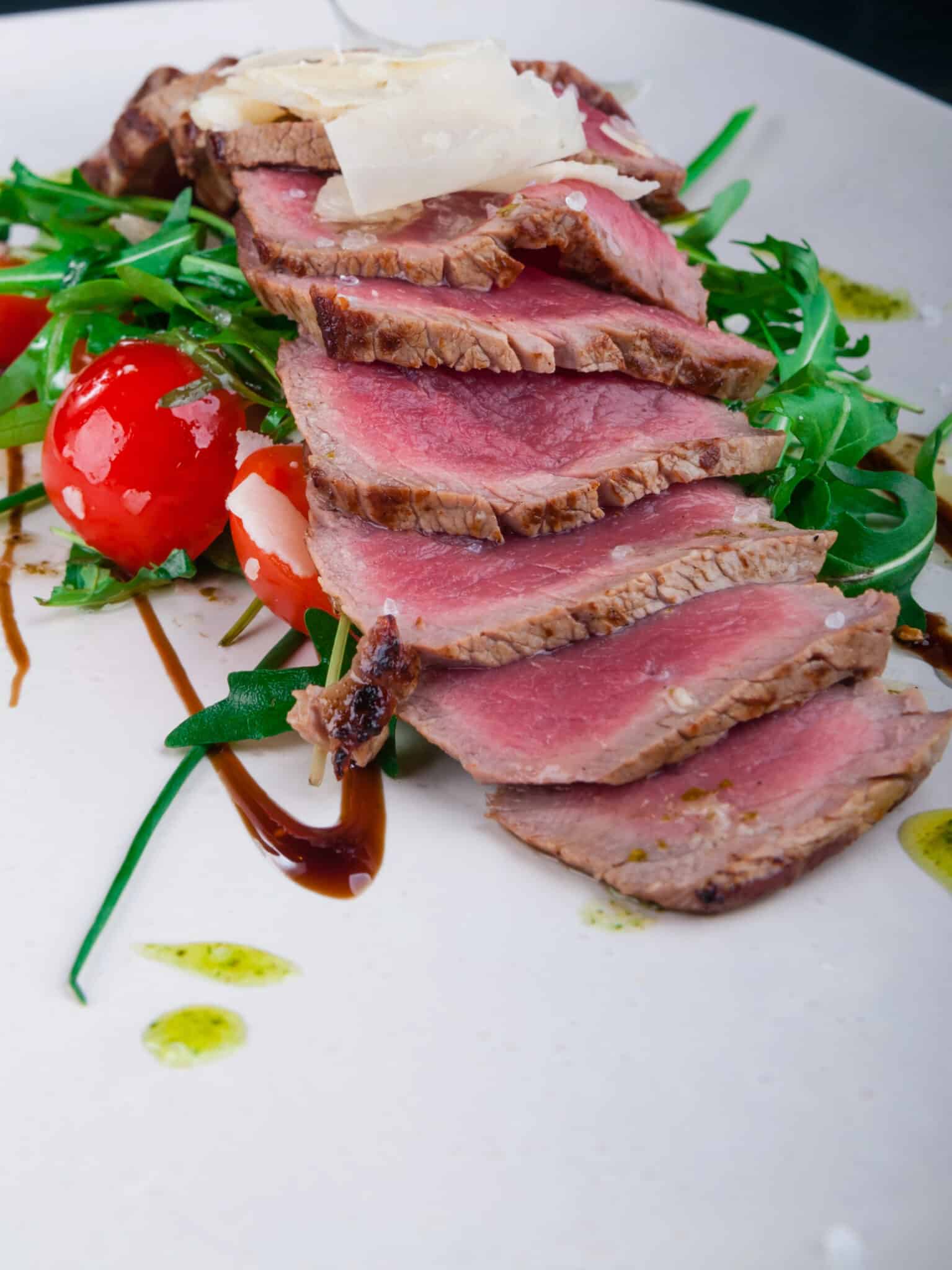
When a steak is cooked, even briefly, the surface reaches temperatures high enough to kill bacteria. The interior, which remains rare or medium rare, is generally not exposed to contamination as long as the meat has not been pierced, mechanically tenderized, or improperly handled. This is why many food safety experts consider rare or medium-rare whole steaks relatively low risk when they are sourced and prepared correctly.
The risk increases when the structure of the meat changes. Ground beef, for example, mixes surface bacteria throughout the product, which is why it must be cooked thoroughly. Similarly, steaks that have been mechanically tenderized or injected with marinades can carry bacteria into the interior, making undercooking more dangerous.
Salmon and Salmonella: A Different Set of Risks
Fish, including salmon, present a different safety profile. While E. coli is more commonly associated with beef, Salmonella can contaminate a wide range of foods, including poultry, eggs, produce, and seafood. Salmon can become contaminated during harvesting, processing, or handling, especially if it comes into contact with contaminated water or surfaces.
Unlike whole cuts of beef, fish flesh does not offer the same protection against internal contamination. Bacteria can be present on the surface and within the flesh, particularly if the fish has been improperly stored or handled. Lightly cooking salmon may not raise the internal temperature enough to kill all bacteria, increasing the risk of illness.
That said, not all undercooked salmon carries the same level of risk. High-quality fish intended for raw consumption, such as sushi-grade salmon, is handled under strict conditions designed to reduce bacterial and parasitic hazards. Even then, risk is reduced—not eliminated.
Why Appearance Can Be Misleading
One of the challenges with foodborne bacteria is that they do not alter the taste, smell, or appearance of food. A rare steak or lightly cooked salmon can look, smell, and taste excellent while still harboring harmful pathogens. This makes visual inspection unreliable as a safety measure.
Temperature is the only reliable indicator that bacteria have been reduced to safer levels. Without a thermometer, it can be difficult to know whether food has reached a point where bacteria are unlikely to survive.
Who Should Be More Cautious
While healthy adults may tolerate low levels of bacteria without severe consequences, certain groups are far more vulnerable. Older adults, young children, pregnant women, and people with weakened immune systems face a higher risk of serious illness from Salmonella and E. coli. For these individuals, the margin for error is much smaller.
For high-risk populations, even a small number of surviving bacteria can lead to severe complications. This is why food safety guidelines tend to err on the side of caution and recommend thoroughly cooking animal products.
Key Factors That Influence Safety
Several factors determine whether eating salmon or steak rare or medium rare is relatively safe or unnecessarily risky:
- Type of food (whole cut steak versus fish or ground meat)
- Source and quality of the product
- Storage and handling practices before cooking
- Cooking method and surface temperature
- Whether the food is intact or mechanically altered
These variables explain why blanket statements about undercooked food can be misleading. Context matters.
Balancing Preference and Risk
For many people, choosing how thoroughly to cook food is a balance between enjoyment and risk tolerance. A properly handled, whole-cut steak cooked rare may pose minimal risk for a healthy adult, while lightly cooked salmon carries more uncertainty due to the nature of seafood contamination.
Risk does not mean inevitability. Many people consume undercooked foods without becoming ill. However, understanding where the risk comes from allows for informed decisions rather than assumptions.
Why Food Safety Guidelines Exist
Public health recommendations are designed to protect the broadest range of people, including those most vulnerable to severe illness. While an individual may feel comfortable eating rare steak or lightly cooked fish, guidelines reflect worst-case scenarios rather than average outcomes.
These recommendations also account for the fact that consumers cannot see or control every step in the food’s journey. From processing facilities to home kitchens, each point introduces variables that can increase risk.
The Takeaway
Eating steak rare or medium rare can be relatively safe when the steak is an intact cut that has been properly handled and cooked on the surface. Salmon, on the other hand, presents different challenges, and eating it undercooked carries a higher risk of exposure to Salmonella and other pathogens unless it is specifically prepared for raw consumption under strict conditions.
Ultimately, food safety is not just about how food is cooked, but about understanding where risks come from and who is most affected by them. Knowing the difference empowers consumers to make choices that align with both their preferences and their health—without relying on myths or assumptions.
