


Holiday Catering: How One Mistake Can Spark a Major Outbreak
Holiday parties, office banquets, and family gatherings depend on caterers to deliver safe, delicious food at scale. Catering that feeds dozens or hundreds introduces operational complexity far beyond a home kitchen. Those complexities matter because a single slip, slow cooling, an underpowered warmer, a cross-contamination event, or a lapse in hand hygiene, can turn a festive banquet into a mass-illness incident.
Why Catered Holiday Events Are Uniquely Vulnerable
Catered events combine several risk multipliers:
- Large batches: Caterers prepare big volumes to serve many guests. Large pots and deep pans retain heat and are slow to cool. Improper cooling creates the perfect window for spores and bacteria to germinate and multiply. CDC investigators repeatedly find that “foods cooked in large batches and held at unsafe temperatures have been linked to outbreaks of C. perfringens food poisoning.”
- Long holding times: Buffets and service lines often expose food to the “danger zone” between 40°F and 140°F for extended periods. That range permits rapid bacterial growth for many pathogens and can turn safe food into a hazard in hours.
- Complex logistics: Transport from commissary to venue, multiple service stations, and variable electricity or equipment at the event site increase the chance that a dish is kept too warm or too cool.
- Multiple handlers and temporary staff. Seasonal kitchens rely on many short-term workers. Inconsistent training in hand hygiene, cross-contamination controls, and temperature monitoring raises risk.
- Diverse menus and consumer preferences. Roasts, gravies, rice, stuffing, and sauces are holiday staples; many of these are classic vehicles for Clostridium perfringens or Salmonella when mishandled.
Case Studies: How One Mistake Became Many Sick People
North Carolina Catered Thanksgiving Luncheon (2015)
Investigators documented an outbreak of Clostridium perfringens gastroenteritis after a catered Thanksgiving lunch. Around 40 people who attended the lunch developed diarrhea and abdominal cramping the following day. The MMWR “Notes from the Field” investigation concluded that food handling and hot-holding practices were likely responsible, and it stressed the importance of chilling large batches rapidly and maintaining holding temperatures. That outbreak is a classic example of how holiday catering, large quantities of roast or meat gravy held improperly, leads to C. perfringens illness.
Restaurant Thanksgiving Complaints and Lessons (2017)
A separate MMWR investigation found multiple transmission modes, including food and person-to-person spread, after patrons reported gastrointestinal illness following Thanksgiving service. The Tennessee investigation reinforced the role of temperature control and safe serving practices, and it illustrated how even a single service day can generate rapid, widespread exposure when controls slip (cdc.gov).
Large Institutional Outbreaks (various years)
Hospitals, schools, prisons, and long-term care facilities experience frequent C. perfringens outbreaks when cooked meats and gravies are prepared in bulk and cooled or held improperly. In one Los Angeles outbreak report, hundreds fell ill after an on-site banquet; rapid cooling and sanitation failures were implicated. Those institutional cases show the same mechanism at a larger scale.
Salmonella and Catering: Multiple Pathways
Salmonella outbreaks tied to catered events tend to show different failure modes. Contamination can come from undercooked poultry or eggs, cross-contamination from raw ingredients to ready-to-eat items, or infected food handlers. A number of Salmonella outbreaks (including outbreaks linked to catered meals, takeout, and home-delivery services in recent years) show the importance of thorough cooking, avoidance of cross-contact, and strict sick-worker policies. Recent investigations of Salmonella linked to home-delivery meal services and other commercial meal providers illustrate how modern supply chains and multi-brand distribution can broaden exposure when a contaminated item enters the finished menu.
The Microbiology in Plain Words
Clostridium Perfringens – This bacterium forms heat-resistant spores in raw meat and soil. Cooking destroys vegetative cells but not necessarily spores. When large roasts, stews, or gravies are cooked and then cooled slowly, spores can germinate and bacteria multiply to infectious levels. Infection typically causes diarrhea and cramping within 6–24 hours. The organism’s ecology explains why meats and gravies made in bulk at holiday feasts frequently appear in outbreak reports.
Salmonella – Many species and serotypes of Salmonella commonly contaminate poultry, eggs, and some produce. Infection often results from inadequate cooking, cross-contamination, or infected food handlers. Salmonella incubation ranges from 6 hours to several days; illness severity varies. Preventing Salmonella in catering hinges on adequate cooking to safe internal temperatures, preventing cross contact, and excluding sick employees.
Practical, Detailed Prevention Measures for Caterers
Preventing catastrophic outbreaks requires systemic attention to process controls. The following is a practical playbook for catering companies and event teams.
1. Production practices: build safety in, not on
- Plan batch size to equipment capacity. Avoid producing one enormous pot meant to be cooled whole. Scale batch size so it fits in available cooling equipment and allows rapid chilling.
- Portion hot product into shallow pans. Divide soups, gravies, and stews into shallow pans (no more than 2 inches deep) to increase surface area and speed cooling. Use ice baths for large pots and stir frequently until safe to refrigerate.
- Use rapid chill equipment. Blast chillers that can quickly bring product through the danger zone are an important capital investment for high-volume caterers. If not available, use ice baths and pre-chill holding units.
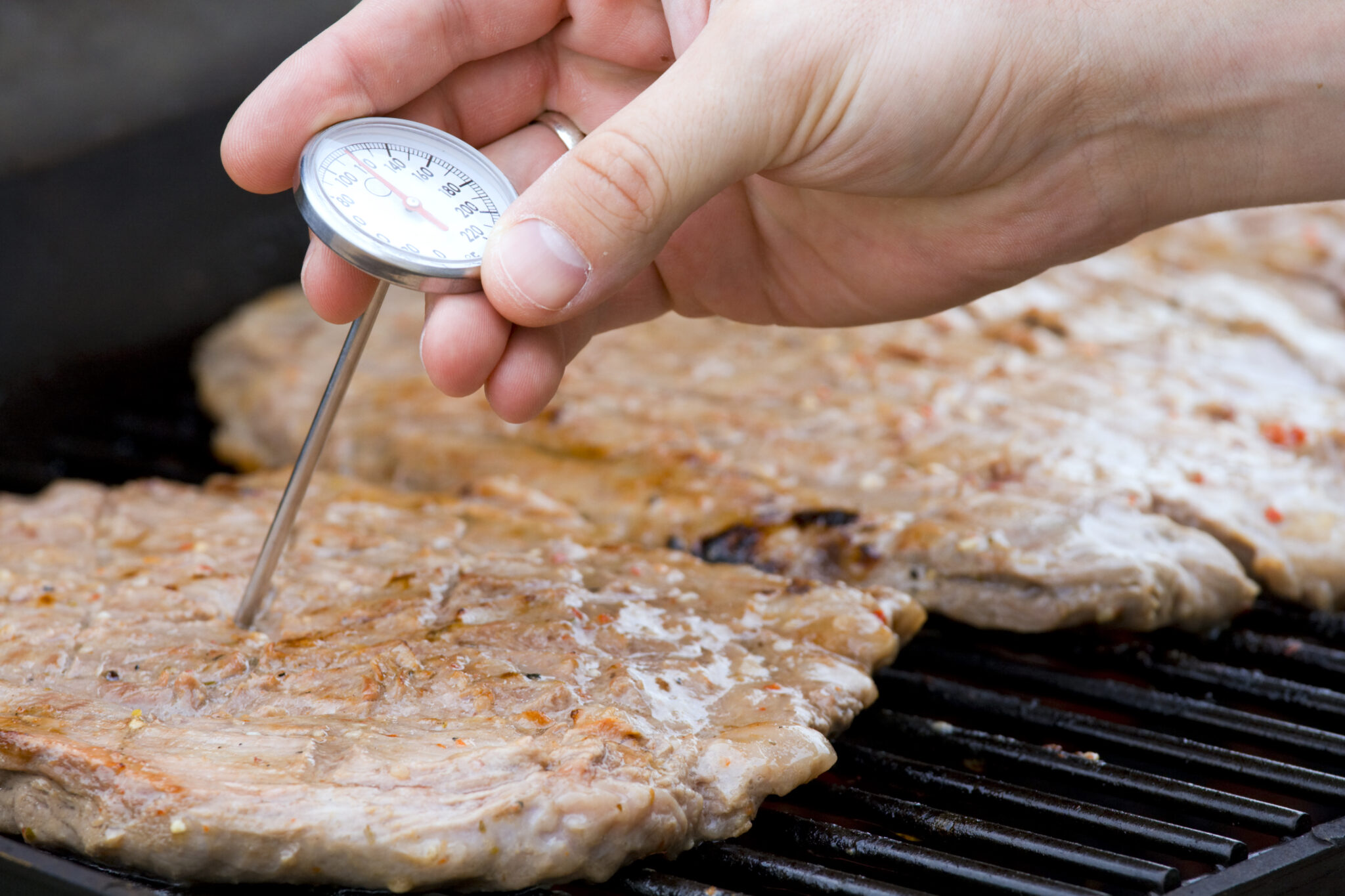
- Hold hot food hotter and cold food colder. Maintain hot holding above 140°F and cold holding at 40°F or below. Monitor holding temperatures continuously using calibrated probes connected to logs or alarms.
2. Transport controls: preserve the kill step
- Insulated hotboxes and refrigerated trucks. Transport in equipment that maintains safe temperatures; don’t rely on ambient heat or a short drive to avoid proper transport gear.
- Validate travel times. Test and record how long items stay in safe temperature ranges under real conditions. Build delivery schedules that prevent prolonged exposure.
- Separate raw and ready-to-eat loads. During transport, avoid storing raw meats above or alongside ready-to-eat salads or plated meals.
3. Service and on-site measures
- Design service lines to minimize holding. Use staged heating (small batches replenished from hot holding) rather than a single long buffet tray. Replace trays frequently rather than replenishing from cold storage without reheating.
- Provide abundant handwashing stations. If there is an animal element or guest interaction (some holiday events include petting or interactive demos), place handwashing and sanitizer stations immediately outside those areas and adjacent to food.
- Assign temperature monitors. Someone on the service team should check and log temperatures every 30–60 minutes. Equip that person with a calibrated probe thermometer.
- Manage leftovers safely. After service, portion leftovers into shallow pans for rapid chill. Label everything by time and lot to support traceability.
4. Human factors: train, verify, and enforce
- Sick-worker policy. No one handling food should work while ill with vomiting, diarrhea, or fever. Require daily health checks and enforce paid sick leave to reduce on-the-job presenteeism.
- Seasonal staff training. Run a mandatory, short certification for temporary hires on hygiene, cross-contamination avoidance, and temperature control.
- Sanitation and zoning. Separate raw product prep from ready-to-eat plating. Sanitize cutting boards, knives, and prep tables between tasks and use color-coded equipment to prevent cross contact.
5. Traceability and product control
- Retain control samples. Hold back small control samples of finished lots for a defined period after service so investigators can test product if an outbreak is reported. Many outbreaks become unsolvable when no retained samples exist.
- Supplier verification. For high-risk ingredients (eggs, poultry, bulk rice), verify supplier testing and consider additional lot testing for pathogen indicators when feasible.
Response Planning: What To Do If People Start Getting Sick
Even the best kitchens should prepare for a failure scenario:
- Have a recall and incident response plan. Document roles (operations, communications, legal), contact lists for public-health agencies, and procedures for halting distribution.
- Preserve evidence. Save leftover product, control samples, packaging, invoices, and temperature logs. Photograph storage and transport conditions.
- Notify health authorities promptly. Early cooperation speeds public-health investigations and can limit reputational damage.
- Communicate transparently. Tell customers and event hosts what you know, what steps you are taking, and how you will support affected guests. Timely, factual communication often reduces panic and lawsuits.
Checklist For Event Hosts Who Contract A Caterer
Hosts have leverage and responsibility. Ask these questions before hiring:
- Does the caterer use blast chillers or validated cool-down methods?
- How do they transport hot and cold items? Do they use temperature-controlled vehicles?
- What training do temporary staff receive? Do they have a written sick-worker policy?
- Will they retain control samples and temperature logs for the event?
- Can they provide a certificate of insurance and references from recent large events?
Ask the caterer to sign temperature and handling commitments in the contract. Demand that hot items be served in a manner that keeps them above 140°F or replenished from hot holding rather than sitting on the buffet all day.
Why Regulators Focus on Catering and Holidays
Data and outbreak reports show C. perfringens and other foodborne illnesses spike during holidays when large-batch cooking is common. CDC and foodsafety.gov explicitly note that institutional and catered events are frequent sites of C. perfringens outbreaks and that failure to chill and hold foods safely creates predictable risk. Regulators therefore prioritize preventive guidance and inspections during holiday seasons and expect caterers to use validated cooling, holding, and transport practices.
Real-World Impact: Costs Beyond Illness
Outbreaks at catered events carry broad consequences:
- Human cost. Hospitalizations, lost work, and, in severe outbreaks, long-term health consequences. Clostridium perfringens rarely causes death, but severe Salmonella infections can be life-threatening in vulnerable guests.
- Financial cost. Lawsuits, recall logistics, lost contracts, increased insurance costs, and remediation of facilities or equipment.
- Reputational damage. A single widely reported event can sink a catering company’s bookings for months or longer.
Those tangible risks make investment in prevention the prudent, not the optional, business decision.
Implementation Roadmap For Caterers – 30/60/90 days
30 days (immediate):
- Audit current cooling and transport equipment. Purchase or rent insulated hotboxes and refrigerated transport if gaps exist.
- Institute mandatory pre-event checklists requiring temperature verification and control sample retention.
- Run seasonal staff short training and enforce a written sick-worker policy.
60 days:
- Standardize shallow-pan cooling protocols and document blast chilling or ice bath procedures. Validate that staff can execute the methods under service conditions.
- Upgrade thermometer calibration schedules. Set alarm thresholds and escalation paths.
- Draft a crisis communications plan and legal checklist for rapid response.
90 days (longer term):
- Invest in blast chiller or commercial rapid-cool equipment if volume justifies it.
- Implement digital temperature logging with cloud backup for transport and holding equipment.
- Conduct a full third-party food safety audit, including environmental sampling for niches and drains.
Analysis & Next Steps
What’s New: Recent outbreak surveillance and seasonal alerts show C. perfringens continues to cause clustered illness associated with catered and large-batch cooking events, especially around holidays. Regulators emphasize temperature control, rapid chilling and staff training. Outbreaks tied to modern meal services and multi-brand supply chains also remind the industry that Salmonella can spread through both cooking failures and contamination of distributed products.
Why It Matters: Catering events amplify a single failure into many sick people in hours. Vulnerable populations (young children, older adults, pregnant people, immunocompromised guests) face higher complication risk. Preventing such events protects public health, preserves business continuity, and avoids legal and reputational harm.
Who’s Affected: Caterers, venue operators, event planners, corporate clients, and hosts who rely on outside food are directly responsible for keeping guests safe. Guests at events that serve large numbers of people are the primary at-risk group. Public-health departments, clinical laboratories and hospitals become involved when outbreaks occur and must have access to retained samples and logs for rapid investigation.
What To Do Now:
- Caterers: Enforce shallow-pan cooling, validated transport, continuous temperature monitoring, retained control samples, and mandatory sick-worker policies. Calibrate thermometers and use digital logs for accountability.
- Hosts and planners: Require caterers to share temperature control protocols, ask about blast-chill or validated cooling methods, and confirm insurance and recall plans before contracting. Include clauses in contracts that require compliance with food-safety plans.
- Public-health and regulators: Prioritize outreach and inspections for seasonal high-volume caterers and provide clear, actionable guidance at the local level on cooling and holding practices. Encourage industry to adopt control-sample retention policies to improve outbreak traceability.
Final Note
Holiday catering does not have to be risky. The scientific lesson is straightforward and operationally tractable: plan smaller batches, chill fast, hold at safe temperatures, train staff, and preserve evidence. A single operational discipline change, portioning hot food into shallow pans and monitoring temperatures, prevents the most common failure mode that turns a single dinner into a major outbreak. The investment in good processes pays back in lives protected, lawsuits avoided and business preserved.
