

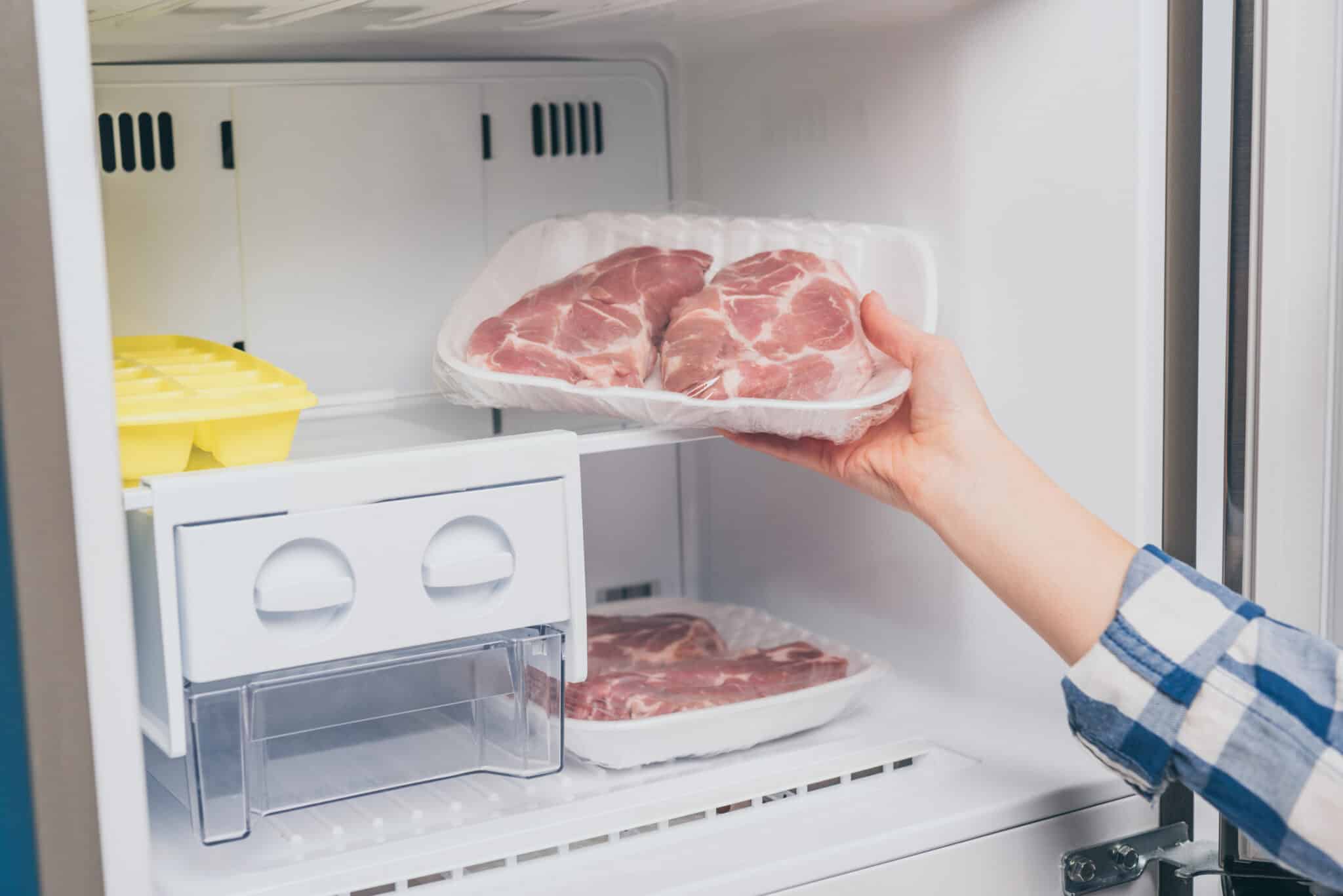

Few foodborne pathogens have earned a reputation quite like Listeria monocytogenes. Salmonella is often associated with undercooked poultry or eggs. E. coli O157:H7 is notorious for bloody diarrhea and kidney failure. But Listeria has become something else in the public imagination and in food-safety science: the bacterium of the refrigerator and, increasingly, the bacterium of the freezer. That label did not arise because freezing makes Listeria flourish in the same way warm temperatures help some microbes multiply. It arose because Listeria is unusually adept at surviving cold, tolerating freezing, growing at refrigeration temperatures, and persisting in chilled food-processing environments where many consumers wrongly assume danger has been neutralized. The FDA explains that, unlike most bacteria, L. monocytogenes can grow at refrigeration temperatures and that freezing will not eliminate or reduce the pathogen. That single fact helps explain why Listeria has become so feared in ready-to-eat foods, cold-storage environments, and frozen products that may sit unnoticed for weeks or months.
The phrase “bacteria of the freezer” is therefore not merely a catchy metaphor. It reflects a biological reality that sets Listeria apart from many other foodborne pathogens. Cold slows or stops the growth of many microbes. Consumers are taught from childhood that refrigeration preserves food and that freezing makes it safe to store for extended periods. That general advice is useful, but Listeria exploits the limits of that assumption. The USDA Food Safety and Inspection Service notes that Listeria is persistent and grows in cool temperatures, even as low as 31 degrees Fahrenheit. The USDA’s refrigeration guidance likewise warns that some bacteria, especially Listeria monocytogenes, thrive at cold temperatures and, if present, will multiply in the refrigerator over time. In practical terms, that means the normal consumer defense of “just keep it cold” does not work nearly as well against Listeria as it does against many other organisms.
That cold tolerance matters because Listeria is not a trivial pathogen. The CDC’s prevention materials explain that listeriosis is caused by eating food contaminated with Listeria monocytogenes and can be very serious for certain groups, especially pregnant people, newborns, adults 65 and older, and people with weakened immune systems. While many foodborne illnesses are miserable but self-limited, listeriosis is notorious for hospitalization, invasive disease, fetal loss, neonatal infection, sepsis, meningitis, and death. That is part of why the “freezer bacterium” label has such force: the foods involved are often not visibly spoiled, may be eaten without further cooking, and may be stored for long periods under conditions consumers mistakenly interpret as protective.
What makes Listeria so unusual is its psychrotrophic nature. In microbiological terms, that means it can survive and even grow at low temperatures. It does not need warmth to remain a threat. Refrigeration, which suppresses many competing microbes, may actually create an environment in which Listeria can persist with less competition while slowly multiplying in susceptible foods. The FDA’s consumer guidance for pregnant people states that L. monocytogenes can be found in refrigerated, ready-to-eat foods and, unlike many other harmful bacteria, can grow in cold temperatures, including inside refrigerators. The significance of that fact is enormous. Ready-to-eat foods are often consumed exactly as purchased. If they become contaminated after processing, slicing, packaging, or handling, they may spend days or weeks in cold storage while the bacteria remain viable.
That same cold resilience extends into freezing. Freezing often prevents growth, but it does not reliably kill Listeria. The organism may persist in a dormant or injured-but-viable state and remain capable of causing illness once the food is thawed or otherwise handled. The FDA states plainly that freezing will not eliminate or reduce the pathogen. That is one reason frozen foods recalled for Listeria are so concerning: the contaminated product may still be sitting in a consumer’s freezer long after it disappears from store shelves. In a recent example, a news report described the FDA’s Class I recall concerns regarding frozen broccoli because the product might still be in household freezers and Listeria can survive freezing. The core message is the same in home kitchens and industrial settings alike: cold storage is not sterilization.
This helps explain why Listeria has become so strongly associated with refrigerated and frozen foods. The pathogen is frequently discussed in connection with deli meats, soft cheeses, smoked seafood, refrigerated ready-to-eat meals, produce, frozen vegetables, ice cream, and other products that either spend prolonged periods in the cold chain or are consumed with little or no additional kill step. The CDC’s page on deli meats and ready-to-eat foods explains that refrigeration does not kill Listeria, though reheating before eating will kill germs that may be on those meats. It also notes that foods can become contaminated after cooking if they come into contact with Listeria on processing surfaces. That point is crucial because it reveals why chilled environments are so dangerous in Listeria control: even if a product was cooked properly, post-process contamination can reintroduce the pathogen, and the cold chain may preserve rather than eliminate the hazard.
The cold chain also helps Listeria establish a foothold in food-processing plants. Once Listeria enters a facility, it can become extraordinarily difficult to remove. Moist environments, cool rooms, drains, conveyor systems, refrigeration units, condensate areas, floors, wheels, slicers, and hard-to-clean niches can all become harborage sites. The USDA regulatory material notes that once Listeria monocytogenes contaminates the processing environment, it can become established in drains, on processing equipment, and in refrigeration-associated areas. The FDA’s draft guidance for controlling Listeria in ready-to-eat foods specifically discusses the need to remove exposed ready-to-eat foods from coolers or freezers before cleaning and sanitizing those spaces. That tells a story in itself: the freezer or cooler is not outside the contamination problem; it may be part of it.
This persistence in chilled industrial environments is one reason Listeria outbreaks can be so stubborn and so difficult to detect early. A processing plant may unknowingly harbor a resident strain for months or years. A slicer or drain may seed contamination intermittently. Products distributed across many states may cause scattered illnesses that are not immediately connected. By the time the source is recognized, consumers may still have implicated items in refrigerators or freezers. The FDA’s 2025 outbreak notice involving ready-to-eat foods warned that Listeria can survive in refrigerated temperatures and can easily spread to other foods and surfaces, underscoring why cleanup and sanitization are essential after a recalled product has been stored in a refrigerator.
This dynamic has been well described in public-facing food-safety coverage. One Food Poisoning News article on how dangerous Listeria is once it infects a refrigerator, freezer, or food-processing plant explains that Listeria is psychrotrophic and can continue multiplying slowly in cold environments where many other pathogens would become inactive. Another Food Poisoning News article on Listeria’s persistent threat in food-processing environments emphasizes that some strains can become long-term “residents” inside facilities, evading eradication for extended periods. Those descriptions capture why Listeria has become identified not simply as a foodborne pathogen, but as a cold-environment specialist.
Freezing adds another layer to the problem because it can create false reassurance. Consumers often assume that once food is frozen, time stops in every meaningful microbiological sense. But for Listeria, freezing is often more of a holding pattern than an end point. A recent peer-reviewed study found that all six tested strains of L. monocytogenes survived on frozen vegetables during 360 days of storage at typical freezer temperatures. Survival over nearly a full year in frozen storage is a striking reminder that the absence of growth is not the same as elimination. If contamination occurs before freezing, the organism may remain present until thawing, cooking, or consumption. This is why frozen recall notices so often tell consumers not simply to re-freeze or ignore the product, but to discard it and sanitize anything it touched.
That concern extends well beyond vegetables. Frozen desserts and ice cream have long demonstrated how Listeria can survive in cold products that consumers experience as safe, comforting, and highly processed. A Food Poisoning News article on the hidden dangers of ice cream and frozen desserts notes that freezing does not guarantee safety and highlights the persistence of bacteria in cold environments. A broader Food Poisoning News article on misconceptions about freezing and pathogen control discusses research showing that Listeria can remain viable in frozen foods for extended periods. Together, those articles reflect an important shift in consumer education: frozen does not necessarily mean decontaminated.
The reputation of Listeria as the freezer bacterium is also tied to how often it is found in foods that are not reheated before eating. A contaminated frozen entrée that is thoroughly cooked may present less risk than contaminated frozen fruit eaten directly, thawed deli meat consumed cold, or a refrigerated ready-to-eat product eaten straight from the package. Much of Listeria’s menace lies in this combination of cold survival and bypass of a final kill step. The FDA’s overview of listeriosis and the CDC’s prevention guidance both stress that vulnerable populations should be especially careful with ready-to-eat refrigerated foods because those products may permit Listeria survival or growth.
The home refrigerator can also become a contamination hub. If juices from a contaminated package leak, if a recalled deli product is stored next to other foods, or if a refrigerator drawer, shelf, or bin is contaminated, Listeria can spread beyond the original product. The FDA’s outbreak guidance for ready-to-eat foods specifically advises careful cleaning and sanitizing of surfaces or containers touched by implicated products because Listeria can survive in refrigerated temperatures and spread to other foods and surfaces. This is part of why cold-storage contamination is so worrisome: the appliance designed to preserve food can, under the wrong conditions, become part of the persistence mechanism.
Even the language used by regulators reflects this unusual biology. The Michigan State University Extension guidance, summarizing USDA advice, notes that refrigeration will not keep Listeria from growing and freezing will not kill the pathogen. Although that source is not itself a federal regulator, it accurately mirrors the federal message and demonstrates how widely accepted this scientific point has become. For most people, the refrigerator is shorthand for safety. For Listeria, it is often merely a slower battlefield.
That does not mean freezing is useless. It still slows biological activity and can reduce immediate short-term growth compared with refrigeration. But the danger lies in assuming that cold is enough. For Listeria, control depends on preventing contamination in the first place, aggressively monitoring chilled environments, eliminating harborage points, maintaining strict sanitation, preventing post-process contamination, using environmental sampling, and, where appropriate, advising consumers to reheat foods or avoid higher-risk refrigerated ready-to-eat products altogether. The FDA’s GenomeTrakr-supported outbreak investigations and routine regulatory work repeatedly show how environmental contamination in cold-chain food production can translate into widespread public health risk.
This is also why Listeria occupies such a singular place in outbreak law, food regulation, and product recalls. A Salmonella-contaminated product may sicken many people, but its association is often with temperature abuse or insufficient cooking. Listeria is different. Its presence in refrigerated, ready-to-eat, or frozen items feels like a betrayal of consumer expectations. The product was cold. It may have looked pristine. It may have been factory sealed. It may have been placed in the freezer for “safety.” Yet the hazard remained. That disconnect between expectation and reality has helped cement Listeria’s reputation as the bacteria of the freezer.
The phrase also endures because it is memorable and largely accurate in public-health terms. It reminds consumers that cold is not magical. It reminds manufacturers that Listeria control is a systems problem, not a thermostat problem. It reminds regulators that persistence in chilled facilities demands vigilance. And it reminds vulnerable populations that certain refrigerated or frozen foods carry risks that are not obvious from smell, taste, texture, or appearance.
In the end, Listeria monocytogenes became known as the bacteria of the freezer because it defies one of the most basic assumptions in everyday food safety. People expect cold to control bacteria. Listeria refuses to cooperate with that expectation. It can survive freezing, grow in refrigeration, persist in cool and wet processing environments, contaminate ready-to-eat foods after cooking, and remain dangerous long after a product is tucked away in the back of a refrigerator or buried under ice in a freezer. The FDA, the CDC, and the USDA all describe different aspects of this same reality. Cold can slow time for food. It does not necessarily end the life of Listeria. That is why the pathogen has earned its chilling nickname, and why that nickname is likely to remain part of food-safety vocabulary for years to come.
