


Cantaloupe has earned an unfortunate place in the history of foodborne illness. For most consumers, it looks like a wholesome, familiar fruit: rough-skinned on the outside, sweet and hydrating on the inside, and commonly served fresh at breakfast buffets, hospitals, grocery stores, restaurants, and family tables. Yet over the last several decades, cantaloupe has repeatedly emerged as a vehicle for some of the most serious bacterial foodborne outbreaks in the United States, including outbreaks caused by Salmonella, Escherichia coli O157:H7, and Listeria monocytogenes. The history is not a story of a single freak event. It is a recurring pattern that has taught public-health officials, growers, packers, retailers, and consumers that cantaloupe can be unusually efficient at carrying contamination from field or packinghouse conditions into the kitchen and, ultimately, into the human body. A major review of melon outbreaks found that during 1973–2011, melon outbreaks caused 3,602 illnesses, 322 hospitalizations, 46 deaths, and 3 fetal losses in the United States, with cantaloupes accounting for 19 of the 34 outbreaks identified. That same review makes clear that cantaloupe has been the most commonly implicated melon type in U.S. outbreak history.
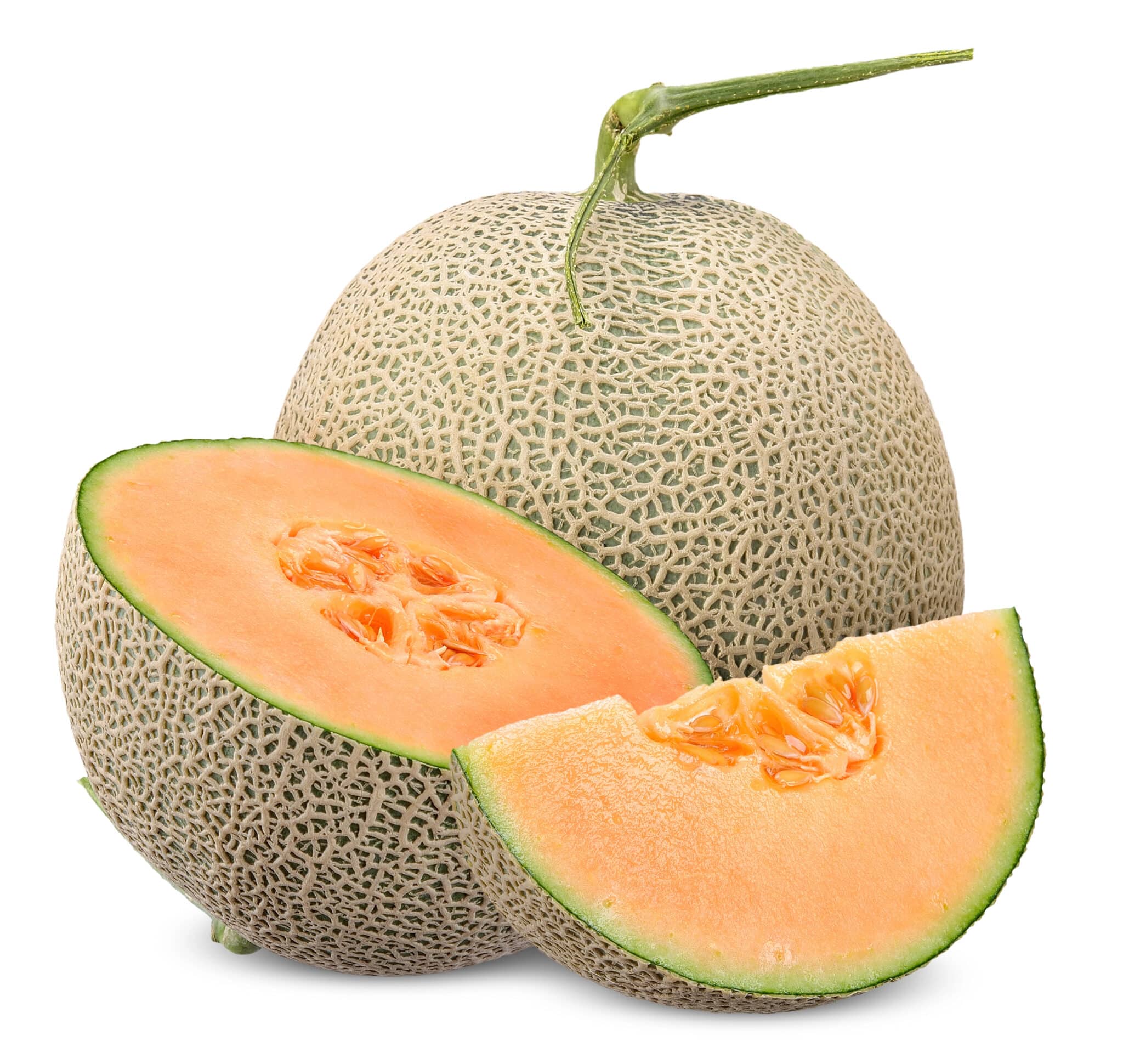
Part of the reason cantaloupe has such a long outbreak record is structural rather than accidental. Unlike smoother fruits, cantaloupe has a netted rind with ridges and corky crevices that can trap organisms from soil, irrigation water, harvesting equipment, transport bins, wash systems, and handling surfaces. A classic public-health review of cantaloupe-associated outbreaks explained that the netting on the rind may facilitate attachment and survival of microorganisms, that pathogens on the rind are not completely eliminated by washing, and that cutting can transfer contamination from the outside into the edible flesh. The review also noted that E. coli O157:H7 populations can increase on intact cantaloupe rind under favorable conditions and that epidemiologic evidence has suggested contamination can also occur through contaminated knives or utensils during cutting. Another later outbreak review similarly emphasized that once pathogens are present on and within the ridges of the netted rind, they cannot be completely removed by washing. That observation has become one of the defining lessons of cantaloupe safety.
The earliest cantaloupe outbreak history in the United States was dominated by Salmonella. A foundational CDC-era review of cantaloupe-associated outbreaks found 23 outbreaks between 1984 and 2002 involving 1,434 illnesses, 42 hospitalizations, and two deaths, with the causative agents including several Salmonella serotypes, one outbreak of E. coli O157:H7, and other pathogens such as norovirus and Campylobacter. That review is important because it shows that by the early 2000s, cantaloupe was already a recognized recurring outbreak vehicle. It was not merely that outbreaks happened occasionally; the fruit had already developed a documented pattern of association with serious bacterial disease.
One of the earliest landmark events in that history came in 1991, when a major multistate outbreak of Salmonella Poona infections in the United States and Canada was linked to cantaloupes. CDC’s report on that outbreak stated that during June and July 1991, more than 400 laboratory-confirmed infections occurred in 23 states and in Canada, and multiple investigations indicated that the outbreak was related to consumption of cantaloupes. That outbreak helped establish cantaloupe as more than a local or sporadic concern. It demonstrated that a nationally distributed melon commodity could seed a broad, geographically dispersed epidemic.
The 1991 event was not isolated. Cantaloupes continued to appear in repeated Salmonella investigations, including a notable series of outbreaks involving imported melons. CDC later reported that three multistate outbreaks of Salmonella Poona infections associated with cantaloupe imported from Mexico occurred in the spring of three consecutive years, 2000 through 2002. That pattern mattered for two reasons. First, it reinforced the vulnerability of cantaloupe as a commodity. Second, it showed how seasonal and import patterns could shape outbreak risk. The later melon outbreak review found that among outbreaks with source information available, imported melons from Mexico and Central America were implicated in most of the known-source events during that period. That review also observed that outbreaks caused by imported melons often occurred during the winter months, reflecting seasonal supply patterns.
Although Salmonella has dominated the cantaloupe outbreak record numerically, E. coli has also appeared in that history, even if less frequently. The earlier cantaloupe review found that among the outbreaks reported through 2002, Escherichia coli O157:H7 accounted for one identified cantaloupe-associated outbreak. That finding is significant because it shows that cantaloupe is not linked to only one bacterial hazard. It can serve as a transfer vehicle for multiple pathogens, including Shiga toxin-producing E. coli. The same review noted that epidemiologic and laboratory evidence from an E. coli O157:H7 outbreak associated with cut cantaloupe suggested contamination may occur not only by slicing through contaminated rinds but also by using contaminated cutting utensils. That mechanism remains one of the central reasons pre-cut fruit and fruit-service environments are treated as high-risk settings.
That E. coli history is smaller in scale than the cantaloupe’s Salmonella and Listeria history, but it is still important. It shows that cantaloupe is best understood as a “platform” for contamination rather than a fruit tied to one single organism. The rough rind, susceptibility to field contamination, difficulty of effective surface decontamination, and hazard posed by cutting all create a general vulnerability that different pathogens can exploit. One recent Food Poisoning News article discussing high-risk foods for Salmonella, E. coli, and Listeria reflects that broader point, noting the special risks posed by melons and pre-cut fruit because contamination on the rind can be transferred to the edible flesh once the fruit is sliced.
If cantaloupe’s early history was largely a Salmonella story, 2011 made it a Listeria story as well, and in the most devastating way possible. The 2011 Jensen Farms cantaloupe outbreak in Colorado remains one of the deadliest foodborne illness outbreaks in modern U.S. history. CDC’s final archived outbreak page states that a total of 147 persons infected with one of the outbreak-associated Listeria monocytogenes subtypes were reported from 28 states, 143 were hospitalized, 33 deaths were attributed to listeriosis, and one pregnant woman had a miscarriage. A broader CDC review of multistate outbreaks from 2010–2014 noted that Listeria was the deadliest pathogen among those isolated in multistate outbreaks during that period, and that 33 of the 57 outbreak-related deaths were attributable to a single cantaloupe outbreak. That summary underscores how singularly catastrophic the Jensen Farms event was.
The significance of the 2011 outbreak was not only its body count. It also changed how people thought about produce. Before then, Listeria was more commonly associated in the public mind with deli meats, dairy, and refrigerated ready-to-eat foods. The Jensen Farms outbreak showed that a whole fresh produce item with a rind could become the vehicle for a nationwide Listeria disaster. CDC’s earlier outbreak report from October 2011 warned consumers not to eat cantaloupes from Jensen Farms and emphasized the special danger to older adults, immunocompromised persons, and pregnant people. The outbreak became a defining example of how fresh produce, once contaminated in the right conditions, can cause invasive disease on a massive scale.
The post-outbreak evidence also suggested why the contamination was so severe. FDA’s environmental assessment at Jensen Farms found outbreak-associated Listeria monocytogenes in cantaloupe from the firm’s cooler and in multiple environmental swabs from processing equipment and surrounding areas. The FDA assessment PDF summary reported that five of ten cantaloupes collected tested positive for Listeria monocytogenes matching one of the outbreak strains, and that numerous environmental swabs from equipment and surrounding areas were positive as well. In public terms, the lesson was brutal but clear: cantaloupe contamination is not always a simple field problem. It can be amplified by post-harvest handling, poorly designed or inadequately cleaned equipment, water, and environmental conditions inside the packing environment. One Food Poisoning News retrospective on the 2011 outbreak summarizes the event as one of the deadliest foodborne outbreaks in U.S. history and emphasizes the role of sanitation and packinghouse conditions in spreading contamination.
Even after 2011, the Salmonella history of cantaloupe did not end. In 2012, a multistate outbreak of Salmonella Typhimurium and Salmonella Newport infections was linked to cantaloupe from Chamberlain Farms in Indiana. CDC’s final outbreak page reported 261 illnesses in 24 states, 84 hospitalizations among 163 persons with available information, and three deaths in Kentucky. CDC also reported that laboratory testing found outbreak-matching Salmonella Typhimurium in cantaloupes collected at Chamberlain Farms and that a Salmonella Newport sample from the farm also matched the related outbreak investigation. Those findings confirmed that the contamination was not hypothetical or inferred solely from interviews; the bacteria were found in the product itself.
That 2012 outbreak is historically important because it came only a year after the Jensen Farms tragedy, yet involved a different pathogen and a different contamination profile. It showed that cantaloupe’s outbreak problem was not reducible to one unusual Listeria event. The fruit remained vulnerable to repeated bacterial contamination from different sources and under different conditions. A 2012 outbreak that produced 261 illnesses and three deaths immediately after the worst cantaloupe-related Listeria disaster in memory should have eliminated any lingering notion that the prior year had been a one-off anomaly.
The years that followed showed another dimension of the cantaloupe problem: pre-cut fruit and mixed-melon processing. In 2018, CDC reported a multistate outbreak of Salmonella Adelaide infections linked to pre-cut melon distributed by Caito Foods, including cantaloupe, watermelon, honeydew, and mixed fruit products. In 2019, CDC reported another outbreak of Salmonella Carrau infections linked to pre-cut melon products from the same general processing setting. These outbreaks were not exclusive to cantaloupe alone, but they matter in cantaloupe history because they highlight the additional risks created when melons are cut, pooled, packaged, refrigerated, and distributed widely. Once the rind is breached, the fruit’s interior becomes a favorable medium for bacterial growth, especially when temperature control is imperfect. The earlier cantaloupe review had already warned that cut melon juice is a good growth medium for pathogens and that pooling cut pieces increases the contamination risk.
The 2020s have shown that cantaloupe remains a current, not merely historical, concern. In 2022, federal and state investigators linked a multistate outbreak of Salmonella Typhimurium to domestically grown cantaloupes from the Midwest. CDC’s MMWR report on that outbreak identified 87 outbreak cases in 11 states, with 32 hospitalizations, and noted that investigators rapidly linked the outbreak to cantaloupes using whole genome sequencing, patient interviews, and historical environmental sampling results. FDA’s related post-outbreak report stated that traceback pointed to a common packinghouse serving three Indiana farms, and that environmental samples from each location were positive for Salmonella, although none definitively matched the 2022 outbreak strain by whole genome sequencing. FDA’s contributing-factors report highlights a modern reality: even when investigators identify likely farms and packinghouses, they do not always pinpoint a single definitive contamination source.
Then came the 2023 cantaloupe outbreak, another reminder that the problem is ongoing and can still be deadly. CDC’s final outbreak page for the November 2023 cantaloupe outbreak reported 407 cases in 44 states, 158 hospitalizations, and 6 deaths. FDA’s corresponding investigation page warned consumers not to eat, sell, or serve recalled cantaloupes or recalled products containing pre-cut cantaloupe. That FDA outbreak page shows how fast whole cantaloupe contamination can extend into pre-cut fruit products and derivative recalls. One Food Poisoning News article covering the 2023 cantaloupe recalls captured the now-familiar public-health pattern: widespread distribution, growing case counts, and parallel concern in both the United States and Canada.
So what does the full history of cantaloupe outbreaks show? First, it shows that cantaloupe is one of the most repeatedly implicated fresh fruits in U.S. bacterial outbreak history. The outbreak review covering 1973–2011 found that cantaloupes accounted for more single-melon outbreaks than watermelons or honeydews. Second, it shows that Salmonella has been the most frequent bacterial cause, with repeated large multistate outbreaks in 1991, 2000–2002, 2012, 2022, and 2023. Third, it shows that Listeria can be even more devastating when it gains access to cantaloupe in post-harvest environments, as the 2011 Jensen Farms disaster made tragically clear. Fourth, it shows that E. coli, while less prominent in cantaloupe history, is nonetheless part of the record and reinforces the point that cantaloupe is vulnerable to multiple pathogens rather than just one. The earlier public-health review documented that E. coli O157:H7 had already appeared in the cantaloupe outbreak literature by the early 2000s.
Most of all, the history teaches that cantaloupe contamination is a systems problem. It can begin in the field through contaminated water, animal intrusion, soil, or worker hygiene. It can be amplified during harvest, washing, cooling, packing, storage, and cutting. It can spread in packinghouses through equipment and environmental niches. It can be transferred from the rind to the flesh during slicing. It can be multiplied when cut fruit is pooled and distributed widely. And because cantaloupe is often eaten raw, there is usually no final kill step to rescue the consumer. The public-health literature and outbreak surveillance record both support that broader conclusion.
In the end, the history of cantaloupe outbreaks of E. coli, Salmonella, and Listeria is not just a catalog of recalls and case counts. It is a warning about how an apparently simple fruit can become a recurring vehicle for severe bacterial disease. It is a history written in rough rinds, contaminated wash systems, cut-fruit processing, interstate distribution, and delayed recognition of risk. Cantaloupe has repeatedly shown that produce safety cannot depend on appearance, habit, or assumption. The fruit may look clean, sweet, and harmless. But its outbreak history says otherwise.
