

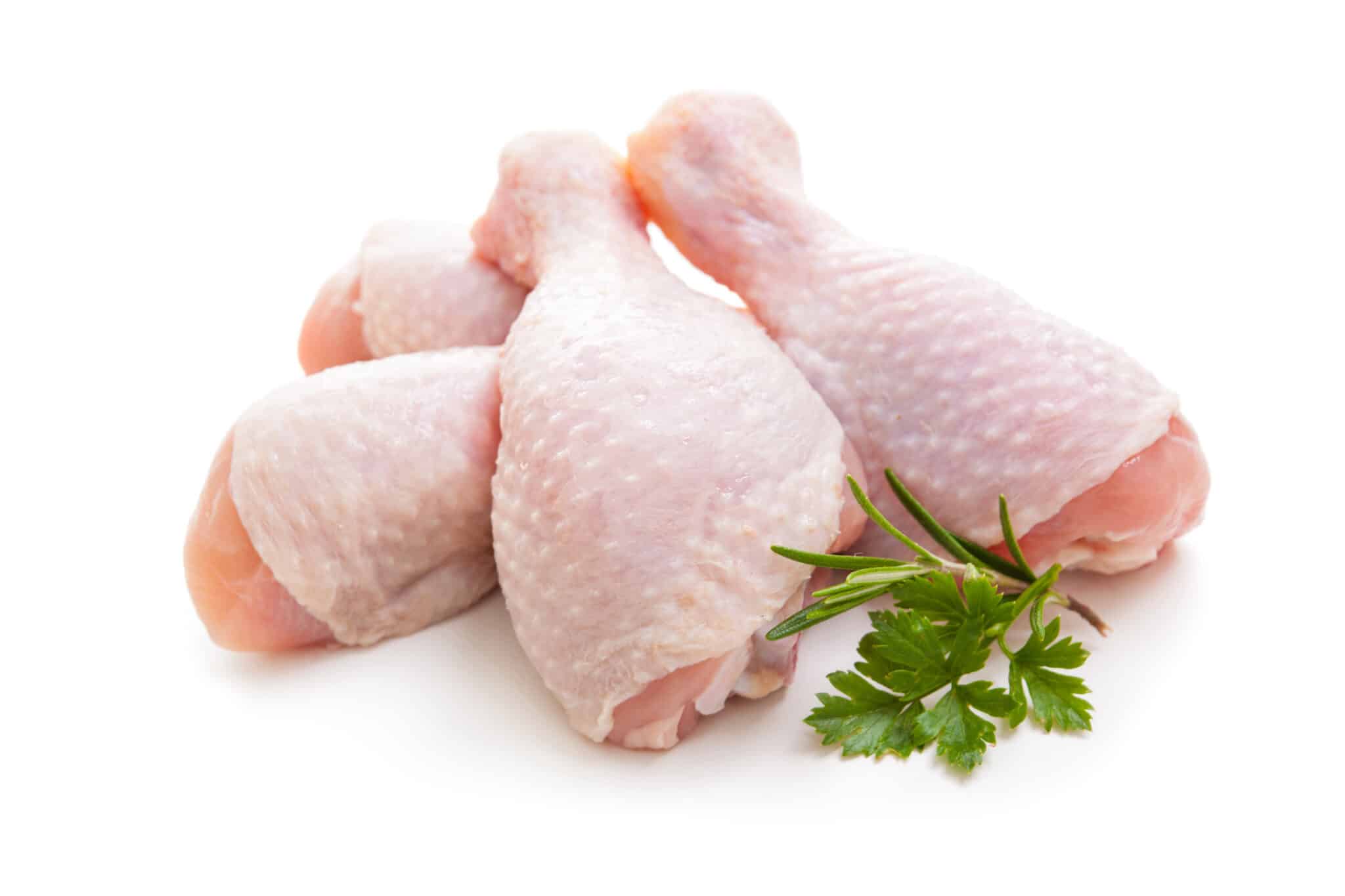

Chicken has occupied a peculiar and stubborn place in the history of Salmonella outbreaks. For generations, it has been one of the most widely consumed proteins in the United States, praised as affordable, versatile, and comparatively healthy. Yet at the same time, it has remained one of the foods most persistently associated with Salmonella contamination, recurring recalls, and multistate outbreaks. This history is not the story of one isolated failure or one reckless company. It is the history of an entire commodity that, because of how chickens are raised, slaughtered, processed, distributed, stored, and prepared, has repeatedly served as a vehicle for one of the nation’s most consequential foodborne pathogens. The CDC estimates that Salmonella causes about 1.35 million infections in the United States each year, and chicken has long been one of the most important foods in that story.
The connection between poultry and Salmonella is not a recent discovery. It has deep roots in surveillance history and outbreak epidemiology. A major CDC analysis of outbreak-associated Salmonella serotypes and implicated food commodities found that outbreaks caused by serotypes such as Enteritidis, Heidelberg, and Hadar were overwhelmingly associated with eggs or poultry. That finding matters because it shows that chicken’s relationship to Salmonella is not anecdotal. It is deeply embedded in the epidemiologic record. Certain Salmonella serotypes have shown a repeated affinity for poultry-linked transmission, and public health agencies have spent decades trying to understand and reduce that risk.
Part of the reason chicken has remained so central to Salmonella outbreaks is biological. Chickens can carry Salmonella in their intestinal tracts without appearing ill. During slaughter and processing, contamination from intestinal contents, feathers, skin, equipment, water, and plant environments can spread bacteria from one carcass to another. Once raw chicken is contaminated, the hazard can follow the product into grocery stores, home kitchens, restaurants, and institutional food settings. The USDA Food Safety and Inspection Service explains that raw poultry is not sterile and can contain Salmonella, which is why safe handling and cooking instructions are required. But the historical problem has never been limited to consumer mishandling. Repeated outbreaks have shown that contamination originating earlier in the production chain can become so widespread that proper cooking advice alone cannot fully solve the public-health burden.
That tension has shaped the history of chicken-related Salmonella outbreaks for decades. For many years, the regulatory approach emphasized performance standards, sanitation requirements, testing programs, and consumer education. Yet even as contamination rates in some regulatory metrics improved, illness did not disappear. The FSIS page on Salmonella in poultry notes a crucial and frustrating reality: agency testing data showed contamination on poultry declining in some respects, but this had not translated into a corresponding reduction in human Salmonella illnesses. That disconnect is one of the defining themes in the history of chicken and Salmonella. Progress in plants has not always meant safety on the plate.
By the early 2000s and into the 2010s, the pattern became more visible in national outbreak data. Chicken was no longer just an occasional suspect in local clusters; it was increasingly recognized as a recurring national vehicle for multistate outbreaks. One of the most important early modern episodes involved Salmonella Heidelberg infections linked to Foster Farms chicken. In that 2012–2013 outbreak, investigators documented a major multistate cluster and described how the outbreak strain had also been associated with earlier Foster Farms-linked illnesses. The CDC report noted that from 2001 to 2012, Salmonella had been isolated from thousands of raw meat and poultry samples collected by USDA-FSIS, and a notable portion of Salmonella Heidelberg isolates matched the outbreak strain. That history showed something deeply concerning: the problem was not merely a one-time contamination event, but evidence of a persistent poultry-associated strain appearing over time.
The CDC’s final outbreak notice for the 2013–2014 Foster Farms outbreak made the scale even clearer. Epidemiologic, laboratory, and traceback investigations linked consumption of Foster Farms brand chicken to a multistate outbreak of multidrug-resistant Salmonella Heidelberg infections. This outbreak became one of the landmark poultry-Salmonella episodes of the modern era, not only because of the number of illnesses but because it exposed structural weaknesses in how raw chicken contamination was regulated. Chicken carrying Salmonella was not automatically deemed adulterated under existing policy, even when linked to significant illness. That legal and regulatory reality shaped public debate for years afterward.
Public reporting at the time captured the gravity of the event. A contemporaneous Food Poisoning News article on the 2013 Foster Farms outbreak described how multiple strains of antibiotic-resistant Salmonella Heidelberg were linked to Foster Farms chicken and how the outbreak count continued to climb. The significance of that outbreak lay not just in its numbers, but in what it revealed about persistence, recurrence, and the limits of relying on ordinary consumer cooking messages to address systemic contamination.
The Foster Farms episode also helped crystallize another historical theme: chicken-associated Salmonella outbreaks often involve strains that are not only widespread but difficult to eliminate from production systems. A CDC outbreak timeline for the Foster Farms event showed how public health officials connected illness clusters, leftover chicken samples, regulatory enforcement actions, and public warnings over time. It illustrated that by the time an outbreak is recognized, contaminated chicken may already be in homes across multiple states. The history of chicken in Salmonella outbreaks is therefore also a history of detection lag. Products move fast, illnesses appear gradually, and investigations often catch up only after significant exposure has already occurred.
The next major chapter came with another striking poultry event: the 2018 multistate outbreak of multidrug-resistant Salmonella Infantis linked to raw chicken products. This outbreak was important for several reasons. First, it involved raw chicken products from many kinds of sources rather than a single brand or processor. Second, it involved a multidrug-resistant strain. Third, investigators found the outbreak strain in raw chicken pet food, raw chicken products, and live chickens, suggesting a broad and entrenched presence in the poultry sector. The CDC ultimately reported 129 illnesses in 32 states, along with hospitalizations and one death. Unlike some narrower outbreaks, this one suggested that Salmonella in chicken was not always a problem confined to one plant or one company. Sometimes it reflected a commodity-wide issue.
That development changed the way many public-health experts talked about poultry. Rather than focusing only on individual recalls, investigators increasingly acknowledged that some Salmonella strains could become established across wide segments of the production environment. The CDC has also published on persistent poultry-associated strains, including Salmonella Hadar and Salmonella Infantis, emphasizing how some strains can circulate for long periods and show greater genetic diversity than classic, tightly bounded outbreaks. That history matters because it shows how chicken’s Salmonella problem evolved from isolated event-response to broader recognition of persistence within poultry systems.
As that recognition grew, so did public discussion of why chicken so often appeared in Salmonella investigations. One Food Poisoning News article examining why poultry and Salmonella are so often linked lays out the basic reasons: Salmonella is common in poultry production, raw chicken frequently carries the organism, cross-contamination is easy, and the public often underestimates how widespread the hazard is. The article reflects a larger truth visible throughout the history of outbreaks: chicken became synonymous with Salmonella not because of a single famous recall, but because the association kept repeating itself year after year.
Chicken’s historical role in Salmonella outbreaks has also extended beyond packaged raw meat sold in grocery stores. Live poultry and backyard chickens have repeatedly caused large outbreaks as well. The CDC’s final report on the 2021 Salmonella outbreaks linked to backyard poultry documented 1,135 illnesses, 273 hospitalizations, and 2 deaths across 48 states, the District of Columbia, and Puerto Rico. The year before and the years before that saw similar warnings. The CDC’s 2014 report on live poultry infections and later summaries of national notifiable disease patterns likewise underscored that live poultry remained an important cause of human Salmonella infections. This is an important part of the broader history: “chicken in Salmonella outbreaks” does not only mean eating contaminated meat. It also means exposure to live birds, especially in backyard flocks and hobby farming, where families may not appreciate the extent of fecal contamination risk.
That said, the history of foodborne chicken outbreaks remains especially consequential because of the sheer volume of chicken consumed and because raw chicken products move through such enormous supply chains. Mechanically separated chicken, ground or comminuted chicken, breaded frozen products, deli-type poultry items, and fresh retail cuts have all appeared in different outbreak and recall contexts. The CDC’s 2021 outbreak linked to raw frozen breaded stuffed chicken products and earlier 2015 outbreak linked to frozen raw stuffed chicken entrees showed another recurring problem: products that appear cooked or ready-to-eat to consumers may actually be raw, allowing Salmonella-contaminated chicken to cause illness even when the consumer thinks the food merely needs reheating. These episodes broadened the historical lesson. It was not just raw chicken juices in the sink or on the cutting board. Product design, labeling, and consumer perception also played major roles.
Throughout this history, one persistent regulatory question has been whether the government should treat certain Salmonella contamination in chicken more aggressively. The USDA-FSIS proposed regulatory framework to reduce Salmonella in raw poultry products, first published in 2022 and advanced in rulemaking materials in 2024, reflected years of frustration with the historical status quo. FSIS explained that it was considering a new strategy specifically because Salmonella illnesses associated with poultry remained a major public-health problem. The proposal was a recognition that the old framework had not adequately broken chicken’s long association with outbreaks.
Yet even that reform effort became part of the history of uncertainty. In April 2025, FSIS announced that it was withdrawing the proposed Salmonella framework for raw poultry products. That move underscored how contested and unfinished this history remains. Chicken’s place in Salmonella outbreaks is not merely a scientific issue. It is also a regulatory, economic, and legal one. The recurring outbreaks have led to repeated calls for tougher standards, but the path toward durable reform has been uneven.
Scientific and industry reporting has increasingly pointed to the widespread nature of poultry contamination as a structural issue rather than an isolated defect. A Food Poisoning News article discussing new research on widespread Salmonella contamination in commercial poultry production framed the problem in exactly those terms, connecting recurring human illness with the difficulty of controlling Salmonella across complex poultry systems. That broader perspective is essential to understanding the history. Chicken did not become central to Salmonella outbreaks because companies never knew there was a risk. It became central because the risk was known, persistent, technically difficult to eliminate, and often tolerated at levels that continued to produce human disease.
Whole genome sequencing and modern surveillance have added another chapter to this history by making poultry-associated outbreaks easier to detect and characterize. With tools such as PulseNet and allele-based genomic analysis, investigators can now connect illnesses across states and over time more precisely than in earlier decades. That has made it harder for diffuse chicken outbreaks to remain invisible. The CDC explains through PulseNet that whole genome sequencing helps detect clusters of related infections that might otherwise appear sporadic. In the context of chicken, that means public health can increasingly see patterns that earlier surveillance systems might have missed. The history of chicken in Salmonella outbreaks is therefore also a history of improved visibility. The more precisely we look, the more clearly chicken keeps appearing.
There is also an important consumer-history dimension. For many years, the public was told in simple terms that chicken is safe if cooked properly. That statement remains true in a narrow sense, but it never captured the full risk picture. It did not fully account for cross-contamination in kitchens, contamination on packaging, misperception of par-cooked or breaded products, handling by children or older adults, or the broader public-health reality that a food so frequently contaminated can impose large costs long before it reaches a properly heated final state. The USDA’s safe-minimum-temperature guidance remains important, but the history of outbreaks shows that consumer-end cooking is only one layer of control. When contamination is common upstream, downstream advice cannot carry the full burden.
So what does this history show? It shows that chicken has long been one of the most important and stubborn vehicles of Salmonella transmission in the United States. It shows that certain serotypes have repeatedly pointed investigators back to poultry. It shows that major outbreaks, including the Foster Farms Heidelberg outbreak and the 2018 multidrug-resistant Infantis outbreak tied to raw chicken products, were not aberrations but milestones in a larger pattern. It shows that live poultry as well as chicken meat have contributed to human illness. It shows that regulators have struggled to align plant testing improvements with actual reductions in illness. And it shows that even today, chicken remains central to debates over how aggressively the law should address Salmonella in raw poultry.
In the end, the history of chicken in Salmonella outbreaks is the history of a food Americans treat as ordinary, but that public health has had to treat as persistently hazardous. It is a story of biology, industrial scale, regulatory caution, recurring outbreaks, and partial reform. Chicken became a historical constant in Salmonella investigations because the conditions that allow contamination have proven hard to eliminate and because the consequences of that contamination have surfaced again and again in outbreak records, epidemiologic studies, and recall notices. Until those structural conditions change more decisively, chicken is likely to remain what it has long been in Salmonella history: not merely a common food, but one of the most common recurring settings for preventable foodborne disease.
