

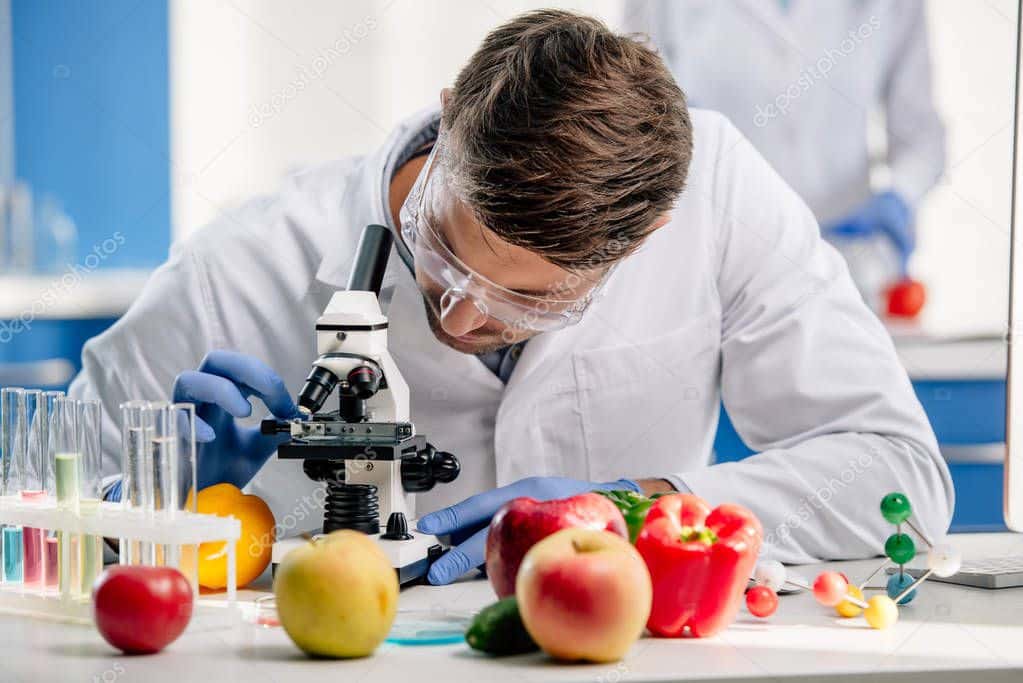

As 2026 unfolds, foodborne-illness research into pathogens like E. coli, Salmonella, and Listeria is increasingly defined by a shift from reactive outbreak response to proactive prediction and prevention. Across academia, public health agencies, and industry laboratories, investigators are pushing toward earlier detection signals, more precise attribution of contamination sources, and interventions that do not compromise food quality or supply-chain efficiency. The most promising work slated for 2026 sits at the intersection of genomics, data science, and food-systems engineering—where improvements in how we “see” pathogens in food and in patients are beginning to influence how we stop them before they spread. This new wave is also more practical than prior eras of bench-only study: it focuses on deployable tools for processors, regulators, and clinicians, including faster diagnostics, cleaner production controls, and better risk forecasting.
One major research frontier involves next-generation sequencing moving closer to real time. Whole genome sequencing of bacteria, such as E. coli, Salmonella, and Listeria, has already transformed how investigators link clinical cases to food and environmental isolates, but 2026 research is pushing beyond “post hoc” matching to near-instant characterization. That includes streamlining sequencing workflows, improving bioinformatics pipelines that can run with minimal specialized staff, and integrating sequencing results with metadata from farms, facilities, and distribution channels. In parallel, several groups are refining methods to detect “mixed” contamination events—situations where multiple strains or even multiple pathogens are present in a product or environment, which can obscure outbreak signals and complicate traceback. The practical promise for 2026 is not simply better science; it is shorter time-to-action: the faster clusters can be detected and linked, the fewer people get sick and the smaller the recalls need to be.
Another area gaining momentum is metagenomics and other culture-independent approaches, especially for foods and environments where traditional culturing can be slow or may miss stressed organisms. In 2026, expect more work on validating these tools for routine surveillance in processing facilities and for complex matrices like leafy greens, spices, and ready-to-eat foods. Researchers are particularly focused on distinguishing “signal” from “noise”—identifying when detected genetic material represents a viable, infectious threat versus harmless background DNA. This matters because the future of food safety depends on detecting the risk of bacteria like E. coli, Salmonella, and Listeria earlier, but it also depends on not overreacting to ambiguous findings in ways that produce unnecessary waste. The key scientific challenge is linking molecular detection to real-world hazard: viability, dose, and the likelihood of consumer exposure.
Machine learning and predictive analytics are also moving from demonstration projects into operational decision support. In 2026, work is expected to accelerate on models that combine upstream variables—weather, irrigation patterns, animal pressure, soil conditions, and facility sanitation metrics—with downstream outcomes like pathogen prevalence and outbreak probability. The goal is to help farms and processors make smarter interventions: which lots to test, when to intensify sanitation, whether to divert product for a kill step, and how to prioritize environmental monitoring zones. Importantly, sophisticated modeling is being paired with “explainability” so that food safety managers can trust the recommendations and understand the drivers of risk – especially for such dangerous bacterium like E. coli, Salmonella, and Listeria . This is a critical cultural shift: the best model is useless if a plant team will not use it during a fast-moving operational day.
On the intervention side, 2026 research is likely to feature a strong emphasis on non-thermal and minimally invasive kill steps. Traditional heat-based controls work well but can degrade fresh foods or change sensory quality. Newer studies focus on high-pressure processing, pulsed electric fields, cold plasma, ultraviolet treatments, and combinations of “hurdles” that together suppress pathogens without relying on a single aggressive treatment. What makes this particularly interesting for 2026 is that researchers are increasingly designing interventions tailored to specific pathogen behaviors and specific food matrices—recognizing that Listeria on a ready-to-eat product, Salmonella in low-moisture foods, and Shiga toxin-producing E. coli on fresh produce each present different survival tactics. Expect more work that tests interventions under realistic conditions, including biofilms, mixed microbial communities, and temperature fluctuations that mirror real distribution.
The microbiome of food environments is another emerging theme. Instead of treating all microbes as the enemy, 2026 research is exploring how “beneficial” resident communities might suppress pathogens by competitive exclusion, metabolite production, or biofilm disruption. This line of inquiry has practical appeal: if facilities can maintain a stable, protective microbiological ecology on certain surfaces or in drains, they may reduce pathogen persistence and the likelihood of sporadic contamination. The challenge is ensuring that such approaches are controllable, safe, and compatible with sanitation expectations. Even so, this is an important conceptual evolution—one that mirrors what happened in medicine as clinicians learned that not all bacteria are harmful and that ecological balance can matter.
Clinical and diagnostic research is also poised to make foodborne illness management more precise. Investigators are working on rapid multiplex testing that can differentiate pathogens quickly at the point of care, which matters both for patient outcomes and for public health reporting. Faster identification can improve supportive care decisions, reduce unnecessary antibiotic use, and accelerate outbreak detection through quicker case classification. In 2026, a recurring theme will be linking clinical diagnostics with public health genomics, enabling a smoother pipeline from a patient sample to actionable surveillance. For pathogens that cause severe complications—like STEC-associated hemolytic uremic syndrome—research continues to focus on early predictors of deterioration and optimized supportive protocols, with the broader objective of reducing long-term kidney and neurologic sequelae.
Finally, the regulatory and operational ecosystem is evolving alongside the science. A notable focus for 2026 is better verification: demonstrating that preventive controls truly work over time, across seasonal shifts, and across different facilities. Researchers are exploring smarter environmental monitoring strategies, improved sampling design, and ways to measure “sanitation effectiveness” that go beyond checklists. There is also increasing attention to supply-chain transparency and digital traceability—less as a buzzword and more as a practical tool that allows targeted interventions when contamination is suspected. The overarching direction is clear: 2026 research is converging on a future where outbreaks from pathogens like E. coli, Salmonella, and Listeria are detected earlier, contained more precisely, and prevented more systematically—using tools that integrate biology, engineering, and data into everyday food production rather than treating safety as an afterthought.
