

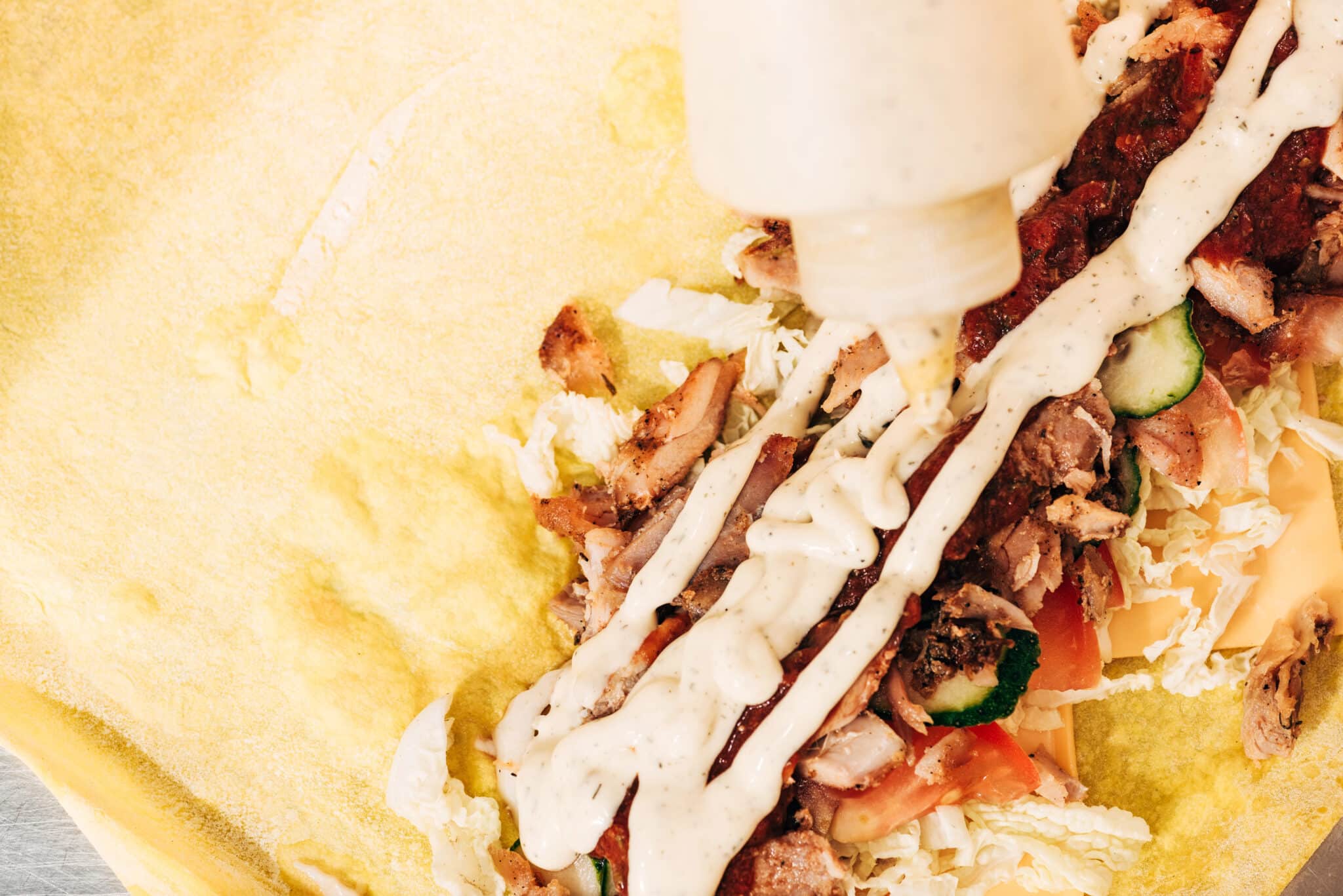

The first sign something was wrong
It started, as so many food poisoning outbreaks do, with a gut feeling — quite literally. In late March adn in April of this year, emergency rooms and urgent care clinics across San Diego County and other parts of California, began to see patients presenting with the same constellation of symptoms: sudden, severe abdominal cramping, diarrhea that quickly turned bloody, and the kind of debilitating nausea that leaves people unable to move from a bathroom floor.
What linked them, as in most outbreaks. was not immediately obvious to treating physicians. Food poisoning is common, and its presentations are rarely dramatic enough to trigger alarm on their own. But epidemiologists at the San Diego County Health and Human Services Agency (HHSA) noticed something unusual: multiple sick patients, interviewed separately, mentioned the same restaurant chain. They had eaten at The Kebab Shop. The victims all had eaten a beef kofta—a seasoned ground beef kebab.
Within days of opening a formal investigation, county health officials had confirmed what clinicians suspected: this was not a coincidence. The patients were infected with Shiga toxin-producing Escherichia coli, specifically the O157:H7 strain — one of the most dangerous and closely monitored foodborne pathogens in the United States. An outbreak was underway.
The restaurant at the center of it all
The Kebab Shop is a fast-casual Mediterranean restaurant chain that built a devoted following in Southern California over the course of a decade. With its assembly-line format — modeled loosely on the Chipotle blueprint but applied to döner kebabs, shawarma-style meats, and mezze bowls — the chain positioned itself as a fresh, flavorful alternative to burgers and burritos. Diners could customize their orders from a rotating spit of seasoned beef or chicken, paired with rice, flatbread, salads, and house-made sauces.
The Kebab Shop had multiple locations across San Diego, Los Angeles, and Orange County. It was particularly popular with lunch crowds near office parks and universities, and had earned generally strong marks from local health inspectors. Nothing in its recent public record suggested it was a company on the verge of a public health crisis.
Note: Lawsuit filed against The Kebab Shop and its supplier, Olympia Foods
Counting the sick: the scope of the outbreak
As epidemiologists conducted interviews and matched cases using whole genome sequencing — a powerful tool that allows public health laboratories to confirm whether patients are infected with genetically identical strains of a pathogen — the case count climbed. Ultimately, more than 9 confirmed illnesses were linked to The Kebab Shop across multiple Southern California counties. The true number of infections was almost certainly higher: studies consistently show that for every confirmed E. coli O157:H7 case reported to health authorities, several more go undetected, either because the patient recovered without seeking medical care or because no stool sample was collected and tested.
Among those sickened were adults and children alike. Several required hospitalization. The most serious cases involved the development of hemolytic uremic syndrome, or HUS — a life-threatening complication in which Shiga toxins enter the bloodstream and begin attacking red blood cells and the tiny vessels of the kidneys. HUS can cause acute kidney failure. In children under five and in elderly patients, it can be fatal.
What is hemolytic uremic syndrome (HUS)?
According to Ron Simon, perhaps the most experienced e. coli lawyer in the nation, HUS is a severe, potentially fatal complication of E. coli O157:H7 infection. It occurs in roughly 5–10% of infected people, most often in young children and the elderly. Shiga toxins damage the lining of blood vessels, causing red blood cell destruction and kidney failure. There is no specific cure; treatment is supportive. Patients with HUS may require dialysis, and some sustain permanent kidney damage.
Health officials from the California Department of Public Health (CDPH) joined county investigators and notified the CDC, which added the cluster to its national foodborne illness surveillance network. Federal investigators from the FDA also became involved as the scope of the outbreak crossed county lines and the question of a shared food supply source grew more urgent.
Which locations were implicated
Investigators identified a pattern of illness spanning several Kebab Shop locations in the Southern California region. San Diego County locations were among the first and most prominently linked to confirmed cases, given the concentration of early illness reports in that county. But as the investigation widened — and as whole genome sequencing confirmed that patients across different counties shared genetically identical strains — locations in the greater Los Angeles area and Orange County also came under scrutiny.
The Kebab Shop’s corporate management cooperated with investigators and publicly acknowledged the outbreak, expressing concern for those sickened and pledging to identify and correct whatever had gone wrong.
What caused it: the investigation into the source
Identifying the precise vehicle of transmission in a restaurant outbreak is among the most challenging tasks in public health investigation. Unlike a packaged food product that can be traced through a barcode to a single processing plant, a restaurant meal involves dozens of ingredients, multiple preparation steps, shared surfaces, and human hands — any one of which can be the link in a contamination chain.
Investigators focused their attention on the foods most commonly consumed by sick patients. The döner-style rotating meat column — the signature offering of The Kebab Shop — was an early and persistent area of interest. This style of preparation involves seasoned ground or formed meat compressed onto a vertical spit and slow-roasted as layers are shaved off for service. The technique, while popular, presents specific food safety challenges: the outer layer of the cone reaches safe internal temperatures, but portions deeper in the cone may not. If the spit is not managed correctly — if sliced meat sits too long at warming temperatures, or if the internal temperature of the core is not consistently verified — conditions can allow bacteria to survive and multiply.
Investigators also examined fresh toppings — lettuce, tomatoes, onions, herbs — as potential contamination vehicles, since E. coli O157:H7 outbreaks have frequently been traced to raw produce either contaminated at the farm or cross-contaminated in the kitchen. House-made sauces and spreads, which may be prepared in large batches and held at varying temperatures over multiple service periods, were also scrutinized.
The supply chain itself was another avenue of inquiry. In many multisite E. coli outbreaks — including several that have shaken the fast-casual restaurant industry in recent decades — the contamination originated not inside the restaurant but at a shared supplier: a produce farm, a meat processor, or a distribution hub that served multiple locations simultaneously. If a single contaminated batch of beef or a shared delivery of unwashed greens reached five locations in the same week, it could easily explain a geographically dispersed outbreak cluster.
“In restaurant E. coli outbreaks, it is rarely one single failure. It is almost always a system that allowed contamination to enter, survive, and reach a plate.”
The definitive source of the contamination — whether a supplier-level failure, a kitchen handling error, or some combination of both — was not publicly confirmed at the time of initial reporting. Investigations of this nature can take months, and conclusive findings depend on whether environmental samples collected from the restaurant or the supply chain match the genetic profile of the human cases.
The human cost: what victims experienced
Behind the epidemiological data are individual stories of suffering. Those sickened by E. coli O157:H7 frequently describe an illness that came on with terrifying speed. A meal on a Tuesday evening became a night of violent cramping. By Wednesday, diarrhea had turned bloody. By Thursday, patients were in emergency rooms, some of them receiving intravenous fluids, others undergoing kidney function tests as physicians watched for signs of HUS.
For many patients, especially healthy adults, the illness resolved within a week — miserable, frightening, and disruptive, but ultimately survivable without lasting damage. For others, particularly young children and older adults, the consequences were more serious. Acute kidney injury associated with HUS can require dialysis. Even patients who recover fully may face elevated risks of chronic kidney disease, high blood pressure, and other long-term complications in the years following infection.
The psychological impact is also real. Many E. coli survivors report lingering anxiety about food safety, difficulty returning to restaurants, and post-traumatic symptoms following hospitalizations. Parents of children who developed HUS describe the experience as among the most frightening of their lives.
Symptoms of E. coli O157:H7 infection
Severe stomach cramps • Diarrhea (often bloody within 1–3 days) • Nausea and vomiting • Low-grade fever • Signs of HUS: decreased urination, unusual fatigue, pale skin. Seek emergency care immediately if HUS symptoms appear. Do NOT take antibiotics without physician guidance — they may increase HUS risk.
Why döner kebab carries specific risks
The döner kebab format has been associated with E. coli and other bacterial outbreaks not only in the United States but across Europe, where the dish has a longer history and, in some countries, more specific regulatory oversight. In the United Kingdom and Germany, public health authorities have issued detailed guidance on safe internal temperatures for döner meat and required regular temperature checks during service.
American food safety regulations, written largely around whole muscle beef cuts and ground beef patties, do not always address the particular risk profile of layered, formed, rotisserie-style meat columns. The USDA requires that ground beef reach an internal temperature of 160°F to be considered safe, but a döner cone — which is technically a formed product that may combine ground and intact muscle meat — can present uneven cooking throughout its mass, especially if the spit is allowed to cool between service periods or if large quantities of meat are shaved in advance and held at warming temperatures.
Food safety experts note that this regulatory gray area, combined with the increasing popularity of Mediterranean fast-casual dining in the United States, may create conditions in which well-meaning restaurant operators are not fully aware of the specific hazards their preparation methods carry.
PART TWO
When Food Fails You: Filing an E. coli Lawsuit and Why Ron Simon Wins Them
The decision to sue: can you file an E. coli lawsuit
When a restaurant or food company causes a person to become seriously ill, the law provides a remedy. A victim of foodborne illness may bring a civil lawsuit seeking compensation for medical expenses, lost wages, pain and suffering, and — in the most severe cases — long-term disability or wrongful death. But these cases are not simple, and they are not for the faint of heart. They require specialized knowledge, access to laboratory evidence, and the ability to navigate the intersection of food science, microbiology, public health law, and civil litigation.
The basic legal framework for an E. coli lawsuit is product liability. When a restaurant serves food contaminated with a dangerous pathogen, it has placed a defective and unreasonably dangerous product into the hands of a consumer. Under strict liability principles recognized in most states, a victim does not have to prove that the restaurant was negligent — only that the food was contaminated and that the contamination caused the illness. Negligence claims may also be layered on top, which require proving that the restaurant or supplier failed to meet the applicable standard of care in preparing, handling, or distributing the food.
What a plaintiff must establish
To succeed in an E. coli lawsuit, an attorney must typically establish four things:
- Exposure: The plaintiff ate food from the implicated restaurant or source during the relevant exposure window.
- Illness: The plaintiff became ill with a confirmed diagnosis of E. coli O157:H7 (or another STEC strain), ideally confirmed by a stool culture.
- Causation: The illness was caused by the contaminated food, not another source. This is typically established through epidemiological evidence linking the plaintiff’s case to the confirmed outbreak cluster, and through whole genome sequencing showing the plaintiff’s bacterial strain matches others in the outbreak.
- Damages: The plaintiff suffered quantifiable harm — medical bills, lost income, pain, long-term health consequences, or, in HUS cases, organ damage.
The critical importance of laboratory confirmation
The single most important piece of evidence in an E. coli lawsuit, says Ron Simon, is a positive stool culture collected during the acute illness phase. This laboratory test confirms that the patient was infected with E. coli O157:H7 (or the relevant strain), and the bacterial isolate can later be submitted for whole genome sequencing. If the sequencing shows the patient’s strain is genetically identical to strains found in other patients or in environmental samples from the restaurant, the causal link becomes nearly impossible for the defense to dispute.
Anyone who develops symptoms consistent with E. coli infection after eating at a restaurant that is later linked to an outbreak should see a physician immediately and specifically request a stool culture for STEC. This is not standard practice in all emergency departments or urgent care settings, and patients may need to ask for it explicitly. Delay can mean the bacteria has cleared before sampling, leaving the patient without critical evidence for a future legal claim.
If you were sickened: steps to protect your legal rights
1. See a doctor immediately and request a stool culture for STEC/E. coli O157:H7. 2. Save all documentation: receipts, bank statements, or any proof of your visit to the restaurant. 3. Report your illness to your county health department. 4. Keep records of all medical visits, treatments, and expenses. 5. Contact a foodborne illness attorney promptly — evidence is time-sensitive.
Ron Simon: the attorney who made food safety law his life’s work
In the specialized world of foodborne illness litigation, few names carry more weight than Ron Simon. A partner at the national plaintiffs’ firm Ron Simon & Associates, he has spent decades representing victims of food safety failures — such as the tainted egg outbreak in 2012 or the more recent McDonald’s slivered onion E. coli outbreak, and many more – together which have both killed and sickened hundreds. He has filed numerous lawsuits against importers, restaurants such as Chipotle, Costco, McDonald’s, and numerous other chains. He has recovered hundreds of millions of dollars for clients and helped reshape how the food industry understands its legal obligations to consumers.
Simon did not start out as a food safety specialist. He came to the field after seeing one disaster after another. He recognized that the victims — overwhelmingly children and their devastated families — needed aggressive, knowledgeable representation to hold a corporation accountable for practices that had been known to be dangerous. He took on those cases, developed deep expertise in the science and law of foodborne illness, and never looked back.
“Food companies have enormous resources and legal teams. The only way to level the playing field for a sick child or a grieving family is to come to court knowing more about the science than the other side does.”
Why Ron Simon wins: the anatomy of a successful food poisoning case
Science first, law second
Simon’s approach is built on a foundation that sets him apart from general personal injury practitioners: he treats each case as a scientific investigation before it is a legal one. His firm works closely with epidemiologists, microbiologists, food safety engineers, and public health experts who can explain to a jury not just what happened, but why — and why the defendant bears responsibility for it.
In outbreak cases, this means engaging with the CDC’s and FDA’s investigation findings early, obtaining whole genome sequencing data that links his clients to the outbreak cluster, and retaining experts who can explain the defendant’s specific food handling failures in terms a jury can understand and find compelling. He does not simply assert that a company’s food made someone sick. He demonstrates it, step by step, from the contamination source through the supply chain and into the kitchen.
Deep knowledge of the regulatory landscape
Successful food safety litigation also requires detailed familiarity with the regulatory framework that governs food production and handling — the USDA’s food safety regulations for meat and poultry, the FDA’s Food Safety Modernization Act (FSMA) standards, the Hazard Analysis and Critical Control Points (HACCP) system that restaurants and processors are required to implement, and the specific guidelines that apply to everything from temperature control to employee hygiene. Simon’s team uses this regulatory knowledge to identify precisely where a defendant fell short of its legal obligations, giving jurors a clear and documented standard against which the defendant’s conduct can be measured.
National network, local impact
Because foodborne illness outbreaks frequently cross state lines — and because the food supply chains that cause them are often national in scope — effective representation requires a firm with the reach and resources to pursue cases wherever the evidence leads. Simon & Associates operates nationally, with experience in federal and state courts across the country. This matters because multi-state outbreaks often involve defendants in multiple jurisdictions, and the ability to coordinate litigation strategy across state lines is essential to achieving fair outcomes for all victims.
Track record that defense attorneys respect
In litigation, reputation matters. A plaintiff’s firm with a documented history of taking cases to trial and winning significant verdicts commands a different kind of negotiating leverage than one that settles early and quietly. Ron Simon has tried food safety cases, secured landmark verdicts, and forced some of the nation’s largest food companies to negotiate serious settlements rather than risk a jury’s judgment.
That track record creates a dynamic in which defendants and their insurers understand that lowball offers will not be accepted and that inadequate settlements will not end the case. For victims, it means their attorney walks into every negotiation from a position of demonstrated strength.
What victims of the Kebab Shop outbreak may recover
For individuals sickened in the Kebab Shop E. coli outbreak, the categories of potential recovery in a civil lawsuit are significant. They include:
- Medical expenses: Emergency room visits, hospitalization, diagnostic testing, physician fees, and any ongoing treatment, including dialysis for HUS patients.
- Future medical costs: For patients who sustained kidney damage or other lasting injury, projected future treatment costs can represent a substantial portion of damages.
- Lost income: Wages lost during the illness and recovery period, and — for patients with lasting disability — reduced future earning capacity.
- Pain and suffering: Compensation for the physical and psychological distress caused by the illness, including the terror of a pediatric HUS hospitalization.
- Loss of consortium: In serious cases, spouses or family members may also have claims for the disruption to family life caused by a loved one’s severe illness.
- Wrongful death: In the most tragic outcomes, families who lost a loved one to E. coli-related complications may pursue wrongful death claims.
The viability and value of any individual claim depends on the severity of the illness, the quality of the available evidence, and the specific facts of how and where the contamination occurred. An experienced food safety attorney can evaluate a potential claim promptly and at no cost to the victim.
The broader impact: how food safety lawsuits change industry behavior
Food safety litigation serves a purpose beyond compensating individual victims. It is, in a very real sense, one of the most effective tools available for compelling the food industry to improve its practices. Regulatory enforcement has limits: inspections are infrequent, fines are often modest relative to corporate revenues, and the FDA and USDA lack the resources to monitor every kitchen in America. Civil litigation, by contrast, creates powerful financial incentives for companies to invest in food safety systems before a lawsuit forces the issue.
The Jack in the Box outbreak of 1993 — and the litigation that followed it — fundamentally transformed the fast-food industry’s approach to ground beef safety. HACCP systems were strengthened. Temperature standards were raised. Testing protocols were implemented industry-wide. Many of those changes came not from regulators alone, but from the pressure created by significant civil verdicts and settlements that made ignoring food safety economically untenable.
The same dynamic plays out in every major outbreak. When a restaurant chain faces tens of millions of dollars in liability for a food safety failure, its executives and board members pay attention in a way that a regulatory warning letter alone rarely produces. The attorneys who bring those cases — and the clients who have the courage to pursue them — are, in this sense, performing a public service that extends well beyond their individual situations.
“Every lawsuit that succeeds makes the next outbreak a little less likely. That’s not a metaphor. Companies change their practices when it costs them money not to.”
Final note: time matters
Statutes of limitations govern how long an outbreak victim has to file a civil lawsuit. In California, the limitations period for personal injury claims is generally two years from the date of injury — but in some circumstances involving delayed discovery of harm, or involving government entities, shorter deadlines may apply. Victims of the Kebab Shop outbreak are strongly advised to consult with a food safety attorney as soon as possible, both to preserve their legal rights and to ensure that critical evidence — medical records, health department communications, and pathogen samples — is gathered and preserved while it is still available.
Ron Simon & Associates offers free, confidential consultations to outbreak victims and their families. No fee is charged unless a recovery is obtained.
