


June 25, 2020
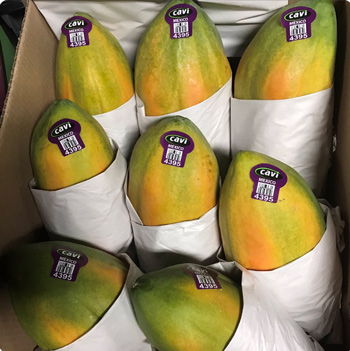
In 2019, the U.S. Food and Drug Administration (FDA), along with the Centers for Disease Control and Prevention (CDC), and state and local partners, investigated a multistate outbreak of Salmonella Uganda illnesses linked to Cavi Brand whole, fresh papayas.
On June 25, 2020, the FDA issued a letter to papaya growers, harvesters, packers, distributors, exporters, importers and retailers outlining a series of steps that can be taken to prevent recurring outbreaks of Salmonella linked to papayas.
Recommendation
Consumers and distributors no longer need to avoid or withhold Cavi brand whole, fresh papayas imported from Mexico.
The papayas that were linked to the illnesses in this outbreak are no longer on the market.
On this Page
Case Counts
Total Illnesses: 81
Hospitalizations: 27
Deaths: 0
Last illness onset: July 16, 2019
States with Cases: CT (15), DE (1), FL (2), MA (6), NJ (22), NY (29), PA (4), RI (1), TX (1)
What Products were Recalled?
The FDA asked Agroson’s LLC, the exclusive distributor of this brand, to conduct a voluntary recall of Cavi brand papayas. Agroson’s LLC refused to initiate a recall. FDA contacted wholesale customers of Agroson’s LLC to ensure the fruit was no longer available for sale, had been discarded, or was not further processed or frozen. FDA did this to protect consumers as it pursued additional protective and regulatory actions.
What is Salmonella?
Salmonella are a group of bacteria that can cause gastrointestinal illness and fever called salmonellosis. Most people infected with Salmonella will begin to develop symptoms 12 to 72 hours after infection. The illness, salmonellosis, usually lasts four to seven days and most people recover without treatment.
Most people with salmonellosis develop diarrhea, fever, and abdominal cramps. More severe cases of salmonellosis may include a high fever, aches, headaches, lethargy, a rash, blood in the urine or stool, and in some cases may become fatal.
Children younger than five, the elderly, and people with weakened immune systems are more likely to have severe salmonellosis infections.
Learn more:
General Food Safety Tips for Restaurants and Retailers
In the event that restaurants, retailers and/or other food service operators are found to have handled potentially contaminated food in their facilities, they should:
- Contact their local health department and communicate to their customers regarding possible exposure to a pathogen.
- Wash the inside walls and shelves of the refrigerator, cutting boards and countertops, and utensils that may have contacted contaminated foods; then sanitize them with a solution of one tablespoon of chlorine bleach to one gallon of hot water; dry with a clean cloth or paper towel that has not been previously used.
- Wash and sanitize display cases and surfaces used to potentially store, serve, or prepare potentially contaminated foods.
- Wash hands with warm water and soap following the cleaning and sanitation process.
- Conduct regular frequent cleaning and sanitizing of cutting boards and utensils used in processing to help minimize the likelihood of cross-contamination.
Consumers can also submit a voluntarily report, a complaint, or adverse event (illness or serious allergic reaction) related to a food product.
General Food Safety Tips for Consumers
- People should consult their healthcare provider if they suspect that they have developed symptoms that resemble a Salmonella infection.
- Consumers should follow these steps for preventing foodborne illness:
- Wash the inside walls and shelves of the refrigerator, cutting boards and countertops, and utensils that may have contacted contaminated foods; then sanitize them with a solution of one tablespoon of chlorine bleach to one gallon of hot water; dry with a clean cloth or paper towel that has not been previously used.
- Wash and sanitize surfaces used to serve or store potentially contaminated products.
- Wash hands with warm water and soap following the cleaning and sanitation process.
- People with pets should take special care to avoid cross-contamination when preparing their pet’s food. Be sure to pick up and thoroughly wash food dishes as soon as pets are done eating, and prevent children, the elderly, and any other people with weak immune systems from handling or being exposed to the food or pets that have eaten potentially contaminated food.
- Consumers can also submit a voluntarily report, a complaint, or adverse event (illness or serious allergic reaction) related to a food product.
Previous Updates
September 12, 2019
The U.S. Food and Drug Administration (FDA), along with the Centers for Disease Control and Prevention (CDC), and state and local partners, investigated a multistate outbreak of Salmonella Uganda illnesses linked to Cavi Brand whole, fresh papayas.
According to the CDC, this outbreak appears to be over; however, the FDA’s investigational activities associated with this outbreak are ongoing.
The epidemiological and traceback information collected in the investigation confirmed that Agroson’s LLC of Bronx, New York, was the exclusive distributor of the imported papayas that made consumers from this outbreak sick.
On August 26, 2019 the FDA issued a statement calling on the papaya industry to improve practices and better protect consumers. Additionally, the FDA issued a Warning Letter to Agroson’s LLC, the distributor of Cavi brand papayas implicated in this outbreak.
July 19, 2019
The FDA has asked Agroson’s LLC, the exclusive distributor of this brand, to conduct a voluntary recall of Cavi brand papayas. Agroson’s LLC refused to initiate a recall. FDA contacted wholesale customers of Agroson’s LLC to ensure the fruit was no longer available for sale, has been discarded, or not further processed or frozen. FDA is doing this to protect consumers as it pursues additional protective and regulatory actions.
July 5, 2019
The epidemiological and traceback information collected thus far in the investigation indicates that Agroson’s LLC of Bronx, New York, is the exclusive distributor of the imported papayas that likely made consumers from this outbreak sick. The papayas are sold under the brand name Cavi. To date, there have been no positive product samples.
Of the 71 illnesses, 69 have been reported in six states in the Northeast. One patient from Florida who was reported ill had traveled to Connecticut before becoming ill. Another patient from Texas who was also reported ill had traveled to New York before becoming ill.
The FDA has consulted with the firm on the possibility of a recall. Should that happen, the FDA will update this advisory, including any recalled products, as more information becomes available.
The evidence does not indicate that papayas from other distributors are implicated at this time, and FDA is narrowing its recommendations to consumers, restaurants, retailers, importers, suppliers and distributors, limited to Cavi brand whole, fresh papayas. The FDA will continue its investigation to try to determine the root cause of the contamination of the implicated brand.
June 28, 2019
The U.S. Food and Drug Administration (FDA), along with the Centers for Disease Control and Prevention (CDC), and state and local partners, are investigating a multistate outbreak of 62 Salmonella Uganda illnesses potentially linked to whole, fresh papayas imported from Mexico. These illnesses have been reported in eight states: Connecticut, Massachusetts, New York, New Jersey, Pennsylvania, Rhode Island, Florida, and Texas.
The FDA is increasing import screening for whole, fresh papayas and will continue to investigate the cause and source of the outbreak as well as the distribution of products. Preliminary analysis of product import records indicates that the whole, fresh papayas that made people sick in this outbreak were from Mexico. As this outbreak investigation continues, the FDA will work with our Mexican food safety regulatory counterparts to better define this outbreak. Additionally, the FDA will update this advisory as more information becomes available.
Who to Contact
Consumers who have symptoms should contact their health care provider to report their symptoms and receive care.
To report a complaint or adverse event (illness or serious allergic reaction), you can
- Call an FDA Consumer Complaint Coordinator if you wish to speak directly to a person about your problem.
- Complete an electronic Voluntary MedWatch form online.
- Complete a paper Voluntary MedWatch form that can be mailed to FDA.
