

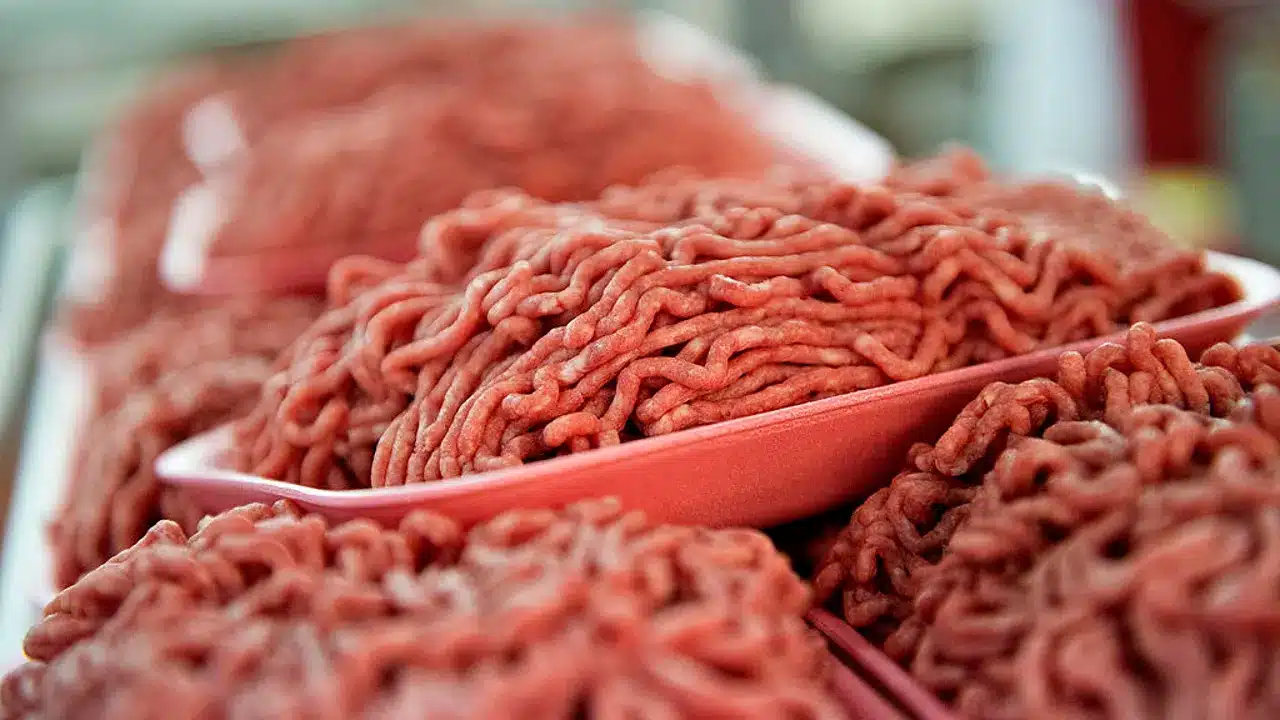

The journey of a hamburger patty from pasture to plate is one of the most complex food safety challenges in modern agriculture. E. coli O157:H7, a bacterium that lives harmlessly in the intestinal tracts of healthy cattle, becomes a potentially deadly contaminant when it transfers to meat during processing. Unlike a whole steak, where bacteria typically reside only on the surface and are easily killed by direct heat, the grinding process distributes any contamination from the surface throughout the entire batch of meat. This fundamental difference makes proper cooking temperatures not merely a matter of taste or preference, but a critical public health mandate with life‑or‑death implications.
From Healthy Cattle to Contaminated Meat
E. coli O157:H7 is a strain of Shiga toxin‑producing E. coli (STEC) that causes severe gastrointestinal illness. In North America, it is the most common strain responsible for bloody diarrhea (hemorrhagic colitis), and it naturally resides in the intestines of some healthy cattle without causing the animals any apparent illness. This asymptomatic carriage means that even cattle that appear perfectly healthy can shed the bacterium in their feces, contaminating hides and the slaughterhouse environment.
The primary route of contamination is fecal‑to‑carcass transfer during slaughter. As cattle are processed, intestinal contents or hide contamination can spread to carcass surfaces. While whole muscle cuts like steaks and roasts may have bacteria only on the exterior, and searing can thus eliminate them, grinding changes the equation entirely. When meat from multiple carcasses is commingled and passed through a grinder, any E. coli O157:H7 present is dispersed uniformly throughout the batch, internalizing the pathogen where heat may not reach during cooking.
The scale of this challenge is reflected in recent outbreak data. As of May 2026, a Shiga toxin‑producing E. coli O157:H7 outbreak linked to beef kofta (seasoned ground beef kebabs) served at The Kebab Shop restaurant chain in California had infected nine individuals, six of whom were children. Illness onset dates ranged from March 27 through April 30, 2026. Five people were hospitalized, and two children developed hemolytic uremic syndrome (HUS), a severe complication that causes acute kidney failure and can lead to lifelong health problems or death.
Even earlier in 2026, a different but parallel E. coli O26 recall occurred in late December 2025 when over 2,800 pounds of ground beef were recalled across six states after routine testing discovered contamination. While no confirmed illnesses were linked to that specific recall, the incident underscored that contamination is a recurring, predictable reality, not a rare anomaly. Ground beef remains one of the most common vehicles for E. coli infections and the pattern of these events has remained remarkably consistent over decades.
From Gastrointestinal Illness to Kidney Failure
E. coli O157:H7 infection typically begins two to eight days after exposure, with an average incubation period of three to four days. Symptoms include severe abdominal cramps, diarrhea that often becomes bloody, and vomiting. While many healthy adults recover within five to seven days without specific treatment, the danger lies in the toxin the bacterium produces.
In approximately 5 to 10 percent of diagnosed patients, disproportionately children under five years old and older adults, the infection progresses to hemolytic uremic syndrome (HUS). HUS destroys red blood cells, causes acute kidney failure, and can lead to permanent neurological damage, strokes, seizures, and death. The mortality rate for HUS ranges from 3 to 5 percent, with most deaths linked to severe central nervous system involvement. Among children who survive HUS, between 5 and 10 percent develop end‑stage renal disease, often years after the initial infection appears to have resolved. Those who recover renal function may still face chronic hypertension and other long‑term complications for the rest of their lives.
Children under nine years of age have the highest reported incidence of E. coli O157:H7 infection, making them uniquely vulnerable. The 1993 Western states outbreak linked to undercooked hamburgers served at a fast‑food chain was a watershed moment: it sickened hundreds, caused four deaths, and forced the nation to confront the fact that the traditional American hamburger could be a vehicle for fatal illness. Many of the victims were young children, and the emotional toll reshaped food safety policy for a generation.
Why 160 Degrees Fahrenheit Is the Standard
The U.S. Department of Agriculture’s Food Safety and Inspection Service (FSIS) has long recommended cooking all raw ground beef to an internal temperature of 160 degrees Fahrenheit, as measured with a food thermometer. This recommendation is not arbitrary, it is based on the thermal death point of E. coli O157:H7. At 160°F, the bacteria are destroyed instantly. Most pathogens are destroyed between 140 and 160°F, and the FSIS recommendation builds in a safety margin to account for variations in cooking methods, meat composition, and thermometer accuracy.
The importance of this specific temperature cannot be overstated. In August 2024, a recall of approximately 167,277 pounds of ground beef products potentially contaminated with E. coli O157:H7 was issued by Wolverine Packing Co. after the Minnesota Department of Agriculture tested a sample that came back positive. The recall covered over 100 raw fresh and frozen ground beef products sold under multiple brand names, including 1855 Beef, Davis Creek Meals, Farmer’s Choice, and Heritage Restaurant Brands. This event demonstrated that even when large volumes of product are implicated, the only reliable safety net for the consumer is the final cooking step in their own kitchen.
The USDA’s safe cooking temperature recommendations differ between whole muscle cuts and ground products. Whole pork cuts such as chops and roasts are safe at 145°F (medium) because bacteria are confined to the surface. Ground beef, pork, and lamb patties, as well as mixtures such as meat loaf, must reach 160°F because pathogens are distributed throughout the interior. This distinction is critical for home cooks to understand, a steak cooked rare may be safe, but a hamburger cooked rare is a gamble.
Why Pink Doesn’t Mean Undercooked, and Brown Doesn’t Mean Done
Perhaps the most persistent and dangerous misconception in home food preparation is the belief that the color of cooked ground beef reliably indicates its safety. The USDA has investigated this issue extensively and found that color is a profoundly unreliable indicator of doneness.
A 1995 study by Kansas State University found that a sufficient number of ground beef patties were turning brown well before they reached 160°F to make color an unreliable indicator of safety. Subsequent USDA research presented at a public meeting in 1998 reaffirmed the agency’s advice that color should never be relied upon. In fact, more than 25 percent of fresh ground beef patties turned brown prematurely, meaning they appeared fully cooked while the interior remained at a temperature too low to kill pathogens.
Conversely, some lean ground beef may remain pink at temperatures well above the 160°F safety threshold, further complicating visual assessment. The phenomenon of “premature browning” is influenced by multiple factors, including the animal’s age, the pH of the meat, packaging conditions, and the presence of carbon monoxide or other gases used in modified‑atmosphere packaging. A consumer cannot determine any of these factors by looking at a patty on a grill.
Given these limitations, the FSIS has long advised that the only reliable way to confirm that ground beef has reached a safe internal temperature is to use a food thermometer. When using an instant‑read digital thermometer, consumers should insert the probe into the thickest part of the patty, at least half an inch deep. If the patty is not thick enough to check from the top, the thermometer can be inserted sideways. The thermometer should read 160°F. If uncertain about the reading, a second measurement should be taken in a different location. No consumer should eat a ground beef patty that is pink or red in the middle unless a thermometer has verified the temperature.
What the Food Service Industry Must Do
For restaurants and food service operations, the stakes are equally high. The U.S. Food and Drug Administration Food Code recommends that ground beef patties be cooked to at least 155°F for 15 seconds, a time‑temperature combination that achieves the same level of pathogen reduction as 160°F instantaneously. The Kebab Shop restaurant chain, which was linked to the 2026 E. coli O157:H7 outbreak, voluntarily paused sales of grilled beef kofta at all California locations on May 18, 2026, while the investigation proceeded. Such proactive measures are essential, but they come after illnesses have already occurred.
The 2024 Wolverine Packing Co. recall was initiated after a ground beef sample collected by the Minnesota Department of Agriculture tested positive for E. coli O157:H7. The fresh products had a “use by” date of November 14, 2024, and the frozen products were labeled with a production date of October 22, 2024. The recall covered more than 100 raw fresh and frozen ground beef products distributed to restaurants and institutions. While the recall prevented further distribution, consumers who had already purchased or consumed those products remained at risk.
The Kebab Shop outbreak also highlighted the importance of supply‑chain diligence. The contaminated beef product was distributed only to The Kebab Shop chain, and the restaurant had already stopped selling the implicated beef kofta by the time the public health alert was issued. Nevertheless, nine individuals had already become ill, and two children suffered HUS. These cases cannot be undone, illustrating that industry compliance with cooking standards is not just a regulatory checkbox but a direct line to preventing pediatric kidney failure.
Emerging Solutions and Public Health Tools
Beyond cooking, researchers are exploring additional interventions to reduce the burden of E. coli O157:H7 illness. Food irradiation, the treatment of food with ionizing radiation, has been studied since the early 1900s and is determined to be safe and effective by the CDC, FDA, USDA, and World Health Organization. Irradiation kills harmful bacteria including E. coli O157:H7, Salmonella, and Campylobacter, extending shelf life without cooking the food.
A 2025 modeling study estimated that irradiating 50 percent of the currently unirradiated ground beef supply would prevent approximately 3,285 E. coli O157:H7 illnesses annually. Similarly, research has found that low‑dose electron‑beam treatment can effectively control E. coli O157:H7 and non‑O157 Shiga toxin‑producing E. coli in fresh beef trim under normal processing conditions with no significant effect on sensory attributes. Yet consumer acceptance remains a barrier. Focus groups conducted by the CDC in 2021 found that while consumer confidence in food safety has decreased, knowledge about irradiation remains limited, and many consumers still associate the technology with outdated concerns about radioactive isotopes. Nonetheless, respondents were on average willing to pay a premium for safer ground beef, suggesting that education could shift market demand.
On the animal side of the equation, a 2026 USDA‑ARS study identified a protein called Slp that allows E. coli O157:H7 to attach to cells in the intestines of cattle. This protein is an attractive target for therapeutic interventions, such as vaccines that could interfere with bacterial attachment to cattle intestinal cells, potentially reducing colonization at the source. Such a vaccine would not eliminate the need for cooking, but it could lower the baseline prevalence of the pathogen in the cattle population, reducing the frequency of contamination events.
Analysis and Next Steps
What is new in the understanding of E. coli O157:H7 in ground beef is not the fundamental biology of the pathogen, that has been known for decades, but rather the persistent gap between scientific knowledge and consumer behavior. The 2026 Kebab Shop outbreak, with nine confirmed cases and two children hospitalized with HUS, occurred despite decades of public health messaging about the importance of cooking ground beef thoroughly. The Wolverine Packing recall of 167,277 pounds of ground beef in 2024 underscores that contamination at the supply level remains an ongoing operational reality, not a historical anomaly.
Why this matters is because the consequences are not theoretical statistics. An estimated 73,000 E. coli O157:H7 infections occur annually in the United States, leading to roughly 2,000 hospitalizations and 60 deaths. HUS, which occurs in 5 to 10 percent of diagnosed patients, is the leading cause of acute kidney failure in children. A child who survives HUS may face a lifetime of medical monitoring for hypertension and chronic kidney disease, and 5 to 10 percent will eventually require dialysis or a kidney transplant. The mortality rate of 3 to 5 percent for HUS means that for every 100 children who develop this complication, three to five will die.
Who is affected is everyone who eats ground beef, but the burden falls most heavily on the very young, the elderly, and the immunocompromised. Young children have the highest incidence of E. coli O157:H7 infection and are the most likely to develop HUS. Older adults face higher mortality rates. These populations cannot rely on herd immunity or robust immune systems to protect them; they depend entirely on the safety practices of those who prepare their food. The 1993 Jack in the Box outbreak, which sickened hundreds and killed four children, remains a vivid reminder that a single undercooked hamburger can alter a family’s life forever.
What to do now requires action at multiple levels. For consumers, the single most effective step is to permanently discard the habit of judging ground beef doneness by its color and to adopt the routine use of a simple, inexpensive instant‑read food thermometer. The USDA’s guidance is unambiguous: cook all raw ground beef to an internal temperature of 160°F as measured by a thermometer. Patties that are pink or red in the middle should never be eaten unless a thermometer has verified the temperature. Leftover ground beef should be reheated to 165°F, and surfaces that have touched raw meat must be cleaned and sanitized to prevent cross‑contamination.
For the food service industry, compliance with FDA Food Code standards, 155°F for 15 seconds, is a legal and ethical necessity, not a suggestion. Restaurants should verify cooking temperatures with calibrated thermometers on every batch, not rely on visual cues or cooking times. Supply‑chain diligence, including testing raw materials and requiring certificates of analysis from suppliers, can reduce the frequency of contamination events before they reach consumers. The Kebab Shop’s voluntary pause of beef kofta sales was a responsible response, but the goal must be to prevent the illnesses that necessitate such actions in the first place.
For regulators, continued investment in whole‑genome sequencing and traceback systems is essential to identify contaminated sources quickly and remove products from the market. Routine testing programs, like the one that identified the contaminated sample leading to the Wolverine Packing recall, remain critical. Future regulatory actions could include more stringent supplier verification requirements and expanded educational campaigns targeting the persistent myth that color indicates doneness.
The ultimate goal is to ensure that when we enjoy a hamburger, the only thing we need to worry about is the flavor, not a preventable trip to the hospital. The science is settled, the temperature is known, and the tool, the food thermometer, is readily available. The only remaining variable is whether we choose to use it. Every cook, every grill master, and every parent who serves ground beef to a child has the power to prevent E. coli O157:H7 infection with a single, simple act: cook it to 160°F, and verify it with a thermometer. No exceptions.
