

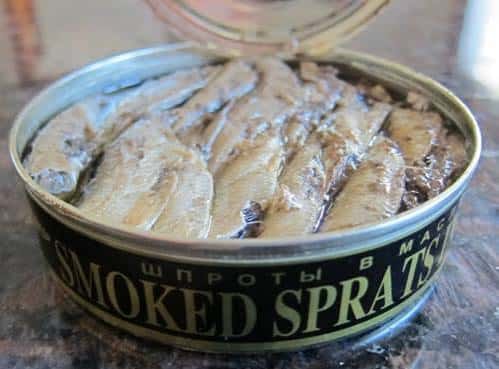

The U.S. Food & Drug Administration (FDA) has issued a public warning advising consumers, retailers, and restaurants not to eat, sell, or serve cold smoked sprats, a small oily fish, sold by Haifa Smoked Fish, Inc., citing potential contamination with Clostridium botulinum (C. botulinum), the bacterium that produces the toxin responsible for botulism. The advisory, published on October 23, 2026, followed an inspection of the company’s Jamaica, New York facility, which the FDA said revealed that the firm was producing cold-smoked sprats without the required food safety controls to prevent the growth of C. botulinum and the formation of its toxin.
The product is sold in bulk cardboard boxes and shipped refrigerated. It may also have been sold at restaurants and grocery store seafood counters with or without a label, and it can be frozen for up to one year, meaning that contaminated product may still be in consumers’ freezers. The sprats were distributed to retailers, restaurants, wholesalers, and food service customers in Connecticut, New Jersey, New York, and Pennsylvania, and the FDA has stated that the product may have been distributed further, reaching additional states. On October 27, 2026, the company recalled approximately 560 pounds of the product. The recall announcement states that no illnesses had been reported to date.
The FDA recommended that the company recall all cold smoked sprats currently on the market, but the firm declined, prompting the agency to issue the public alert directly to consumers. The agency noted that food contaminated with C. botulinum toxin can look, taste, or smell normal and still cause illness. Consumers who are unsure whether they have purchased the product are advised to discard it. Retailers and food service operators are instructed to clean and sanitize any surfaces or containers that may have touched the sprats.
Clostridium Botulinum Defined
Clostridium botulinum is a rod-shaped, spore-forming bacterium that lives in anaerobic, or oxygen-deprived, environments. Under favorable conditions, its spores can germinate into vegetative cells that produce botulinum neurotoxin, one of the most potent toxins known. The spores themselves are highly resistant to heat and can survive in improperly processed or preserved foods, but the toxin they produce is sensitive to heat and can be inactivated by heating at 80°C for ten minutes or an equivalent time-temperature combination.
The bacterium is widely distributed in nature, particularly in soil and aquatic environments. In food production, the greatest risk arises in low-acid, anaerobic, or reduced-oxygen products, such as vacuum-packaged fish, improperly canned goods, and fermented foods, where spores can germinate and toxin can accumulate if temperature, salinity, acidity, or other controls are inadequate. The FDA’s inspection of the Haifa facility found precisely this gap: the production of cold-smoked sprats without the controls needed to prevent C. botulinum growth and toxin formation.
Signs and Symptoms
Botulism is a neuroparalytic illness. The toxin attacks the body’s nerves and causes muscle weakness that can progress to paralysis. The classic symptoms include double vision, blurred vision, drooping eyelids, slurred speech, difficulty swallowing, dry mouth, and muscle weakness. In foodborne botulism, gastrointestinal symptoms such as nausea, vomiting, stomach pain, and diarrhea may also occur.
The paralysis is characteristically descending, beginning with the muscles of the head and neck and then moving to the upper body, arms, lower body, and legs. Respiratory difficulty is a common and dangerous development, because the toxin can weaken the muscles used for breathing. The incubation period for foodborne botulism is typically 12 to 48 hours, though it can range from a few hours to several days depending on the amount of toxin ingested.
Botulism is a medical emergency. The FDA advisory states that in severe cases, people will die without intensive care, and that anyone experiencing symptoms should seek immediate medical attention. The CDC similarly advises that people with signs of botulism should go to the emergency room without delay.
What Makes Botulism Dangerous
Botulism is dangerous for several reasons that distinguish it from many other foodborne illnesses.
The potency of the toxin. Botulinum neurotoxins are among the most toxic substances known. They exert their effects by targeting the presynaptic terminals of cholinergic nerves and cleaving SNARE proteins, which are essential for the release of acetylcholine. The result is a blockade of nerve-to-muscle signaling that produces flaccid paralysis.
The potential for respiratory failure. The muscles that control breathing are vulnerable to the toxin’s effects. Without mechanical ventilation, respiratory paralysis can be fatal. Even with modern intensive care, some patients require weeks or months of ventilator support before they recover.
The need for early antitoxin. Treatment relies on the administration of botulinum antitoxin, which prevents the toxin from causing further harm but cannot reverse damage that has already occurred. Antitoxin works best when given early in the illness, which makes prompt recognition of symptoms critical. With antitoxin and modern medical care, fewer than five of every 100 people with botulism now die, a substantial reduction from the historical mortality rate of approximately 50%.
Long-term recovery. Patients who survive botulism may experience fatigue and shortness of breath for years and may require long-term therapy. The paralysis caused by the toxin usually improves slowly, and some patients remain hospitalized for weeks or months.
Other Foodborne Botulism Outbreaks
The Haifa Smoked Fish advisory is the most recent event in a long record of foodborne botulism outbreaks linked to fish and other preserved foods.
Smoked fish from the Great Lakes. Some of the earliest well-documented U.S. outbreaks of type E botulism involved smoked fish. A 1960 outbreak in Minneapolis, Minnesota, was traced to smoked ciscoes from the Great Lakes, and a series of outbreaks in 1963 further established the link between commercially prepared smoked fish and type E botulism. The 1963 outbreaks prompted renewed attention to the hazards of C. botulinum in fishery products and contributed to the development of modern processing controls.
Fermented fish in Alaska. Foodborne botulism has been endemic among Alaska Native populations for centuries, with most cases linked to traditional fermented fish and aquatic animals, including fish heads (“stinkheads”) and fish eggs (“stink eggs”). During the period from 1950 to 2000, Alaska recorded 226 cases of foodborne botulism, and the mean annual incidence among Alaska Natives from 2000 to 2007 was slightly less than 800 times the overall U.S. rate. Similar traditions exist elsewhere in the Arctic, where Norwegian “rakfisk” has been associated with type E botulism.
Home-canned foods. Improperly home-canned low-acid vegetables remain a recurring source of foodborne botulism. In June 2024, an outbreak of multiple cases in Fresno County, California, was linked to home-prepared prickly pear cactus (nopales) that had been canned without adequate processing. The outbreak illustrated that the risk is not confined to commercial products; home preservation practices that fail to destroy spores or prevent anaerobic conditions can create the same hazard.
Infant botulism linked to formula. Between December 2023 and December 2025, the Centers for Disease Control and Prevention (CDC) investigated a multistate outbreak of infant botulism associated with powdered infant formula. A total of 51 infants in 19 states were hospitalized and treated with botulinum immune globulin, making it the largest number of infant botulism cases ever traced to a single source. Infant botulism differs from foodborne botulism in that the spores germinate and produce toxin in the infant’s intestinal tract rather than pre-formed toxin being ingested, but the clinical consequences, flaccid paralysis and the need for intensive care, are similar.
Commercially canned products. Improperly processed canned foods have caused notable outbreaks, including a 1919–1925 series of botulism cases linked to commercially canned olives that drew national attention and contributed to the development of modern canning regulations. More recently, in 2025 and 2026, canned tuna products were recalled over concerns that faulty easy-open lids could allow C. botulinum to enter and produce toxin, and some recalled product was inadvertently redistributed to retailers in nine states.
Uneviscerated fish. The sale of uneviscerated fish has been prohibited in New York State because C. botulinum spores are more likely to be concentrated in the viscera. Recalls of smoked whole herring and other uneviscerated fish products have been issued repeatedly because the products were processed without removing the internal organs.
Prevention and the Limits of Refrigeration
The FDA’s advisory for the Haifa sprats includes several practical recommendations. Consumers should not eat the product, even if it appears unspoiled, and should throw it away if they cannot confirm the source. Retailers, restaurants, and wholesalers should not sell or serve the sprats, and surfaces and containers that touched the product should be cleaned and sanitized.
For consumers who choose to prepare fish at home, the toxin is destroyed by heating to 80°C for at least ten minutes, but the spores themselves are more heat-resistant and require higher temperatures or pressure canning to eliminate. Refrigeration alone does not guarantee safety, because some strains of C. botulinum can grow and produce toxin at temperatures as low as 3°C. Vacuum packaging, which reduces oxygen, can create conditions favorable to the bacterium if temperature controls are inadequate, and food safety specialists advise opening vacuum-packed fish before thawing to restore aerobic conditions that inhibit toxin production.
Conclusion
The Haifa Smoked Fish advisory illustrates a persistent challenge in food safety: a pathogen that is invisible, odorless, and capable of causing a life-threatening paralytic illness, combined with a production environment in which the necessary controls were not applied. The FDA’s warning places the immediate burden on consumers and retailers to identify and discard the affected product, while the broader record of botulism outbreaks, from smoked Great Lakes fish to Alaskan fermented seafood, home-canned cactus, and infant formula, demonstrates that the risk is not limited to any single product category or production scale. For public health officials, the event reinforces the importance of process controls at the point of production, rapid consumer notification when a firm declines to recall, and early recognition of a clinical syndrome in which antitoxin timing can mean the difference between full recovery and prolonged paralysis.
