

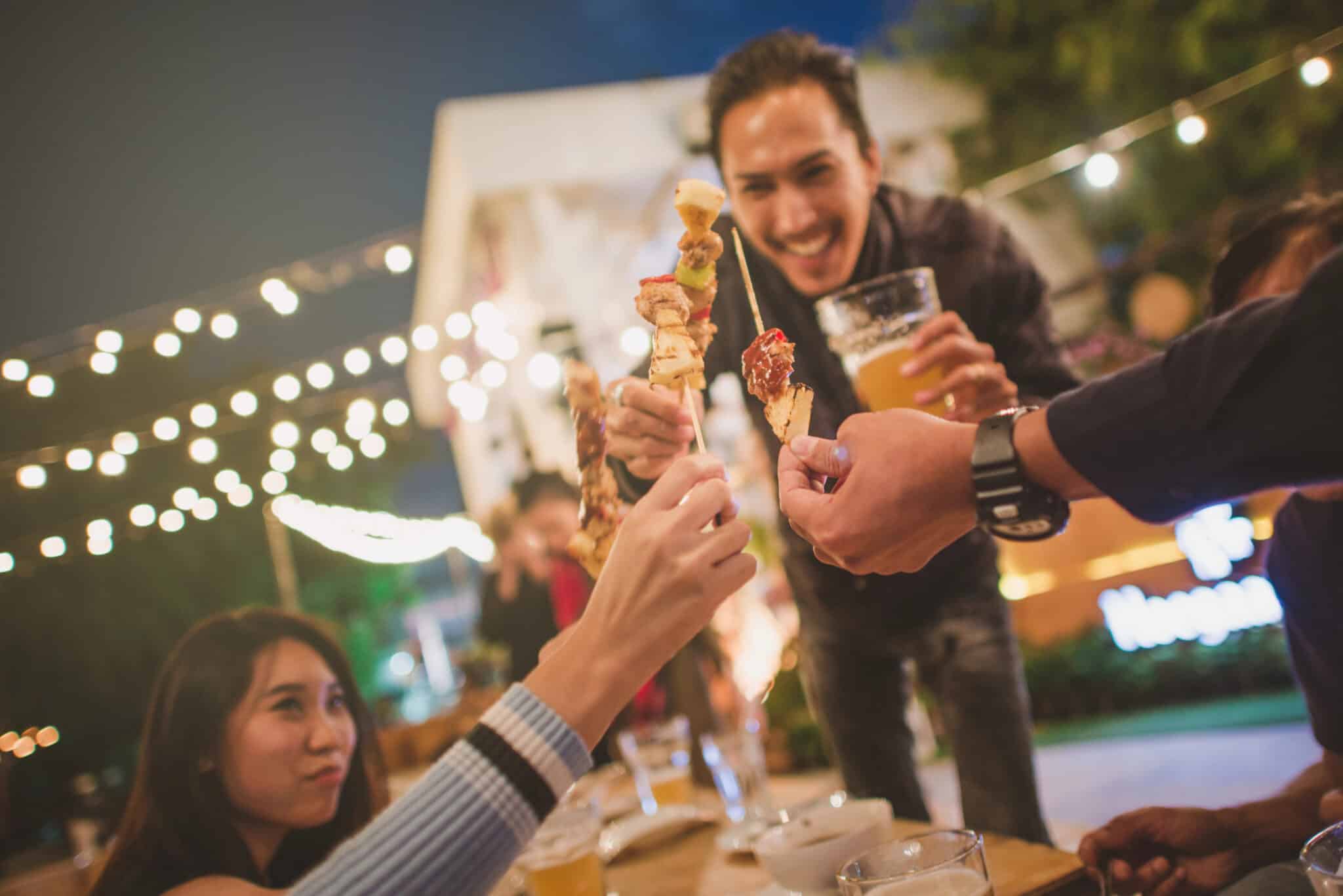

Large outdoor event organizers are responsible not only for programming and logistics, but also for public health. Food safety at festivals, fundraisers, community events, and sporting activities presents unique challenges that don’t always exist in controlled indoor environments.
Heat, crowd density, shared access to food and drinks, and temporary infrastructure all increase the risk of foodborne illness. And when something goes wrong, it affects not just attendees—but your event’s reputation and future viability.
A Quick Overview for Busy Organizers
- Outdoor environments make temperature control harder and bacterial growth faster.
- High foot traffic increases cross-contamination risks.
- Shared drink stations and condiment areas are often overlooked contamination points.
- Temporary handwashing and sanitizing setups are frequently under-resourced.
- Small, proactive design changes can dramatically reduce risk.
The goal isn’t perfection. It’s prevention through planning.
Why Outdoor Settings Change the Risk Profile
Unlike permanent kitchens or indoor venues, outdoor events rely on temporary equipment, fluctuating weather conditions, and large volunteer or seasonal staff teams. These variables introduce vulnerabilities.
1. Temperature Control Breakdowns
Foodborne bacteria grow rapidly between 40°F and 140°F. Outdoor summer events can push food into this “danger zone” quickly. Even short delays during transport, setup, or service can allow temperatures to drift.
Common weak points:
- Coolers opened repeatedly throughout the day
- Insufficient ice replenishment
- Food trays left uncovered in buffet-style setups
- Limited shaded storage areas
Without active monitoring, food that began safely chilled can become unsafe before anyone notices.
Risk Snapshot: Where Problems Commonly Start
| Risk Area | Why It Happens Outdoors | Organizer Countermeasure |
| Cold food warming too quickly | Direct sun + repeated cooler access | Use thermometers + scheduled ice rotation |
| Cross-contamination | Tight prep spaces + rushed volunteers | Separate prep zones + clear labeling |
| Shared condiment pumps | Hundreds of hands in short time | Single-serve packets or staff-managed stations |
| Limited handwashing access | Portable setups underused | Place sinks in high-traffic areas with signage |
| Trash overflow | Full bins attract pests | Increase pickup frequency |
Shared Drinks & High-Touch Surfaces: A Hidden Multiplier
Beverage stations can unintentionally become contamination hubs. When attendees repeatedly reach into communal coolers, scoop ice by hand, or handle multiple cans while choosing a drink, bacteria can easily transfer from one surface to another. Add warm temperatures and dense crowds, and the risk compounds.
Providing insulated drink holders—like personalized can koozie options ordered in bulk—can reduce unnecessary handling. When guests clearly identify their own beverages, they’re less likely to touch multiple containers or swap drinks accidentally. As a bonus, branded holders serve as practical keepsakes while reinforcing a more organized, hygienic beverage system.
Sometimes small environmental design changes do more than additional signage ever could.
A Practical Food Safety Checklist for Event Day
Before the Event
- Confirm all vendors understand safe holding temperatures.
- Require thermometers in every hot and cold unit.
- Designate shaded food storage zones.
- Map handwashing stations in advance.
During Setup
- Verify cold foods are below 40°F before service.
- Check hot foods are holding above 140°F.
- Label prep areas clearly (raw vs. ready-to-eat).
- Position trash and sanitizer stations near food zones.
During Service
- Assign staff to monitor temperature every 2 hours.
- Replace ice fully, not partially.
- Restock single-use utensils frequently.
- Remove food that has sat out beyond safe time limits.
Post-Event
- Discard questionable leftovers.
- Sanitize surfaces thoroughly before breakdown.
- Review any near-miss issues for improvement next year.
The Crowd Factor: Density Changes Behavior
Large gatherings create behavioral shifts. People rush. Volunteers multitask. Guests move quickly between attractions.
In dense crowds:
- Hand hygiene declines.
- People lean over food displays.
- Children interact freely with serving areas.
- Surfaces are touched repeatedly in short intervals.
High-touch surfaces—cooler lids, beverage taps, serving utensils, tent poles, and payment tablets—should be treated as priority sanitation zones, not afterthoughts.
A simple adjustment like assigning one rotating sanitation volunteer per food cluster can significantly reduce surface contamination.
Frequently Asked Questions
How often should food temperatures be checked at outdoor events?
At minimum, every two hours during service. In extreme heat, hourly checks are safer.
Are buffet-style setups safe outdoors?
They can be, but require sneeze guards, frequent monitoring, and strict time limits for food exposure.
What’s the safest way to manage condiments?
Single-serve packets reduce shared handling. If using pumps, assign staff to manage and wipe them regularly.
Do small community fundraisers face the same risks as large festivals?
Yes. The scale changes, but bacterial growth and cross-contamination risks remain the same.
Is ice safe for drinks?
Ice must be handled with scoops—not hands—and stored separately from food storage ice.
A Helpful Public Health Resource
For official guidance on temporary food service safety, the U.S. Food & Drug Administration provides a practical overview for event operators and vendors.
Reviewing current regulatory guidance before your event can help ensure compliance and prevent avoidable risks.
Designing for Prevention, Not Reaction
Food safety at outdoor events isn’t just about vendor compliance—it’s about system design. Clear layouts, temperature monitoring routines, managed drink stations, and proactive sanitation plans reduce risk before problems start.
