

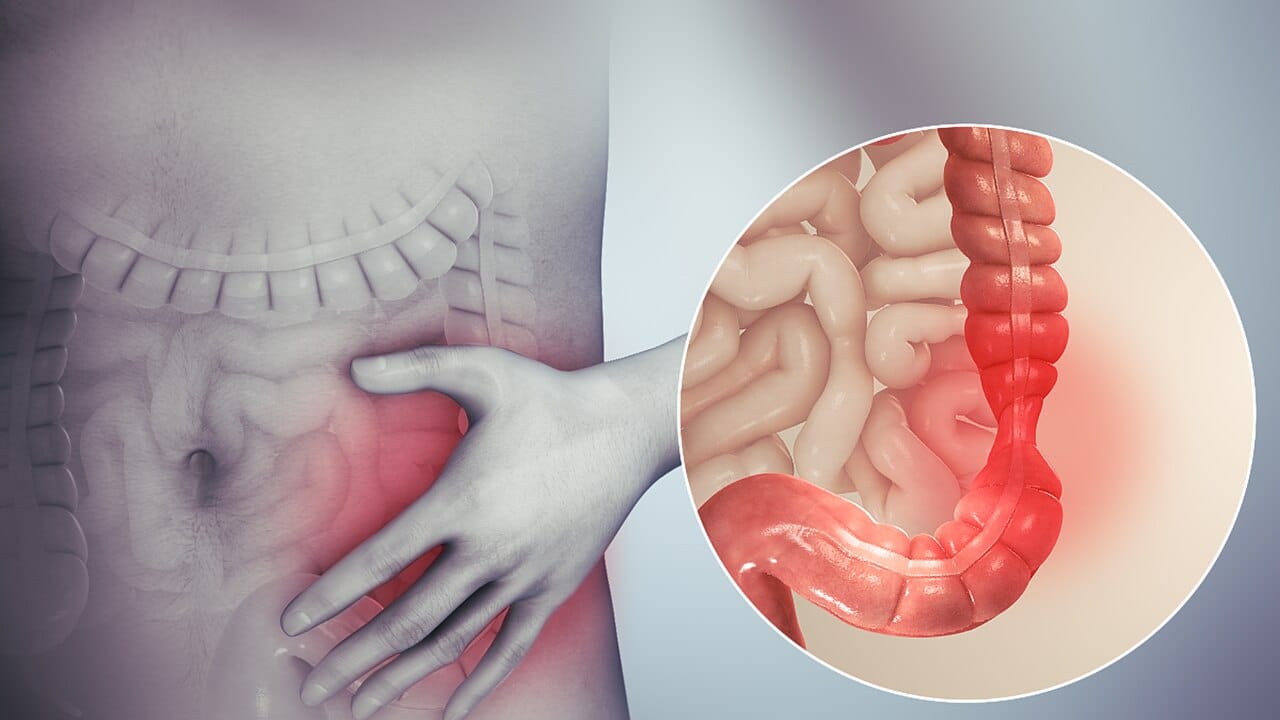

For most people, a bout of food poisoning follows a familiar arc: the queasy stomach, the cramping, the fever that comes and goes, a few days spent close to a bathroom, and then it ends. Within a week, the body has cleared the invader, and life resumes. But for a meaningful subset of people who contract Salmonella, the story doesn’t end there. Some become long-term carriers of the bacteria without ever feeling sick again. Others find that weeks or months after their gut has settled, new problems emerge — joint pain, digestive disorders, or in rare cases, infections that have nothing to do with the stomach at all. Understanding these two phenomena, lingering or recurring infection on one hand, and secondary complications on the other, requires looking past the textbook description of “food poisoning” and into the messier biology of how this bacterium interacts with the body over time.
Non-typhoidal Salmonella, the strains responsible for the overwhelming majority of foodborne cases in the United States and most of the developed world, typically enters the body through contaminated food: undercooked poultry, eggs, unwashed produce, or cross-contaminated kitchen surfaces are the usual suspects. The bacteria survive the stomach’s acidity in sufficient numbers to reach the small intestine, where they invade the cells lining the gut wall, triggering diarrhea, cramping, fever, and vomiting, usually beginning between six hours and six days after exposure.
In a healthy adult, the immune system mounts an effective response and the infection runs its course in four to seven days. Antibiotics are usually not recommended for uncomplicated cases, a point that matters quite a bit for what comes next. The bacteria are cleared, antibodies are produced, and the person returns to normal.
That’s the typical story. But Salmonella has evolved several strategies for persistence that complicate this picture, and it’s worth separating out what “getting it again” actually means, because the term covers several distinct biological events.
Reinfection: The Most Common Explanation for Recurrence
When someone recovers from Salmonella and then, weeks or months later, develops the same symptoms again, the most statistically likely explanation isn’t that the original infection never left. It’s that they’ve been exposed a second time, from a different source, and their immune system wasn’t equipped to stop it.
This comes down to basic immunology. The genus Salmonella contains more than 2,500 distinct serotypes, identified by variations in surface proteins called O-antigens and H-antigens. The immune response generated after an infection is largely serotype-specific. Antibodies produced against Salmonella Enteritidis, common in egg-related outbreaks, offer limited protection against Salmonella Typhimurium, often linked to poultry and produce. Even within a single serotype, immunity tends to wane over time and isn’t considered durable the way immunity to some viral infections can be.
This means a person who suffered through a Salmonella infection in the spring and develops near-identical symptoms in the fall has, in most cases, simply encountered the bacteria again, likely a different strain, from a different contaminated source. Given how widespread Salmonella contamination is in the food supply, particularly in poultry, eggs, and produce like cantaloupe, cucumbers, and leafy greens, repeat exposure over the course of a year is not unusual for people whose diet or food handling habits put them at ongoing risk.
The practical implication for anyone investigating “recurring” Salmonella in themselves or a family member: before assuming a single infection has somehow persisted or returned, it’s worth examining whether the household’s food sources, kitchen practices, or even pets (reptiles and backyard poultry are well-documented reservoirs) have created repeated opportunities for exposure.
When the Infection Doesn’t Fully Clear: The Chronic Carrier State
Reinfection accounts for most recurrences, but it isn’t the whole story. A smaller but well-documented phenomenon involves people who become chronic carriers, individuals who continue to harbor and shed live Salmonella bacteria long after their symptoms have resolved, sometimes for a year or more.
The textbook example involves Salmonella Typhi, the cause of typhoid fever, and its close relative Salmonella Paratyphi. These typhoidal strains behave differently from the non-typhoidal strains responsible for ordinary food poisoning. After acute illness resolves, somewhere between one and five percent of infected individuals become long-term carriers, with the gallbladder serving as the primary hideout. The bacteria form biofilms, protective bacterial communities, on the surface of gallstones, which shields them from both the immune system and antibiotics. People with pre-existing gallstones or biliary abnormalities are at substantially elevated risk for this reason. The historical case of “Typhoid Mary” Mallon, who unknowingly infected dozens of people over years while asymptomatic herself, remains the most famous illustration of how this state can persist undetected.
For non-typhoidal Salmonella, chronic carriage is less common but still documented, with estimates generally placed around one percent of cases. The mechanism is less centered on the gallbladder and more often involves prolonged colonization of the intestinal tract itself, particularly in certain risk groups.
Several factors increase the likelihood that someone will continue shedding Salmonella well past the point of feeling better. Age plays a role: both very young children and elderly adults are more likely to shed the bacteria for extended periods, sometimes for weeks after symptoms resolve, which is part of why daycare centers and food service workers often face waiting periods before returning to normal activities even after feeling fine. Immune status matters considerably too — people who are immunocompromised, whether due to HIV/AIDS, chemotherapy, transplant medications, or chronic conditions requiring immunosuppressive drugs, clear Salmonella less efficiently and are more prone to prolonged shedding or recurrent invasive infections.
Perhaps counterintuitively, antibiotic use during an uncomplicated Salmonella infection can actually prolong the carrier state rather than shorten it. This is a primary reason current guidance generally advises against antibiotics for otherwise healthy people with uncomplicated Salmonella gastroenteritis: antibiotics can disrupt the normal gut microbiome that would otherwise crowd out Salmonella, without necessarily eliminating bacteria that have taken refuge in protected niches like the gallbladder. Underlying gallbladder or biliary tract disease creates a physical reservoir where bacteria persist largely insulated from immune surveillance.
For the person experiencing this, the chronic carrier state is often invisible. There’s no ongoing illness, nothing that would prompt a doctor’s visit. The bacteria are simply present, periodically shed in stool, sometimes in infectious quantities, sometimes not detectable at all depending on when a sample is taken. This intermittent shedding pattern is part of why diagnosing chronic carriage typically requires multiple stool cultures spaced over weeks or months rather than a single test.
True Reactivation: The Rarest Scenario
The third possibility, and the one most people probably have in mind when asking about “latent” Salmonella, is genuine reactivation: an infection that becomes dormant and then flares back into active illness without any new exposure.
This is the least common of the three scenarios and is most relevant to typhoidal Salmonella rather than the non-typhoidal strains behind typical food poisoning. In chronic typhoid carriers, biliary disease flares, gallstone movement, or significant immune suppression can theoretically trigger a transition from asymptomatic shedding back into active infection, though this is discussed more in the context of typhoid-endemic regions than in the kind of foodborne illness most commonly encountered in the U.S.
For non-typhoidal Salmonella, true “reactivation” is much less established in the medical literature. What does happen, and what sometimes gets described informally as a relapse, is that immunocompromised individuals can experience recurrent bouts of Salmonella bacteremia (bloodstream infection) stemming from incompletely cleared intestinal colonization. This is well documented in advanced HIV/AIDS, where recurrent non-typhoidal Salmonella bloodstream infections are common enough to be considered an AIDS-defining condition in some classification systems. In these cases, the underlying immune deficiency, rather than anything unusual about the bacteria, is what allows the infection to resurface.
For the average person without significant immune compromise, true reactivation of a fully resolved Salmonella infection without any new exposure is uncommon. This reframes the more common question, “Did my Salmonella come back?”, toward a more useful one: “Did a new exposure occur, or might testing reveal ongoing low-level carriage that was never fully resolved?”
Secondary Infections and Complications: The Bigger Story
While chronic carriage and reactivation get a lot of attention because they sound dramatic, the more statistically significant story for most people who get Salmonella poisoning involves what happens in the weeks and months after the infection resolves, even when the bacteria itself is long gone. These post-infectious complications affect a far larger proportion of people than chronic carriage ever does, and they’re increasingly recognized as a substantial part of the overall burden of foodborne illness.
Post-Infectious Irritable Bowel Syndrome
Perhaps the most common, and most underappreciated, secondary effect of a Salmonella infection is a lasting change in gut function. A meaningful body of research has established that bacterial gastroenteritis, including but not limited to Salmonella, can trigger what’s known as post-infectious irritable bowel syndrome. Studies looking at this phenomenon have found that somewhere in the range of ten to thirty percent of people who experience an episode of infectious gastroenteritis go on to develop new, persistent symptoms resembling IBS — bloating, altered bowel habits, abdominal discomfort, and food sensitivities — that can last for months or, in some cases, years after the original infection has cleared.
The proposed mechanisms involve lasting changes to the gut’s nervous system, persistent low-grade inflammation in the intestinal lining, and shifts in the composition of the gut microbiome that don’t fully return to their pre-infection state. The infection leaves behind a gut that functions differently than it did before, even though no infectious organism remains. For someone trying to understand why their digestion never quite felt “normal” again after a bout of food poisoning months earlier, this is often the explanation, and it’s a far more common outcome than chronic bacterial carriage.
Reactive Arthritis
Another well-documented complication is reactive arthritis, sometimes still called Reiter’s syndrome when it occurs alongside eye inflammation and urinary symptoms. This condition typically develops one to four weeks after the gastrointestinal infection resolves and involves the immune system, having been activated to fight Salmonella, mistakenly attacking the body’s own joint tissues.
The joints most commonly affected are the knees, ankles, and feet, often asymmetrically. Some people also develop eye inflammation (conjunctivitis or uveitis) or urinary tract irritation around the same time. Reactive arthritis following Salmonella infection occurs in roughly one to three percent of cases overall, but the risk is substantially higher in people carrying a genetic marker called HLA-B27.
The good news is that reactive arthritis is usually self-limiting, resolving over weeks to months, though a minority go on to develop chronic joint symptoms. The connection to a gastrointestinal infection weeks earlier is often missed, since by the time joint symptoms appear, the digestive symptoms are a distant memory.
Invasive Disease: When Salmonella Leaves the Gut
In a smaller percentage of cases, typically cited in the range of five to ten percent for non-typhoidal Salmonella, but concentrated among infants, the elderly, pregnant women, and immunocompromised individuals, the bacteria don’t stay confined to the intestines. They cross into the bloodstream, a condition called bacteremia, and from there can seed other parts of the body.
This is where some of the more serious secondary infections come into play. Salmonella has a tendency, once in the bloodstream, to seek out and colonize areas of the body that are already structurally compromised. Bones and joints can become infected, leading to osteomyelitis or septic arthritis, particularly in people with sickle cell disease, who are at notably elevated risk for Salmonella bone infections. Heart valves, especially those already damaged or replaced with prosthetic valves, can become sites of endocarditis. And blood vessels, particularly the aorta in older adults with existing atherosclerosis or aneurysms, can become infected in a condition known as a mycotic aneurysm, a serious and potentially life-threatening complication.
What makes these invasive secondary infections tricky diagnostically is the time lag involved. Someone might have a relatively unremarkable bout of Salmonella gastroenteritis, recover, and then present weeks or months later with back pain from a vertebral infection, or a new heart murmur from valve infection, with no obvious connection drawn back to the food poisoning episode that preceded it. Clinicians who aren’t specifically thinking about this connection may not ask about recent gastrointestinal illness when evaluating these presentations, which can delay diagnosis.
Other Documented Secondary Effects
Beyond the more commonly discussed complications, Salmonella infection has also been associated, though less frequently, with Guillain-Barré syndrome, a neurological condition in which the immune system attacks the peripheral nerves. While Campylobacter is the bacterial infection most strongly linked to Guillain-Barré syndrome, Salmonella has been reported as a triggering pathogen in a smaller number of cases as well.
There’s also the matter of recurrent bacteremia in immunocompromised populations, mentioned earlier in the context of HIV/AIDS, where the line between “secondary infection” and “reactivation of the original infection” becomes genuinely blurry. In these patients, what might look like a new infection on a blood culture could represent either a fresh exposure or the resurgence of bacteria that had been present at low levels in the gut all along, illustrating how the categories discussed throughout this piece aren’t always as cleanly separable in real clinical practice as they are in theory.
Putting It Into Context
Stepping back, the overall picture that emerges is one of a bacterium that, for the vast majority of the roughly 1.35 million annual non-typhoidal Salmonella illnesses estimated in the United States, behaves exactly as expected: it causes a few uncomfortable days of illness and then it’s gone, cleared by a competent immune system with no lasting trace.
But within that large number, several smaller populations experience something different. A fraction become temporary or, rarely, long-term carriers, continuing to shed bacteria without feeling unwell, a state that matters more for its implications for transmission to others than for the carrier’s own health. A larger fraction, plausibly the largest downstream effect of Salmonella infection overall, experience lasting changes to gut function that get labeled as post-infectious IBS, a condition that may never get traced back to the original infection at all. A smaller group develops reactive arthritis in the weeks following infection, an autoimmune aftershock triggered by the body’s own response to the bacteria rather than by the bacteria itself. And a smaller group still, concentrated among those with pre-existing vulnerabilities, experiences the infection spreading beyond the gut entirely, with consequences that can show up in bones, joints, heart valves, or blood vessels long after the original digestive symptoms have faded from memory.
For anyone trying to make sense of symptoms that seem to follow a Salmonella infection, whether that’s a recurrence of the original illness, a new and unrelated set of symptoms, or something in between, the key questions worth asking are less about whether the bacteria “came back” in some mysterious sense, and more about which of these well-documented pathways might explain what’s happening: a new exposure, a lingering carrier state, or one of the post-infectious complications that can emerge well after the original infection has run its course. Each of these has its own evaluation and, where relevant, its own treatment approach, and distinguishing between them is the first step toward understanding what’s actually going on.
