


The adhesion problem, the detection problem, and the prevention toolkit
Most foodborne pathogen control assumes a wash step will catch what the field misses. Cyclospora cayetanensis breaks that assumption. It resists the sanitizers the industry relies on, it lodges in leaf structures that water cannot reach, and it is hard to detect even when you know it is there. The practical consequence is that cyclospora is close to a pure prevention problem: if it reaches the leaf, the supply chain has essentially no reliable way to remove it.
Part One: How the parasite gets onto lettuce and why it stays
The organism
Cyclospora cayetanensis is a single-celled apicomplexan parasite — more closely related to animals than to bacteria or viruses (Stanford Report, July 2026). Its infectious stage is the oocyst: a spherical or ovoid body 8 to 10 micrometers across, enclosed in a double-layered, smooth outer wall (AffiTechBio review, July 2026; Stanford Report, July 2026). That wall is the entire problem. It is what allows the organism to survive weeks in soil and water, and what makes it indifferent to chlorine.
Two biological facts drive everything about control strategy:
It is an obligate human parasite. C. cayetanensis is believed to infect only humans and to spread only through human fecal matter (FDA, “Cyclospora” pathogen page, 2026). There is no cattle reservoir, no wildlife intrusion vector, no bird contamination pathway. Every contamination event traces back to human feces reaching the crop or its water. This narrows the problem enormously — and makes it uncomfortable, because it points at sanitation infrastructure and human waste management rather than at wildlife fencing.
Oocysts are not infectious when shed. They leave the body unsporulated and require time in the environment — roughly a week, sometimes longer — to mature into their infectious form (Johns Hopkins Bloomberg School of Public Health, July 23, 2026; UF/IFAS FS440). This is why the parasite is not readily transmitted person to person (FDA fact sheet material summarized by AffiPCR, July 2026).
That lag has an underappreciated implication for farm investigation: contamination did not happen at harvest. For an oocyst to be infectious on a leaf at harvest, it must have arrived days to weeks earlier, matured in place or in the water supply, and persisted. A worker with poor hand hygiene on harvest day is a real hazard for bacteria — but for cyclospora, the timeline points upstream, most often to water. As Johns Hopkins’ Kellogg Schwab described the cycle: the parasite matures in the environment after being shed, and if it reaches irrigation water it can contaminate further crops and infect more people (Johns Hopkins Hub, July 23, 2026).
How it reaches the leaf
The dominant route for leafy greens is water contacting the edible portion of the plant.
Overhead irrigation is the most direct pathway, because water sprayed onto the crop lands on exactly the tissue people eat. Drip irrigation, which delivers water at the root zone, carries meaningfully lower risk — though not zero, since splashed soil can still reach low-growing plants (International Fresh Produce Association, Cyclospora FAQ, updated July 2026). Heavy rain and flooding do the same thing by splashing contaminated soil or water onto the canopy (IFPA, July 2026).
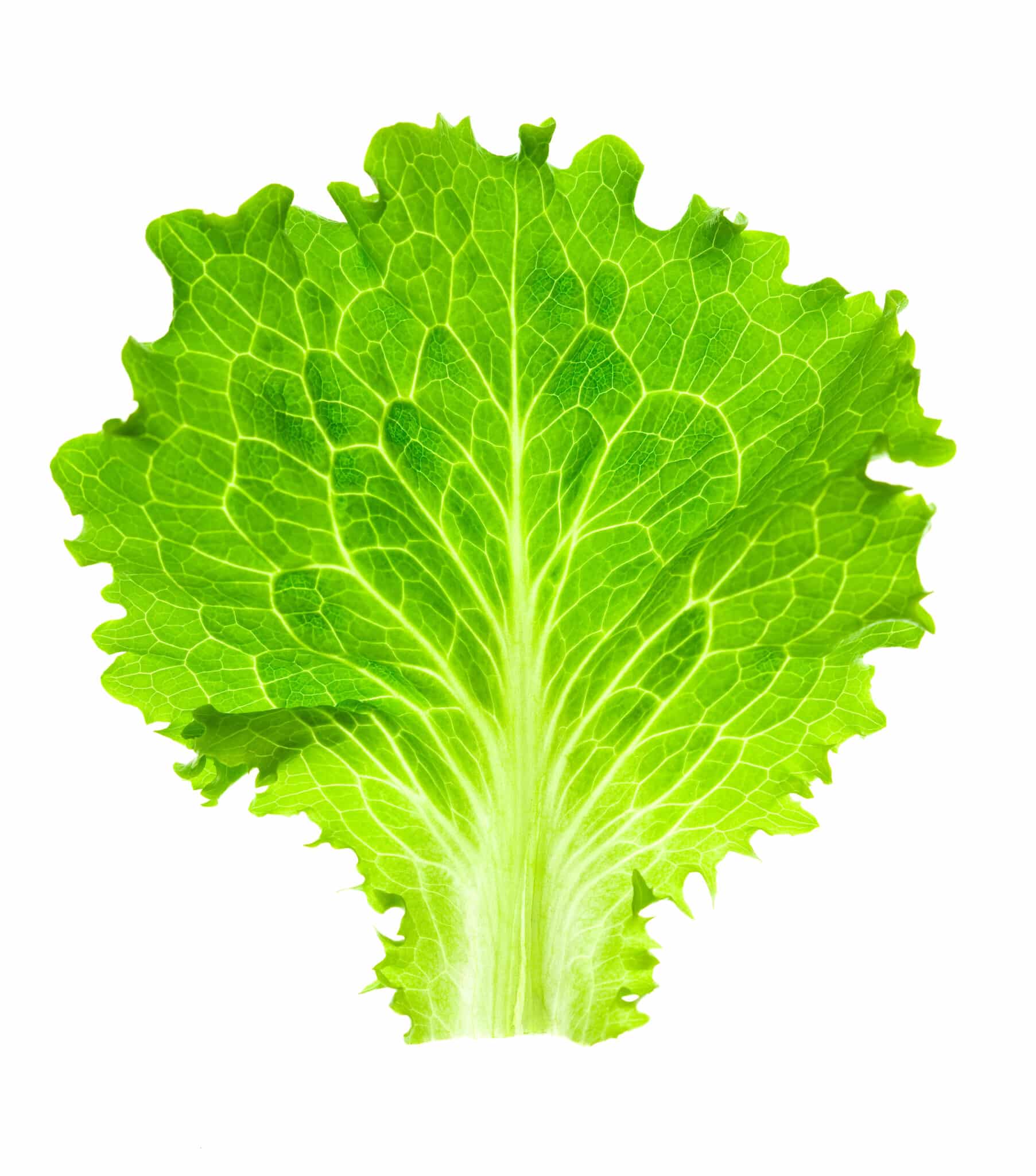
Iceberg lettuce is structurally unlucky here. It grows low, forms a dense head with overlapping leaves that trap and hold water and soil particles, and is harvested and eaten raw.
Soil is a documented reservoir. Contact with human-feces-contaminated soil has been strongly associated with cyclospora infection, with higher prevalence where handwashing water was unavailable in agricultural operations; Italian researchers recovered oocysts from roughly 12 percent of soil samples tested (NACMCF, “Cyclospora cayetanensis in Produce,” 2023, citing Giangaspero et al.).
Critically, cyclospora is not exotic to the United States. Center for Produce Safety research established that the parasite is endemic in the U.S. and recoverable from both wastewater and irrigation water, which the organization characterizes as a significant risk for produce contamination (Center for Produce Safety project summary; USDA National Agricultural Library). This complicates the common assumption that cyclospora is strictly an import problem.
Why it stays put
Here honesty is required: the specific adhesion mechanisms of Cyclospora oocysts on produce surfaces are not well characterized. Scientists are still working out the exact chemistry (Scrunchy Living summary of current guidance, July 2026). Much of what the industry operates on is inference from two adjacent literatures — bacterial attachment studies on leafy greens, and Cryptosporidium work, which shares the resistant-oocyst architecture.
What is established, and what can reasonably be inferred:
Surface topography traps particles. Research on spinach found that leaf vein density correlated positively with the failure to recover E. coli from surfaces — not just with a plain water rinse, but under a more aggressive detergent wash protocol as well. The same topography helped organisms escape chlorine inactivation (Frontiers/PMC study on leaf surface topography, 2020). Leaf surfaces are highly heterogeneous, with veins, stomata, and trichomes creating protected microenvironments where water and nutrients concentrate — and where arriving pathogens preferentially lodge (same study).
Scale is the key variable. At 8 to 10 micrometers, a cyclospora oocyst is dimensionally comparable to the surface features it encounters. It is not a smooth ball on a smooth plane; it is a particle roughly the size of the crevices available to it. Extension guidance frames this in blunt practical terms: produce with many bumps and high surface area — leafy greens, herbs, melons — is particularly difficult to wash, because the parasite lodges on tiny surface irregularities and can be impossible to fully remove (University of Minnesota Extension, July 2026). FDA’s own consumer guidance concedes that rinsing is an appropriate first step but may not reliably eliminate the parasite (FDA Cyclospora page, 2026).
Hydrophobicity works against washing. The lettuce cuticle is waxy; the oocyst wall is a lipid-and-protein-containing resistant structure. Water alone has poor mechanical purchase on this interface. FDA advises against soap or bleach on produce because produce is porous and absorbs residues (FDA guidance summarized by Scrunchy Living, July 2026) — which removes the surfactant option that might otherwise help.
Cutting and shredding change the risk profile. This is directly relevant to the 2026 outbreak, which involved shredded iceberg. Cut edges expose interior tissue and release plant exudates, creating fresh attachment surfaces that intact cuticle does not offer. More consequentially, shredding is a mixing operation: contamination originating on a small number of heads is distributed across an entire processing batch. FDA advises consumers to discard the outer two to three layers of leafy greens (FDA Cyclospora page, 2026) — advice that is structurally unavailable once the product has been shredded and bagged.
Why sanitizers fail
Chlorine-based sanitizers do not work. FDA states plainly that cyclospora parasites are resistant to standard chlorine-based sanitizers, and that commercial washing processes may be insufficient to remove the parasite (FDA Cyclospora page, 2026). UF/IFAS is equally direct: sanitizers used in fresh produce settings are not effective against cyclospora, owing to the oocysts’ protective coating (UF/IFAS FS440).
There is historical precedent for how far this resistance extends — a documented cyclospora outbreak was associated with chlorinated drinking water (Rabold et al., Lancet, 1994).
Heat is the reliable kill step. FDA advises that heating produce to at least 158°F (70°C) is expected to inactivate the parasite, and cooking is more dependable than washing or routine chemical sanitizing (FDA guidance via UConn Extension, July 2026; Penn State Extension, July 2026). For iceberg lettuce destined for a taco, this is not an available intervention.
Vinegar, baking soda, and commercial produce washes have no strong evidence behind them for this organism (Scrunchy Living, July 2026; Penn State Extension, July 2026).
The summary judgment from extension food safety specialists is that cyclospora prevention requires a systems-based approach precisely because no single dependable post-harvest intervention can correct fecal contamination of fresh produce (UConn Extension, July 2026).
The detection problem compounds it
A validated FDA method exists — BAM Chapter 19b — but its sensitivity on leafy greens is limited at realistic contamination levels. In Canadian Food Inspection Agency verification work, diagnostic sensitivity for leafy greens spiked with 200 oocysts per 25 grams was 93 percent; at 10 oocysts per 25 grams it fell to 30 percent (CFIA verification study, PMC8954584). Berries showed a comparable drop, from 100 percent to 44 percent.
In other words, at low-but-still-infectious contamination levels, testing misses roughly seven out of ten leafy green samples. In a CFIA survey of 1,759 imported leafy green, herb, and berry samples, only 0.28 percent were positive (same study) — a figure that reflects both genuine rarity and the method’s detection floor.
This is the technical reason a company’s assertion that no product sample tested positive carries little exculpatory weight for this particular parasite. Negative results are weak evidence when the assay’s sensitivity is 30 percent.
Part Two: Prevention on the farm
The candid starting point
There is currently no FDA guidance or validated, cyclospora-specific protocol telling growers exactly how to prevent contamination (IFPA, July 2026). What exists is general Good Agricultural Practices, believed to reduce risk broadly across pathogens but never developed or validated specifically against this organism (IFPA, July 2026). UF/IFAS says the same thing in its own voice: at present there are no specific control strategies beyond strict GAP adherence plus targeted emphases (UF/IFAS FS440).
Everything below should be read in that light — expert-informed and biologically sound, but not validated against cyclospora outcomes.
Control point 1: Keep human waste out of the growing environment
Because humans are the only source, prevention effort concentrates here. UF/IFAS recommendations, paraphrased and grouped:
- Provide enough toilets, keep them accessible, and keep them functioning. Insufficient or unpleasant facilities produce open-field defecation, which is the failure mode this entire control point exists to prevent.
- Site and service portable toilets away from growing areas and away from all water sources, so that a leak or a servicing spill cannot reach either the crop or the irrigation supply.
- Use reputable third-party contractors for cleaning and servicing, and dispose of human waste into an adequate sewage system.
- Write corrective-action procedures for leaks and spills before one happens, and monitor against them.
- Map every septic and sewage system on and near the operation, including drain fields, so that contamination pathways are known rather than discovered during an outbreak investigation.
(All from UF/IFAS FS440; echoed in Western Growers’ industry resource summary, July 2026.)
Control point 2: Protect and manage agricultural water
Water is the highest-leverage intervention because it is the dominant delivery route.
Source selection. UF/IFAS advises avoiding surface water sources, after plant establishment, for any activity contacting the harvestable portion of the crop (UF/IFAS FS440). This is the single most consequential line in the grower literature. Surface water is exposed to upstream sewage, informal settlements, and runoff; groundwater generally is not. Extension specialists note that well water is very unlikely to contain the parasite (University of Minnesota Extension, July 2026).
Mapping. Map water sources and adjacent and upstream land uses, so that risks from neighboring operations are identified rather than assumed away (UF/IFAS FS440).
Testing. Growers using private wells or surface water for irrigation or produce washing should monitor water quality routinely through certified laboratories and follow applicable FSMA Produce Safety Rule requirements and state guidance (University of Maine Extension, July 2026). Generic E. coli is the practical indicator: if it is present, human feces may be present, and where human feces are present, cyclospora and other pathogens may follow (University of Minnesota Extension, July 2026). This is an indirect proxy — testing directly for cyclospora is neither routine nor sensitive — but it is the tool that exists.
Delivery method. Shifting from overhead irrigation to drip meaningfully reduces the risk of depositing waterborne oocysts on edible tissue (IFPA, July 2026).
Treatment. This is where the toolkit thins. Chlorination should not be relied upon. UV is promising by analogy — Cryptosporidium, which is chlorine-resistant, responds well to high UV doses (PLOS One, 2019) — but this is extrapolation, not validated cyclospora data. The Center for Produce Safety has funded work systematically evaluating gamma radiation, UV, ozonation, and chlorine dioxide gas against cyclospora oocysts, precisely because so few inactivation studies exist (Center for Produce Safety; USDA NAL). Physical filtration is mechanically plausible given oocyst size but is not established practice for irrigation-scale volumes.
Control point 3: Worker health, hygiene, and training
A framing note first: agricultural workers in cyclospora-endemic regions are more often victims of inadequate sanitation infrastructure than they are the origin of it. The controls below work best when read as employer obligations rather than worker failings.
- Deliver training in workers’ native language and appropriate to their cultural context, education level, and background (UF/IFAS FS440). Training that is not understood is not a control.
- Train on handwashing, recognition of foodborne illness symptoms, and the principle that sick workers should not work.
- Train on correct toilet use, including disposing of toilet paper inside the toilet rather than on the ground — a specific and frequently overlooked transmission pathway.
- Ensure supervisors actively monitor hygiene and sanitation practices rather than assuming compliance.
- Establish policies that genuinely encourage workers to report gastrointestinal illness, and exclude symptomatic employees from handling fresh produce until recovered (University of Maine Extension, July 2026). This only functions where reporting does not cost workers income or employment; paid sick leave is a food safety control, not merely a labor benefit.
- Clean and sanitize worker tools before and after use (UF/IFAS FS440).
Control point 4: Weather events and field conditions
- Develop a plan, in advance, for preventing contamination after significant weather events — flooding, hurricane wind damage, and similar disruptions that move water and soil unpredictably (UF/IFAS FS440).
- Treat flooded ground as contaminated until assessed. Floodwater is a plausible vector for both sewage and previously deposited oocysts.
- Consider contamination potential across all three phases — preharvest, harvest, and postharvest — rather than treating field and packhouse as separate risk domains (UF/IFAS FS440).
Control point 5: Seasonality and timing
Cyclospora infections occur most frequently in the United States from May through August (CDC, via Penn State Extension, July 2026). Canadian outbreak investigations show the same May-to-August seasonality (CFIA study, PMC8954584). Water source vigilance, testing frequency, and irrigation method should tighten during this window rather than remaining constant year-round.
What this adds up to
The control logic for cyclospora inverts the usual food safety hierarchy. For most pathogens, on-farm prevention reduces load and downstream processing provides a second line of defense. For cyclospora, there is effectively no second line: the oocyst wall defeats the sanitizers, leaf topography defeats the wash, shredding amplifies whatever contamination exists, and the detection method is likely to miss it either way.
Everything therefore rides on keeping human feces out of the water and the field. That is not a technology problem. It is a sanitation infrastructure, worker welfare, and water sourcing problem — which is why it recurs, and why it recurs seasonally in the same regions.
The gap in validated science is real. Cyclospora cannot be cultured in the laboratory, which has limited the number of oocysts available for inactivation studies, and viability assessment requires a trained parasitologist to microscopically confirm sporulation (Center for Produce Safety; USDA NAL). Until those bottlenecks break, growers are working from sound biological inference rather than validated protocol — and consumers are relying on farm-level prevention that no downstream step can verify.
