

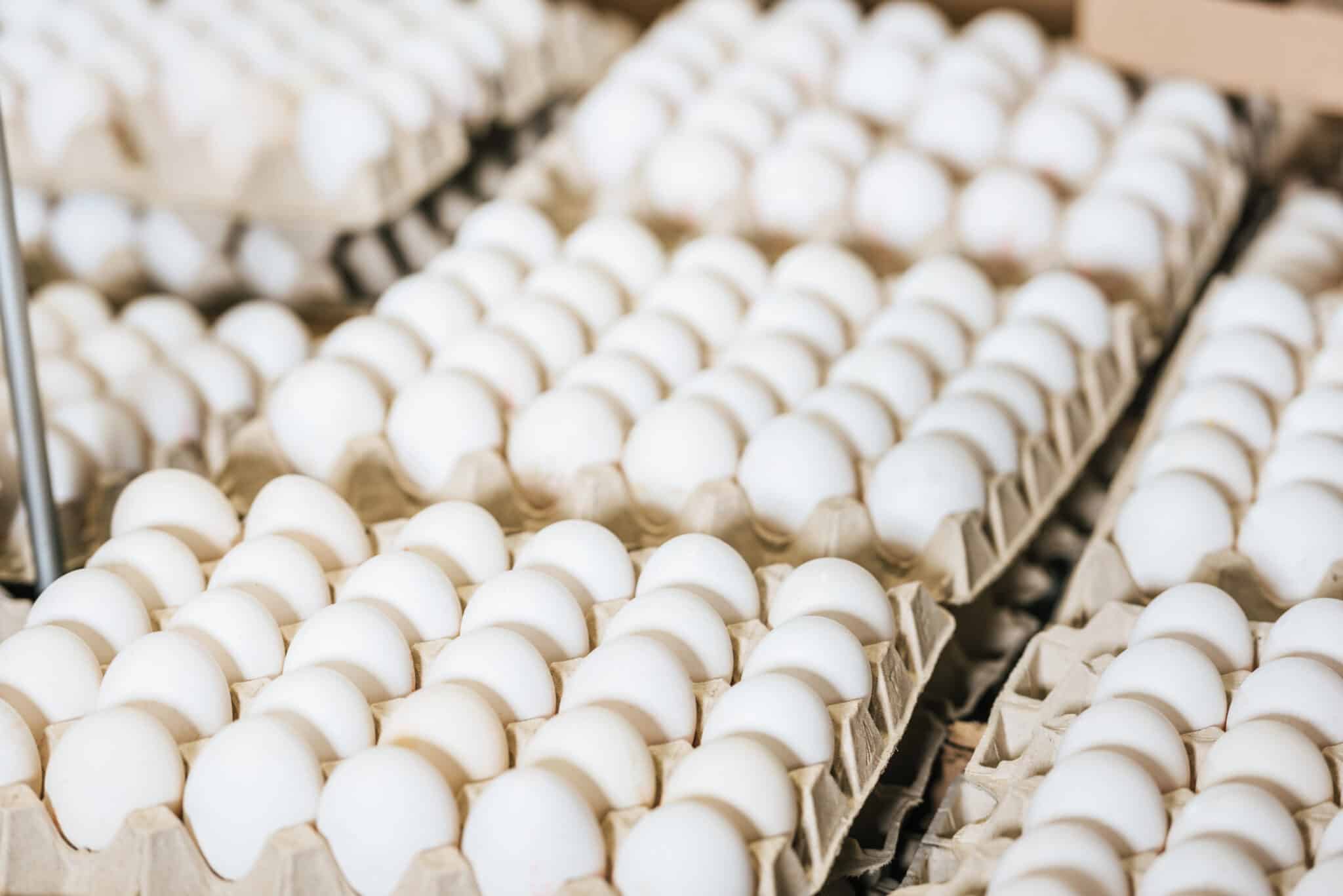

Federal investigators have linked a multistate outbreak of *Salmonella* Enteritidis to shell eggs produced on two Texas farms, and the illness map is overwhelmingly a Texas map. Of the 98 confirmed cases across 17 states, 73 are Texans — roughly three out of every four.**
Reported July 27, 2026. Case counts reflect CDC and FDA data current as of July 24, 2026.
The Number of Victims
The Centers for Disease Control and Prevention and the Food and Drug Administration, working with state and local health departments, are investigating an outbreak of Salmonella Enteritidis linked in part to shell eggs recalled by Midwest Poultry Services, L.P., an Indiana-based, family-owned producer that operates two farms in Texas.
As of the FDA’s July 24 update:
Confirmed illnesses – 98
States with cases – 17
Hospitalizations – 26
Deaths – 0
First illness onset – November 21, 2025
Most recent illness onset – June 30, 2026
Investigation status – Open / ongoing
Among ill people for whom investigators had food-history information — 44 individuals — 40, or 91 percent, reported eating eggs before they got sick. That is an unusually strong signal in an egg outbreak and is part of what pointed investigators toward shell eggs as the vehicle.
Texas is at the Center of this Outbreak of Salmonella
The state-by-state breakdown makes the geography plain:
-Texas — 73
– Louisiana — 5
– Arizona — 4
– Georgia — 2
– New Mexico — 2
– One case each in California, Colorado, Illinois, Michigan, Mississippi, Missouri, Nevada, New York, North Carolina, Oklahoma, South Carolina, and West Virginia
That concentration is consistent with where the eggs went. The recalled product was shipped to foodservice and retail customers in Texas, Oklahoma, and Louisiana, and reached shoppers at Kroger stores in Texas and Louisiana, Brookshire Grocery stores in Texas, Oklahoma, Arkansas, and Louisiana, and smaller retail and foodservice outlets in those states plus Mississippi and New Mexico.
It is worth being precise about what the map does and does not show. The case locations are where sick people lived, not where the recalled eggs were confirmed to have been distributed. FDA has confirmed distribution only in Arkansas, Louisiana, Mississippi, New Mexico, Oklahoma, and Texas — and cautions that product could have traveled farther. Several states with cases, including New York, Michigan, and West Virginia, are not on the confirmed-distribution list. Arkansas, conversely, is a confirmed distribution state with no reported cases.
For Texans, the practical takeaway is straightforward: this outbreak is happening in your grocery aisle more than anyone else’s.
The Recall
On July 22, 2026, Midwest Poultry Services voluntarily recalled **1,589,577 dozen shell eggs — roughly 19 million individual eggs.**
What’s covered:
– White shell eggs and brown cage-free shell eggs
– Sold in bulk and retail packs of 6, 12, 18, 24, 30, 36, and 60
– Produced and distributed from the company’s Texas farms between June 6 and July 3, 2026
– Sell-by or best-by dates between **July 20 and August 17, 2026**
Brands: Kroger, Simple Truth (cage-free brown), Brookshire’s, Country Morning, and Cal-Maine Sunups, plus unbranded bulk cases sold to foodservice.
How to identify them: Check the side of the carton, not the top. The recall applies only to cartons printed in date-coding ink with plant code P-1950 or 0840962 and a Julian date between 157 and 184. Julian dates count days of the year, so 157 through 184 corresponds to roughly June 6 through July 3.
If you transferred eggs to a different container and can’t check the code, FDA’s guidance is to throw them out.
No other Midwest Poultry Services products are part of the recall.
How the Contamination Was Found
According to the FDA, Midwest Poultry Services collected samples at its Texas farms. Some of those samples tested positive for *Salmonella*, and whole genome sequencing performed by the company’s third-party laboratory showed that certain isolates matched the outbreak strain — the genetic fingerprint linking the farm environment to the people who got sick.
The company shared those third-party results with FDA on **July 21**, and initiated the recall the following day. Midwest Poultry says it identified the problem through proactive environmental monitoring and root cause analysis on its two Texas farms, and that it has stopped distributing fresh eggs from those farms.
In a statement, the company said it began diverting eggs to a breaking plant for pasteurization once it learned of a possible issue, and launched an internal investigation and testing protocol to trace the source. When the recall was announced on July 22, the company said it was not aware of any illnesses connected to its products; FDA published the outbreak linkage two days later.
The Seven-Month Gap nNobody has Explained Yet
The most important unresolved fact in this investigation is a calendar problem.
Illnesses in this outbreak began on November 21, 2025. The recalled lots were produced between June 6 and July 3, 2026 — more than six months later. The recall, on its own, cannot account for the cases that occurred before those eggs existed.
FDA has been explicit about this. The agency’s traceback identified Midwest Poultry Services as a common egg source among ill people and called the recalled eggs a likely source of illnesses in this outbreak — while stating plainly that the producer does not account for all of them. Additional investigation is underway to determine whether there are other implicated producers.
That leaves at least three possibilities on the table, none of them yet confirmed publicly: that contamination at the Texas farms predates the recalled production window and earlier lots were also affected; that a second producer or a different food is contributing cases; or some combination of both. Until FDA says more, consumers in the affected states should treat the recall as a floor, not a ceiling.
What to Do Now
If you have recalled eggs, do not eat them. Throw them out or return them to the store for a full refund. Wash and sanitize any surface, container, or utensil the eggs touched, using hot soapy water or a dishwasher.
If you run a restaurant or store in Arkansas, Louisiana, Mississippi, New Mexico, Oklahoma, or Texas, do not sell or serve recalled eggs, including wholesale cases, and sanitize contact surfaces.
Thoroughly cooking eggs until both white and yolk are firm is the best way to kill Salmonella. The risk concentrates in raw and undercooked preparations — runny yolks, soft scrambles, homemade mayonnaise, aioli, hollandaise, Caesar dressing, raw batter and cookie dough, and egg-based drinks.
Symptoms, and When to Call a Doctor
Salmonella illness typically begins 12 to 72 hours after exposure — some sources put the window as wide as six hours to six days — and usually lasts four to seven days. Common symptoms are diarrhea (sometimes bloody), fever, nausea, vomiting, and abdominal cramps.
CDC advises calling a healthcare provider right away for:
– Diarrhea with a fever above 102°F
– Diarrhea lasting more than two days without improvement
– Bloody diarrhea
– Vomiting severe enough that you can’t keep liquids down
– Signs of dehydration — little or no urination, dry mouth and throat, dizziness on standing
Children under five, adults over 65, and people with weakened immune systems face higher risk of severe illness. In rare cases the bacteria enter the bloodstream and cause complications including infected aneurysms, endocarditis, and reactive arthritis.
Anyone who has been sick and wants their illness counted in the outbreak should ask a physician for a stool culture. A confirmed culture, and the genetic sequencing that follows it, is what links an individual case to an outbreak strain — and it is the mechanism by which the official count grows.
The “Official” Count is Almost Certainly Very Low
CDC notes what it always notes in these investigations, and it matters here: the true number of illnesses is likely much higher than 98, and the outbreak may not be limited to the 17 states with known cases. Most people who get *Salmonella* recover at home without seeking care and are never tested, so they never enter the surveillance system. There is also a reporting lag of several weeks between when someone gets sick and when their case is confirmed and attributed — meaning recent illnesses may not yet appear in the totals.
Putting tis Outbreak in a Broader Context
This is the second sizable egg-linked *Salmonella* outbreak in roughly a year. In June 2025, the August Egg Company recalled about 1.7 million eggs after an outbreak that sickened 79 people across seven states and hospitalized 21.
Both are dwarfed by the 2010 Iowa outbreak, in which two producers recalled roughly 550 million eggs following an outbreak that sickened thousands nationwide, and which ultimately produced criminal charges and multimillion-dollar penalties.
The FDA says its investigation into the current outbreak is ongoing and that its advisory will be updated as more information becomes available.
