

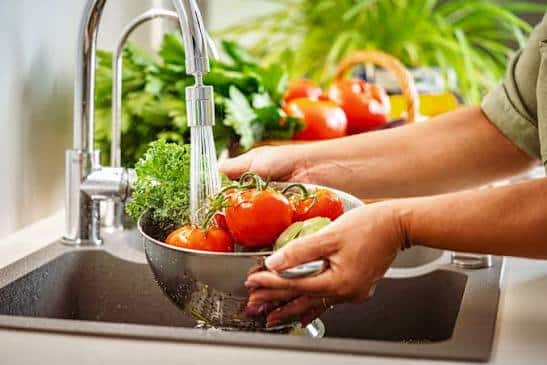

Fresh produce occupies a unique position in modern nutrition and food safety. Public health agencies consistently encourage increased consumption of fruits and vegetables because they reduce the risk of cardiovascular disease, diabetes, obesity, certain cancers, and numerous chronic illnesses. At the same time, however, fresh produce has become one of the leading vehicles for foodborne disease outbreaks in the United States and around the world.
Over the past two decades, the Centers for Disease Control and Prevention (CDC), the Food and Drug Administration (FDA), and state health departments have investigated numerous outbreaks linked to lettuce, spinach, cucumbers, onions, cantaloupes, tomatoes, sprouts, peppers, berries, celery, and fresh herbs. These outbreaks have involved pathogens including Salmonella, shiga toxin-producing Escherichia coli (STEC), Listeria monocytogenes, Cyclospora cayetanensis, and norovirus.
Unlike foods that undergo cooking before consumption, many fruits and vegetables are eaten raw. Consequently, any contamination introduced during growing, harvesting, packing, transportation, or retail display may remain present until the product reaches the consumer’s kitchen.
Although commercial growers implement Good Agricultural Practices (GAPs), sanitation procedures, water testing, and preventive controls under the Food Safety Modernization Act (FSMA), no food safety system can guarantee that fresh produce is completely free of contamination. This reality places increased importance on consumer food handling practices, particularly produce washing.
Contrary to popular belief, washing fruits and vegetables is not intended to sterilize produce. Rather, it serves as the final opportunity to reduce microbial contamination, remove dirt and debris, decrease some pesticide residues, and improve overall food hygiene before consumption. The FDA emphasizes that consumers should wash nearly all fresh produce under running water before eating, cutting, or cooking, even when the produce will later be peeled.
Understanding why this simple practice matters requires examining how contamination occurs long before fruits and vegetables arrive in the grocery store.
How Produce Becomes Contaminated
Many consumers assume contamination occurs primarily in grocery stores or home kitchens. In reality, produce may become contaminated at virtually any point along the farm-to-table continuum.
Agricultural production exposes fruits and vegetables to a wide range of environmental hazards. Irrigation water contaminated with livestock waste or untreated sewage may introduce bacteria, viruses, or parasites directly onto growing crops. Wildlife, including birds, deer, rodents, reptiles, and wild pigs, can deposit fecal material in agricultural fields, creating additional opportunities for contamination.
Flooding presents another increasingly important concern. When agricultural fields are inundated with floodwater, pathogens originating from livestock operations, wastewater systems, and surrounding environments may be deposited directly onto produce. Because many disease-causing microorganisms survive for extended periods in soil and water, contamination may persist well beyond the flooding event itself.
Human handling also contributes significantly to contamination risks. Farm workers, packing house employees, transportation personnel, retail staff, and consumers all represent potential sources of microbial transfer if proper hygiene practices are not followed.
Cross-contamination may occur through harvest containers, conveyor belts, washing equipment, knives, reusable storage bins, transportation vehicles, or retail display surfaces. Unlike canned or frozen foods, fresh produce often undergoes relatively little processing after harvest, allowing contamination introduced at any stage to remain until consumption.
Recent multistate outbreaks illustrate these vulnerabilities. Investigations involving cucumbers, cantaloupe, onions, leafy greens, and fresh herbs have repeatedly demonstrated that contamination originating at farms or packing facilities can rapidly spread through national distribution systems before illnesses are detected. Modern traceback investigations frequently identify irrigation water, environmental contamination, inadequate sanitation, or wildlife intrusion as contributing factors.
These realities underscore an important principle: produce does not become contaminated because it is inherently unsafe. Rather, contamination reflects the biological reality that fresh fruits and vegetables are grown outdoors in complex natural environments where eliminating every microbial hazard is impossible.
Why Washing Produce Matters
Washing produce serves multiple purposes beyond simply removing visible dirt.
Running water physically removes soil particles, dust, insects, and organic debris that may harbor microorganisms. Friction generated by rubbing produce under running water further dislodges contaminants adhering to surfaces.
Scientific studies demonstrate that proper washing can reduce populations of bacteria present on produce surfaces, although effectiveness varies depending on the type of fruit or vegetable, surface texture, and characteristics of the microorganism involved.
For example, smooth-skinned fruits such as apples, tomatoes, and cucumbers generally respond better to washing than rough-surfaced produce like cantaloupe or leafy greens, where bacteria may become lodged within natural crevices.
The USDA notes that washing produce under cool running water remains the most effective household practice for reducing contamination. Soap, detergent, bleach, or household disinfectants should never be used because these products are not approved for food and may leave harmful residues.
It is equally important to wash produce before peeling. Many consumers skip this step because they assume the peel will be discarded. However, knives cutting through contaminated surfaces can transfer bacteria from the exterior into the edible flesh. This phenomenon has been documented repeatedly during investigations involving melons, avocados, citrus fruits, and other produce with inedible skins.
Produce washing therefore protects not only against direct surface contamination but also against cross-contamination occurring during food preparation.
Store Bought Produce Versus Homegrown Produce
One of the most persistent misconceptions in food safety is that homegrown produce does not require washing because it comes directly from the garden.
In reality, home gardens present many of the same contamination risks found in commercial agriculture.
Garden vegetables may be exposed to wildlife, domestic pets, birds, insects, contaminated compost, improperly aged manure, untreated rain barrels, irrigation water, and soil containing naturally occurring microorganisms. Backyard chickens, increasingly popular in urban and suburban communities, may also introduce Salmonella into garden environments through fecal contamination.
Floodwaters present particular concerns for home gardens because they may carry sewage, chemicals, heavy metals, and disease-causing pathogens. Both the FDA and USDA recommend discarding produce exposed to floodwaters because washing alone cannot reliably eliminate contamination.
Home composting systems also require careful management. Compost that has not reached temperatures sufficient to destroy pathogens may serve as a contamination source rather than a soil amendment.
Consumers often perceive homegrown produce as safer because they know its origin and have greater control over pesticide use. While locally grown produce offers numerous benefits, microbiological hazards remain possible regardless of whether produce originates from a commercial farm or a backyard garden.
Consequently, both store bought and homegrown produce should be washed thoroughly before consumption.
The Science Behind Washing Produce
Many consumers expect washing to completely eliminate bacteria and viruses from produce. Scientific research shows that this expectation is unrealistic.
Once bacteria attach to fruits and vegetables, they may adhere tightly to waxes, microscopic surface irregularities, or natural openings within plant tissues. Some pathogens are even capable of forming biofilms, protective microbial communities that increase resistance to removal by water alone.
In certain circumstances, bacteria may become internalized within plant tissues through roots, stems, or damaged surfaces. When this occurs, no amount of washing can completely remove the microorganisms because they are no longer confined to the outer surface.
This limitation explains why outbreaks continue to occur despite consumers carefully washing produce before eating it. Washing reduces risk but cannot guarantee safety if contamination has penetrated beyond the surface.
Even so, studies consistently demonstrate that rinsing produce under cool running water removes substantially more dirt, microorganisms, and pesticide residues than leaving produce unwashed. The FDA therefore continues to recommend washing nearly all fresh fruits and vegetables immediately before preparation or consumption rather than relying on commercial prewashing during processing.
Timing also matters. Produce should generally be washed immediately before eating rather than before storage. Washing fruits and vegetables before refrigeration introduces additional moisture that may accelerate spoilage and promote mold growth during storage.
Running Water Remains the Gold Standard
Despite numerous commercial produce washes marketed to consumers, federal food safety agencies continue to recommend plain running tap water as the preferred method for cleaning fresh produce.
The mechanical action of running water combined with gentle rubbing physically removes soil, organic debris, insects, and many microorganisms adhering to produce surfaces. For firm produce such as apples, cucumbers, potatoes, carrots, and melons, gentle scrubbing with a clean produce brush provides additional removal of surface contaminants.
Consumers frequently assume that stronger cleaning solutions provide greater protection. However, available scientific evidence has not demonstrated meaningful advantages for most commercial produce washes over proper rinsing with clean running water.
The effectiveness of washing depends less on specialized products than on thorough physical cleaning.
Why Soap, Bleach, and Detergents Should Never Be Used
One of the most persistent food safety myths is that fruits and vegetables should be washed using dish soap or household cleaning products.
The FDA, CDC, and USDA all advise against this practice.
Fresh produce is porous. Soap and detergent residues may be absorbed into microscopic surface structures and are not approved for direct consumption. Even after rinsing, chemical residues may remain.
Similarly, bleach solutions and household disinfectants should never be applied to produce intended for eating unless specifically approved for food-contact use under carefully controlled conditions.
Although disinfectants are valuable for sanitizing kitchen countertops and food preparation surfaces, they are not intended for direct application to foods.
Ironically, attempting to over-sanitize produce may introduce unnecessary chemical exposure without significantly improving microbiological safety.
Vinegar, Baking Soda, and Commercial Produce Washes
Consumers frequently ask whether vinegar, baking soda, or specialized produce washes provide additional protection.
Research suggests that diluted baking soda solutions may remove certain pesticide residues from some produce more effectively than water alone, particularly on apples. However, the improvement varies depending upon the pesticide involved and does not necessarily translate into superior removal of bacterial pathogens.
Vinegar possesses mild antimicrobial properties and may reduce certain surface bacteria under laboratory conditions. Nevertheless, neither the FDA nor USDA currently recommends vinegar as a routine produce-washing method because evidence has not demonstrated consistent advantages over running water in typical household settings.
Commercial produce washes similarly lack convincing evidence that they outperform proper rinsing under clean running water.
For the average consumer, careful washing with water remains both the simplest and most evidence-based recommendation.
Different Produce Requires Different Washing Techniques
Because fruits and vegetables vary considerably in texture and structure, cleaning methods should be adapted accordingly.
Leafy Greens
Leafy greens represent one of the most challenging categories of produce from a food safety perspective. Lettuce, spinach, kale, Swiss chard, cabbage, and similar vegetables possess numerous folds and overlapping leaves capable of trapping soil, insects, and microorganisms.
The FDA recommends removing damaged outer leaves before washing. Individual leaves should then be separated and rinsed thoroughly under running water.
Prewashed and triple-washed packaged greens labeled “ready to eat” generally do not require additional washing. Washing these products again may actually increase opportunities for cross-contamination if sinks or utensils are contaminated.
However, if consumers choose to rewash packaged greens, careful attention should be paid to sink cleanliness.
Berries
Strawberries, raspberries, blueberries, and blackberries require special care because they bruise easily.
Berries should not be washed until immediately before consumption. Premature washing introduces excess moisture that encourages mold growth and shortens shelf life.
The preferred method involves placing berries in a colander and gently rinsing them under cool running water while minimizing handling.
Damaged or moldy berries should be discarded because mold may spread rapidly throughout the container.
Melons
Melons illustrate why produce should be washed even when the peel will not be eaten.
Cantaloupe, watermelon, and honeydew frequently develop surface contamination during growing because they rest directly on soil throughout much of their development.
Before cutting, melons should be scrubbed thoroughly under running water using a clean produce brush.
Failure to wash melons before slicing allows knives to transfer bacteria from the rind directly into the edible flesh.
The 2011 Jensen Farms Listeria monocytogenes outbreak, one of the deadliest foodborne outbreaks in modern U.S. history, demonstrated the devastating consequences that surface contamination on cantaloupes can produce. More recently, additional salmonella outbreaks involving cantaloupe have reinforced the importance of careful melon washing before preparation.
Root Vegetables
Potatoes, carrots, beets, radishes, turnips, and similar vegetables often carry significant amounts of soil.
These products should be scrubbed thoroughly using a clean produce brush while rinsing under running water.
Even when root vegetables will be peeled, washing beforehand remains essential because peeling knives can transfer microorganisms from contaminated surfaces into edible portions.
Mushrooms
Mushrooms require somewhat different handling.
Rather than soaking mushrooms, consumers should briefly rinse them under running water or wipe them clean using a damp paper towel.
Prolonged soaking causes mushrooms to absorb water, negatively affecting texture and flavor without providing additional food safety benefits.
Fresh Herbs
Fresh herbs present unique challenges because of their delicate structure.
Parsley, cilantro, basil, dill, mint, and similar herbs should be separated into smaller bunches and rinsed gently under cool running water before being dried with clean paper towels or salad spinners.
Because herbs possess numerous leaves and stems, they can retain soil and insects despite appearing visually clean.
Recent outbreaks involving cilantro and basil have highlighted the vulnerability of fresh herbs to microbial contamination during production and distribution.
Common Consumer Mistakes
Food safety investigations repeatedly reveal that consumers often unknowingly increase contamination risks through improper handling practices.
One common mistake is washing produce in sinks that have recently held raw poultry or meat without first sanitizing the sink. Kitchen sinks frequently contain more bacteria than many consumers realize. Placing produce directly into contaminated sinks may introduce pathogens rather than remove them.
Another mistake involves allowing washed produce to contact contaminated cutting boards or knives previously used for raw meat.
Cross-contamination remains one of the leading causes of foodborne illness in home kitchens.
Consumers should also avoid using reusable cloth towels that have not been freshly laundered when drying produce. Paper towels or dedicated clean kitchen towels provide safer alternatives.
Finally, consumers sometimes believe visibly clean produce does not require washing.
Appearance alone cannot reveal microbial contamination. Pathogens such as Salmonella, Listeria monocytogenes, shiga toxin-producing E. coli, norovirus, and Cyclospora are invisible to the naked eye.
Washing Cannot Replace Safe Production
Although washing remains an important consumer practice, it should never be viewed as a substitute for safe agricultural production.
Recent outbreaks involving leafy greens, onions, cucumbers, tomatoes, cantaloupe, sprouts, and berries demonstrate that contamination often occurs before produce reaches consumers.
In many cases, pathogens become firmly attached to produce surfaces or internalized within plant tissues during growing.
Consequently, preventing contamination at farms, packing houses, and processing facilities remains the most effective public health strategy.
The FDA Produce Safety Rule emphasizes preventive agricultural practices including:
- Agricultural water quality monitoring
- Worker hygiene and training
- Equipment sanitation
- Wildlife management
- Biological soil amendment controls
- Harvest sanitation procedures
Consumer washing represents the final layer of protection within this broader food safety system rather than the primary defense.
This distinction is important because some consumers incorrectly assume that washing can completely eliminate contamination regardless of its source.
Scientific evidence clearly demonstrates otherwise.
Recent Outbreaks Demonstrate Why Washing Produce Remains Essential
Recent multistate foodborne illness investigations have reinforced a critical reality: fresh produce continues to be one of the most challenging categories of food from a microbiological perspective. Although regulatory oversight has expanded considerably since passage of the Food Safety Modernization Act (FSMA), outbreaks linked to fruits and vegetables continue to occur because produce is grown in open environments where complete elimination of microbial hazards is impossible.
Over the past several years, the Centers for Disease Control and Prevention (CDC) and the Food and Drug Administration (FDA) have investigated outbreaks involving cucumbers, cantaloupe, onions, leafy greens, fresh herbs, peaches, mushrooms, and berries. These investigations have implicated pathogens including Salmonella, shiga toxin-producing Escherichia coli (STEC), Listeria monocytogenes, and Cyclospora cayetanensis.
One notable example involved the multistate Salmonella Newport outbreak linked to imported cantaloupe. Federal investigators ultimately identified a common supplier after conducting extensive epidemiological interviews and traceback investigations. Although consumers had purchased the fruit from numerous retailers across multiple states, the contamination originated much earlier within the distribution chain. The outbreak demonstrated how a single contaminated agricultural commodity can rapidly spread throughout the national food supply before illnesses become apparent.
Similarly, repeated outbreaks involving cucumbers have highlighted the vulnerability of produce that is frequently eaten raw. Once harvested, cucumbers may pass through packing houses, transportation networks, distribution centers, grocery stores, restaurants, and consumers’ kitchens. Every additional handling step introduces opportunities for contamination or cross contamination.
Leafy greens continue to present perhaps the greatest challenge because their complex leaf structures provide numerous microscopic locations where bacteria may adhere. Multiple investigations involving romaine lettuce and spinach have demonstrated that contamination associated with irrigation water, wildlife intrusion, or nearby livestock operations may affect large agricultural regions rather than isolated farms.
These outbreaks illustrate an important principle: washing produce is an essential protective measure, but it cannot completely compensate for contamination that occurs during production. Public health protection therefore depends upon multiple layers of food safety working together, beginning on the farm and ending in the consumer’s kitchen.
Emerging Research in Produce Safety
Scientific understanding of produce contamination has advanced considerably during the past decade.
Researchers now recognize that certain pathogens can attach to produce surfaces within minutes of contamination. Some organisms produce extracellular substances that allow them to adhere tightly to leaves, fruit skins, and vegetable surfaces, making removal more difficult than previously believed.
Investigators are also studying the plant microbiome, the naturally occurring community of microorganisms living on fruits and vegetables. Understanding how beneficial microorganisms compete with harmful pathogens may eventually lead to innovative approaches for reducing contamination before harvest.
Agricultural water quality has become another major research priority. Studies have demonstrated that irrigation water quality varies considerably depending on weather conditions, nearby land use, wildlife activity, and seasonal rainfall. This research contributed directly to the FDA’s Produce Safety Rule, which places significant emphasis on agricultural water management and risk assessment.
Technology is also transforming outbreak investigations.
Whole genome sequencing now allows public health laboratories to compare bacterial isolates recovered from patients, foods, and production environments with remarkable precision. Outbreaks that once appeared to involve isolated illnesses can now be linked across multiple states through shared genetic fingerprints.
Digital traceability systems are improving as well. Electronic recordkeeping allows investigators to reconstruct supply chains far more rapidly than was possible using traditional paper documentation. Faster traceback investigations mean contaminated products can often be removed from commerce before additional illnesses occur.
Researchers are also evaluating innovative sanitation technologies, including ultraviolet light, ozone treatments, electrolyzed water, cold plasma, and advanced antimicrobial coatings for fresh produce. While several approaches have shown promise under laboratory conditions, no technology has yet replaced careful agricultural practices, proper handling, refrigeration, and consumer washing as the foundation of produce safety.
The Future of Produce Washing and Consumer Food Safety
The future of produce safety will depend upon integrating advances in agriculture, food processing, public health surveillance, and consumer education.
Climate change is expected to influence food safety in important ways. Rising temperatures, more frequent flooding, prolonged droughts, and changing wildlife patterns may increase opportunities for produce contamination. Floodwaters can introduce sewage, animal waste, and environmental pathogens into agricultural fields, while drought conditions may force growers to rely on alternative irrigation sources that require careful monitoring.
Globalization adds another layer of complexity. Many fruits and vegetables consumed in the United States are imported from regions with different growing conditions, regulatory systems, and environmental challenges. Although imported produce must meet U.S. food safety requirements, international supply chains make traceback investigations more complicated when outbreaks occur.
For consumers, these changes reinforce the importance of evidence-based food handling practices.
Proper produce washing should become a routine habit comparable to handwashing before preparing food. Yet education remains essential because misconceptions persist. Surveys conducted by food safety organizations consistently show that many consumers continue to wash produce with soap, neglect to wash produce that will be peeled, or fail to clean melons before cutting them. Others mistakenly believe that produce labeled “organic,” “local,” or “homegrown” does not require washing.
The evidence does not support these assumptions.
Organic produce may still be exposed to contaminated water, wildlife, insects, or soil. Locally grown produce encounters many of the same environmental hazards as commercially grown products. Home gardens are subject to contamination from birds, pets, wildlife, compost, untreated manure, and environmental runoff.
Ultimately, produce safety depends upon recognizing that contamination is an environmental issue rather than simply a commercial one.
A Shared Responsibility
Perhaps the most important lesson from decades of produce-related outbreaks is that food safety is a shared responsibility.
Growers must implement Good Agricultural Practices and monitor water quality.
Processors and distributors must maintain sanitation, temperature control, and traceability.
Retailers must protect produce from contamination during display and storage.
Public health agencies must conduct surveillance, investigate outbreaks, and communicate risks rapidly.
Consumers must complete the final step by properly washing, handling, storing, and preparing fresh produce.
No single intervention can eliminate every risk.
Instead, food safety depends upon a series of overlapping protections in which each participant contributes to reducing the likelihood of illness. Produce washing represents the final consumer-controlled intervention within this larger system.
Rather than viewing washing as an optional kitchen habit, it should be recognized as an evidence-based public health practice that complements the efforts of every preceding stage of food production.
Final Note
Fresh fruits and vegetables remain among the healthiest foods available, yet they also present unique food safety challenges because they are frequently consumed raw and produced in complex outdoor environments where contamination cannot always be prevented.
Scientific evidence demonstrates that proper washing under clean running water effectively removes dirt, debris, and many microorganisms from produce surfaces. Although washing cannot sterilize produce or eliminate pathogens that have become internalized within plant tissues, it substantially reduces contamination and remains one of the simplest and most effective actions consumers can take to lower their risk of foodborne illness.
The distinction between store bought and homegrown produce is less significant than many consumers believe. Both may encounter contamination from water, soil, wildlife, insects, animals, and human handling. Consequently, both require careful washing before preparation and consumption.
Recent outbreaks involving cantaloupe, cucumbers, onions, leafy greens, berries, and fresh herbs demonstrate that contamination can occur despite modern agricultural controls and regulatory oversight. These investigations also highlight the value of whole genome sequencing, traceback analysis, and preventive agricultural practices in identifying contamination sources and preventing additional illnesses.
As food production becomes increasingly globalized and environmental conditions continue to evolve, produce washing will remain an indispensable component of household food safety. Combined with safe agricultural practices, modern surveillance systems, proper refrigeration, and careful food handling, this simple practice serves as the final critical control point in protecting consumers from foodborne disease.
